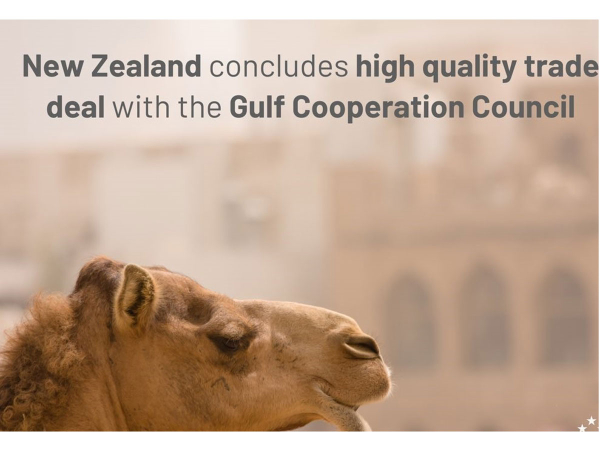
The deal, announced in Doha by Trade Minister Todd McClay, eliminates tariffs on red meat exports to a range of countries including Bahrain, Kuwait, Oman, Qatar, Saudi Arabia and the UAE within 10 years. The GCC bloc is one of NZ’s largest halal markets.
In the year to September, New Zealand’s red meat exports to this region were worth $245 million, with current tariff costs of $7.5 million.
Kate Acland, chair of Beef + Lamb New Zealand (B+LNZ), said the region is a high-value market so improving access for farmers’ products is great news.
“The GCC is forecast to be one of the fastest-growing regions for beef and sheepmeat consumption due to its population growth, rising incomes, and rapidly developing tourism sector.
New Zealand and GCC trade is worth over $3 billion annually, with New Zealand exporting $2.6 billion in the year to June 2024. This includes $1.8 billion of dairy, $260 million of red meat, $72 million of horticulture and $70 million of travel and tourism services. The agreement comes hard on the heels of a trade deal with the UAE.
McClay says the trade deal follows significant reengagement with the GCC following meetings with GCC Ministers at the WTO Ministerial Meeting in Abu Dhabi in February of this year and delivers on an 18 year-long ambition for New Zealand to agree this high-quality trade deal in the Middle East.
Read More
-
Red meat's China push
-
Widespread support for UAE trade deal done in record time
-
UAE trade deal to boost halal exports
“This is the highest quality deal the GCC has done to date and its first with a major agricultural exporter,” McClay said.
“It delivers duty free access for 99% of New Zealand’s exports over 10 years and when combined with our recently concluded NZ-UAE CEPA, 51% of our exports to the region will be tariff-free from day one.”
Nathan Guy, chair of the Meat Industry Association (MIA) says exporters will be delighted.
“The GCC is one of our largest halal markets and the agreement provides new avenues for growth and cooperation.
“New Zealand has an internationally recognised halal system that adds tremendous value. Halal certified exports account for almost $4 billion annually.
“This deal also provides New Zealand with a competitive advantage as no other major red meat exporters to the GCC have secured such an agreement.
“This agreement has been talked about for over a decade and we knowledge Minister McClay and his officials for their hard work and perseverance to get this deal across the line.”
The agreement includes provisions that will make doing business easier with preferential access for our primary sector exporters, streamlined customs processes, reduced trade barriers, and commitments to level the playing field for Kiwi services businesses entering the market.
The agreement also includes chapters and provisions on intellectual property, transparency and trade and sustainable development including labour standards, climate, and women’s economic empowerment committing to the Convention on the Elimination of All Forms of Discrimination against Women (CEDAW). New Zealand has also secured our Treaty of Waitangi exception to allow us to meet treaty obligations.
“This agreement complements the NZ-UAE CEPA that was announced in September, and together they represent an important milestone in the Government’s efforts to grow our international connections and double exports by value in 10 years,” McClay says.