NZ Milk Price Could Hit $10/kgMS as Global Supply Eases
A 'tsunami' of milk from key exporting countries is winding down and this may be good news for New Zealand dairy farmers.
 increase font size
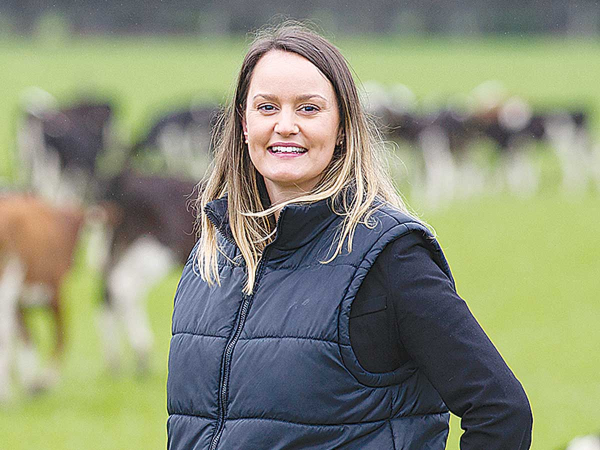 Rabobank senior agriculture analyst Emma Higgins.
Last year's fourth quarter Rabobank Rural Confidence survey found New Zealand farmer confidence rebounding strongly off the back of improved dairy farmer sentiment, with farmers across all sectors more optimistic about the prospects for the agri economy.
Following an historic low in September, the survey — completed during the last two weeks of November 2023 — found farmer confidence up to a net reading of -47% from -72% previously. The number of farmers expecting conditions to worsen over the next 12 months dropped from 77% to 58%, while those expecting conditions to improve rose from 5% to 11%.
However, despite this sizeable uplift, farmer sentiment remains low overall.
A majority of primary producers still expect the broader agricultural economy to worsen over the coming 12 months, while those who expect conditions to remain the same jumped from 15% to 29%.
Rabobank senior agriculture analyst Emma Higgins said dairy farmers recorded the biggest lift in sentiment, largely down to strong GDT results pushing dairy commodity prices – and the farmgate milk price forecast – higher.
“With this morale-boosting lift in the Fonterra payout coming just after the close of the latest survey period there’s a strong likelihood that, if taken today, dairy farmer confidence would be even higher,” she explained.
“While we did still see government policy featuring as a reason for pessimism [26%], we’ve also seen it come through as a major reason for optimism [59%].
Several announcements from the new government – including the decision to increase the size of the Recognised Seasonal Worker (RSE) scheme and the launch of a new $1.2 billion Regional Infrastructure Fund – appear to have landed well with farmers.”
Higgins added that overseas markets/ economies and rising commodity prices were the other key reasons cited by farmers for an optimistic outlook.
Meanwhile, falling commodity prices and rising input costs continued were the two most regularly cited reasons for pessimism.
Farmers across all sectors were found to be more optimistic about the prospects for their own farm businesses, with 15% of farmers (11% last quarter) now expecting the performance of their business to improve in the year ahead. Some 46% expect it to worsen (67% previously) and 37% expect performance to remain the same (from 21%).
However, while sheep and beef farmers are also generally more optimistic, their confidence remains depressed at a net reading of -62%. With lamb prices falling to their lowest level for this time of year since 2016 and little to indicate an improvement in short-term prices.
A 'tsunami' of milk from key exporting countries is winding down and this may be good news for New Zealand dairy farmers.
Milk powder prices are keeping farmgate prices up, helping processors offset the dip in milk fat prices.
Chinese beef trade quotas and a looming suspension of Brazilian beef imports into the European Union are expected to reshape global beef trade flows over the remainder of 2026, with implications for New Zealand exporters, according to Rabobank's Q3 Global Beef Quarterly report.
New Zealand consumers are paying more for beef mince than ever before, with the average retail price now sitting above $24 per kilogram, according to Rabobank.
West Otago dairy farmer Luke Kane has been awarded the 2026 Rabobank Dr John Morris Business Development Prize.



Ravensdown shareholders have elected Jane Montgomery and Kate Acland to the Ravensdown Board for three-year terms, following a closely contested director election.
Federated Farmers says new legislation replacing the Resource Management Act will cut red tape, unlock investment and help grow New Zealand's export-led economy, after the Planning Bill and Natural Environment Bill passed their third reading in Parliament yesterday.
Leading figures from the major political parties will be questioned on their primary sector policies at the Rural Issues Debate at Mystery Creek Events Centre, Hamilton, on 30 September.
OPINION: Have a plan in place now!
Beef + Lamb New Zealand (B+LNZ) says it welcomes the passage of the Natural Environment Bill and Planning Bill, calling the bills a positive step for sheep and beef farmers.
A spate of southerly winds bringing cold temperatures has presented challenges for Taranaki dairy farmers.