Paris Agreement Exit Could Put NZ-EU and UK Trade Deals at Risk
Politicians calling for New Zealand to withdraw from the Paris Agreement on climate risk damaging two of our gold-plated free trade deals.
 increase font size
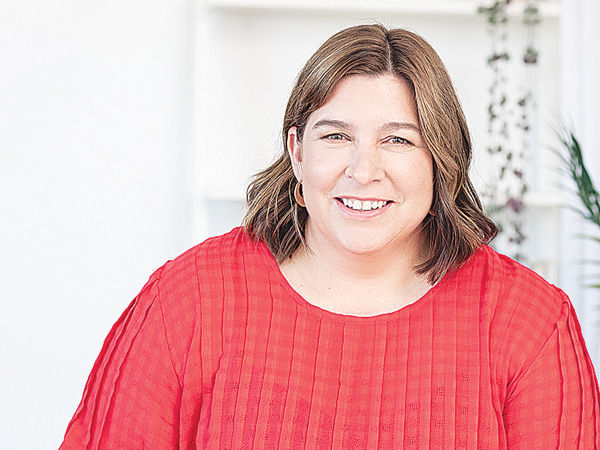 DCANZ executive director Kimberly Crewther.
Dairy processors want New Zealand to upgrade the free trade deal signed with the European Union by the former Labour Government.
Dairy Companies Association of NZ (DCANZ) executive director Kimberly Crewther says the way the NZ-EU trade deal was closed for dairy highlights that we are very far from a point of "peak FTA".
Her comments come as Australia walked away from an FTA with the EU last week, after failing to win meaningful access for Australian agricultural products.
Crewther told Rural News that the approach taken by the EU in negotiations with Australia appears to have mirrored the approach the EU took with New Zealand: Seeking to keep its own dairy market largely closed, while at the same time advancing an agenda to monopolise certain cheese names that have been used internationally for decades.
"We are not surprised to see the Australian industry backing its government in walking away from a deal on these terms," she adds. "It is a matter of public record that DCANZ requested the New Zealand Government to not close out an agreement with the low level of dairy access we were granted. Especially when the EU had previously eliminated dairy tariffs in trade details with Canada and the UK."
Crewther points out that bilateral and plurilateral trade agreements might cover over 70% of NZ's current trade, but the trade negotiating job is far from over.
"New Zealand dairy exports continue to incur more than $1 billion in tariffs annually and 86.8% of global consumption takes place behind tariff barriers of 10% or more. These trade barriers suppress the value of New Zealand dairy exporters," says Crewther.
"This means it is important that New Zealand's trade agenda includes upgrading the EU FTA to put us on a level playing field, as well as completing the unfinished business of tariff elimation with other FTA partners including Japan, Korea, Canada, and Mexico."
Federated Farmers dairy section chair Richard McIntyre says it's no secret that Kiwi dairy farmers were disappointed with NZ's free trade deal with the EU.
"The deal gave very little in the way of market access to NZ dairy products, while imposing restrictions on the use of geographic indicators such as Feta," he told Rural News.
No Deal
Australia turned down the EU's trade deal offer following the latest round of talks.
Australian Trade Minister Don Farrell said they had not been able to make progress.
National Farmers' Federation David Jochinke thanked the Australian Government for "standing by Australian farmers and walking away from an unacceptable offer".
"It would have locked our farmers in at a disadvantage to competitors in New Zealand, Canada and South America."
Australian Dairy Industry Council (ADIC) chair Rick Gladigau says that despite the best efforts of the Australian Government, the EU has continued to make unreasonable demands by insisting Australia adopt an anti-competitive Geographical Indications (GI) regime, while at the same time not providing equitable market access into the EU dairy market.
Politicians calling for New Zealand to withdraw from the Paris Agreement on climate risk damaging two of our gold-plated free trade deals.
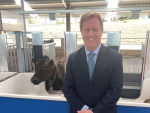
The stark realities of the world trade that New Zealand is having to face have been revealed by Trade Minister Todd McClay.
New Zealand and the European Union are closer than ever.
New Zealand exports to the European Union have surged by $3 billion in two years under the New Zealand-European Union Free Trade Agreement.
When it comes to international trade, politicians from all sides of the aisle are united, says Labour's trade spokesman Damien O'Connor.

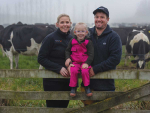
DairyNZ deputy chair Cameron Henderson has been re-appointed unopposed for another term.
Farms across the upper North Island are trialling different pasture mixes as part of a research programme that aims to build greater resilience into farming systems.
Election years are always a concerning time for farmers, according to DairyNZ chair Tracy Brown.
The Ballance Farm Environment Awards are coming to the West Coast of the South Island.
Most dairy regions around the country have had a pretty good season so far says Tracy Brown.