Top dairy CEO quits
Arguably one of the country's top dairy company's chief executives, Richard Wyeth has abruptly quit Chinese owned Westland Milk Products (WMP)
 increase font size
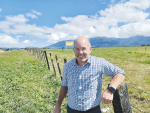
 Pete Morrison.
Westland Milk Products is promising better things for the 2018-19 season, while conceding that this season’s payout will be disappointing.
Westland, New Zealand’s second-biggest dairy co-operative, predicts its payout to shareholder suppliers will be in the range $6.75 to $7.20/kgMS for 2018-19.
The figure is in line with payout predictions of $7.00 from Fonterra and Synlait.
WMP chairman Pete Morrison says the shareholders will welcome the prediction; they are anticipating a payout in the range of $6.10 to $6.30 for 2017-18.
“This (17/18 payout) is a disappointing result – as it is not as competitive as we had originally told shareholders we would be,” Morrison said, “but a number of one-off factors contributed to this.”
They included the impact of former-tropical cyclone Fehi, estimated to have cost at least 10c/kgMS. Lyttelton Port strikes added to the cyclone’s disruption and meant Westland incurred higher freight costs. And quality issues, while now improved, were more extensive than at first thought and took longer than expected to resolve.
“We are now seeing improved sales and a better sales outlook; there is a much improved performance by our infant and toddler nutrition (ITN) and UHT plants; and consumer butter has been, and we believe will continue to be, a star performer.”
Westland’s decision to enter the NZ retail consumer butter market with its Westgold brand has also paid off, Morrison said.
He expects butter to continue to be a good export earner.
“We see robust demand for butter in all sectors growing further in the coming year, with grass-fed growth showing even further potential. Westland is in a great position to take advantage of the growing demand for grass-fed dairy products.”
To make butter, Westland had to find markets for its skim milk powder and that is also looking promising, he said.
Arguably one of the country's top dairy company's chief executives, Richard Wyeth has abruptly quit Chinese owned Westland Milk Products (WMP)
OPINION: This old mutt well remembers the wailing, whining and gnashing of teeth by former West Coast MP and Labour Agriculture Minister Damian O’Connor when Chineseowned Yili took over the troubled dairy company Westland Milk a few years back.
Westland Milk has reaffirmed its commitment to pay farmer suppliers 10c above Fonterra farm gate milk price for the following two seasons.
Not all milk processors in New Zealand are struggling; just look at Westland Milk Products on the West Coast.
Dairy farmers supplying Chinese-owned Westland Milk Products in Hokitika had another reason to celebrate this holiday season.


South of the central Hawke’s Bay town of Waipukurau is Taniwha Station – a highly successful 550ha bull beef farming operation.
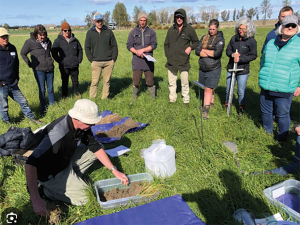
Beef + Lamb NZ funded research has shown that some simple changes to pasture management could help farmers make better use of rainfall and build resilience before dry conditions hit.
OPINION: There could hardly be a more appropriate theme for a conference than the one chosen by the red meat sector - Navigating Volatility.
When Northland leather worker Vernon Suckling started making horse saddles 50 years ago, quad bikes and side-by-side vehicles were unheard of.
Alliance Group has confirmed that eligible farmer-shareholders who supply and continue to back the business will receive up to $20 million later this year, following the strategic investment partnership with Dawn Meats.
With a general election under five weeks away, Rural News is asking major political parties about their policies and positions on key issues facing the primary sector. We will run their responses to each question over the next four weeks. The ACT Party and the Greens didn't respond in time.