Ravensdown Elects Montgomery, Acland to Board
Ravensdown shareholders have elected Jane Montgomery and Kate Acland to the Ravensdown Board for three-year terms, following a closely contested director election.
 increase font size
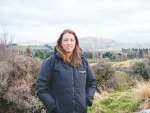
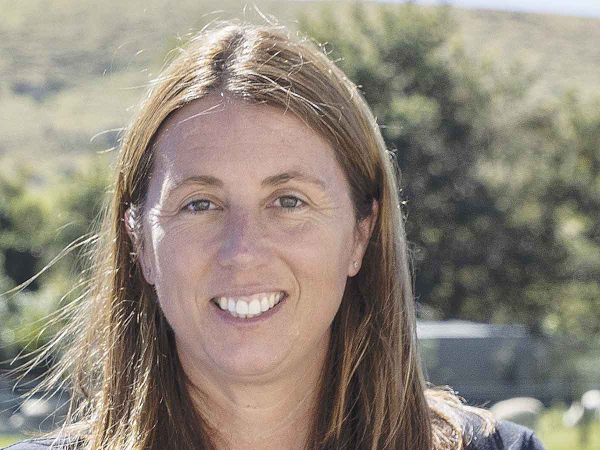 Beef + Lamb NZ chair Kate Acland.
Beef + Lamb New Zealand (B+LNZ) says the Government needs to close loopholes in the guidance around limits on carbon forestry as news of further whole-farm sales emerges.
B+LNZ chair Kate Acland says that while the industry-good group welcomed the announcement of limits on carbon forestry in December 2024, in light of subsequent whole sheep and beef farm sales since then she says it is clear that a lack of specificity is undermining the intent of the limits.
"When the limits were announced, the Government said the new rules would apply from 4 December 2024, unless there was a clear intent for conversion before that date," Acland says. "That is fair, as rules shouldn’t apply retrospectively to land use decisions made in good faith."
“However, the Ministry for Primary Industries’ recently released guidance on what constitutes ‘intent’ to plan an area of trees before that date is deeply flawed and will enable land to go into the Emissions Trading Scheme despite the Government’s intended limits," she adds.
Acland says the two key flaws in the guidance relate to accepting receipts for ordering seedlings and accepting third party assessments of farmland for afforestation.
“Accepting these as proof of intent does not align with the intention of the limitations," she says.
Acland says that seedlings can be planted anywhere and it is not uncommon to purchase seedlings and worry about where those seedlings will be planted later.
"In such cases, there is no intent to enter any particular parcel of land into the ETS," she says.
“Additionally, arguably almost all land in New Zealand has already been ‘assessed’ by a third party for suitability for afforestation.
"These are simply not specific enough proof of ‘intent’. In effect, the guidance is enabling carbon forestry entities that own seedlings to continue to look for land on which to plant them, despite the announcements made in December. "
B+LNZ is seeking the removal of seedlings receipts and third-party assessments from the guidelines as proof of intent.
Acland says that B+LNZ is not anti-forestry and supports the integration of trees within farms.
She also notes that B+LNZ supports action on climate change - using a balanced approach that maintains critical food production alongside sustainable forestry.
However, in the past week alone, two more sheep and beef farms in Hawke's Bay have been sold, following other sales nationally since the announcement, particularly in Southland.
“We appreciate the Government’s willingness to address the number of farm conversions driven by short-term carbon gains and by fossil fuel emitters planting their way out of their emissions problems," Acland says.
“We’re just asking them to follow through and close the loopholes in the guidance before too much more damage is done to our sector, to long-term land productivity, biodiversity, regional economies and export earnings.”
Ravensdown shareholders have elected Jane Montgomery and Kate Acland to the Ravensdown Board for three-year terms, following a closely contested director election.
Beef + Lamb New Zealand (B+LNZ) says it welcomes the passage of the Natural Environment Bill and Planning Bill, calling the bills a positive step for sheep and beef farmers.
As farmers begin thinking about establishing next year’s winter forage crops, Beef + Lamb NZ is encouraging farmers to carefully consider what crops they are planting and where.
Farmgate lamb prices are down by 8%, beef cattle by 4.5% and farm expenditure up by 4.2%.
Red meat farmers are welcoming Labour’s plan to review the Emissions Trading Scheme and not to campaign on pricing agricultural emissions.

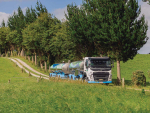
Farmer-owned fertiliser company, Ballance Agri Nutrients is welcoming National’s plan to negotiate security agreements with key supplier countries to protect New Zealand-bound products from export restrictions and greater supply chain certainty.
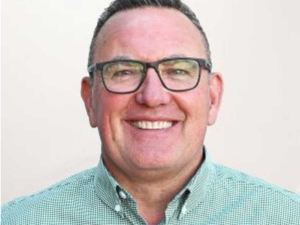
Carrfields has announced the appointment of Stu Hall to the newly created role of chief operating officer, Carrfields Ltd, reflecting the continued growth of their agribusinesses and the need to ensure the company has the leadership capacity and support in place as it pursues the emerging opportunities ahead.
New Zealand's role is not to compete with Indian growers, according to NZ Apples and Pears.
The potato industry is celebrating the success of two rising stars - James Blair, the 2026 Young Grower of the Year and runner-up and innovation award winner, Amber Davy.
Twenty-eight emerging leaders from across the horticulture sector spent two days last month learning valuable skills and connecting with industry experts.
There are five entrants in this year’s Young Horticulturist of the Year, competing in a series of technical, practical, business and leadership challenges.