Cool Beef: NZ's New Programme to Cut Cattle Methane
Beef+Lamb New Zealand and the Ag Emissions Centre have launched a new research project aimed at helping beef farmers reduce methane emissions without impacting productivity or profitability.
 increase font size
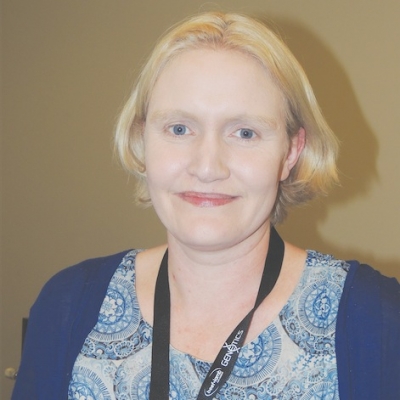 Dr Tricia Johnson’s studied ewes’ feed efficiency.
FOR ALL the talk about feed efficiency in the sheep industry it’s actually a trait with little science to support it when it comes to grazing animals, a review of the international literature by AgResearch has found.
“We found there’s no dataset in the world which can answer our questions,” Dr Tricia Johnson told Rural Newsat the recent Beef + Lamb Genetics’ Sheep Breeders Forum in Dunedin – where she was presenting a research poster.
That dearth of data meant research on feed efficiency on pasture had to start from scratch last year with a pilot study of 40 hoggets’ feed efficiency as measured by residual feed intake*.
The hoggets were initially fed cut pasture – it had to be cut so intakes could be accurately measured – and their growth recorded. Then half the mob was put onto a lucerne pellet feed diet to see if the feed efficiency ranking changed.
With the last data from that pilot trial just collected Johnson says preliminary analysis suggests significant variability in animal intake relative to growth exists, indicating eventually the work might lead to scientifically sound criteria to selectively breed for feed efficiency.
“There are a lot of pre-conceived notions in this area,” she notes.
The switch to pellet feed produced more or less the same range and ranking of animals for feed efficiency, so it’s probably not just a case of one diet suiting some animals better than others.
“It’s pretty neat that there’s considerable but consistent variation in how these individual animals have performed. It shows there’s potential to identify sheep which either produce more from the same amount of feed, or produce the same with less feed.”
A five-year trial using 200hoggets/year from the Central Progeny Test will start in June which will, hopefully, build on the pilot study findings and produce a world-leading data set.
“No-one else in the world is doing this work on this scale and we’ll be looking not only at growth but at reproductive performance and things like onset of puberty. It will definitely be a unique dataset.”
Long-term the aim is to not only identify more feed efficient lines of sheep, but also how heritable feed efficiency is as a trait and how it correlates with other traits so breeders can make informed decisions about whether to select for efficiency.
Johnson notes breeders in the beef industry are already familiar with the concepts of feed efficiency as measured by residual feed intake, though unfortunately there are some negative correlations with reproduction, complicating selection criteria. Heritability estimates for feed efficiency in cattle range from 0.07 to 0.62.
“In the sheep world it’s going to take a while get up to speed with this terminology.”
Johnson’s work is being funded by Beef + Lamb New Zealand Genetics.
* Residual Feed Intake: what’s left over after an animal’s needs for maintenance, exercise, growth/liveweight gain, pregnancy and milk production are accounted for.
Beef+Lamb New Zealand and the Ag Emissions Centre have launched a new research project aimed at helping beef farmers reduce methane emissions without impacting productivity or profitability.

Last night saw the winners of the 2026 Beef + Lamb New Zealand (B+LNZ) Awards named at a gala dinner at Te Pae Christchurch Convention Centre.
A significant breakthrough in understanding facial eczema (FE) in livestock brings New Zealand closer to reducing the disease’s devastating impact on farmers, animals, and rural communities.
A breakthrough in the understanding of Facial Eczema (FE) in livestock could bring New Zealand closer to reducing the disease’s impact.
An innovative idea for transforming mechanically deboned meat (MDM) into a meat flake for seasoning has taken top honours in the Meat Industry Association’s (MIA) first-ever Dragon’s Den competition.

Converting a longstanding cropping farm to dairy was the only way to ensure the land stayed in the family long term, says new dairy farmer Rod May.
As the election heats up, Organics Aotearoa New Zealand (OANZ) has launched its election scorecard designed to help voters wanting to support policies that grow organic and New Zealand's organic sector.
A 'tsunami' of milk from key exporting countries is winding down and this may be good news for New Zealand dairy farmers.
Will the good times last? That's one of the key issues to come out of the latest Federated Farmers confidence survey.
Outgoing Fonterra Co-operative Council chair John Stevenson says that it has been a privilege to represent the co-op's farmer shareholders.
Have a plan in place for your cows and staff.