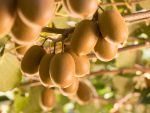
NZKGI Responds to Migrant Worker Exploitation Reports
Where any worker in the kiwifruit industry is mistreated, we expect the authorities to take action.



 increase font size
 Essential horticultural business that cannot practicably meet social distancing requirements must register with MPI by Friday.
The Ministry for Primary Industries (MPI) has responded to questions and concerns from growers surrounding COVID-19.
The questions and concerns were raised by Horticulture New Zealand (HortNZ).
They cover areas such as the definition of horticulture as an essential service, the 2-metre distancing rule, growers and workers who are over 70, and independent fruit and vegetable retailers.
The 2m social distancing rule
HortNZ asked: It is impractical for some grower operations to continue using the 2m rule. It would mean either halving production by taking staff off the packing lines (for crops already in the ground) and it would be impossible for new crops to be planted using machinery required (transplanters) that do not enable people to be 2m apart.
Is PPE able to be used in lieu of the exact 2m spacing, especially in outdoor conditions where there’s fresh air? For packhouse environments, are other conditions able to be applied for closer spacing i.e. 1.5m and PPE with no contact between staff and full wipe downs between staff areas and shifts?
MPI’s response: Each essential horticultural business that cannot practicably meet social distancing requirements (or has more than five people present on any site) must register with MPI and provide extra information about how it will manage COVID-19 risk. A form to register is on the MPI website and must be emailed to MPI by 5pm on Friday 27 March. The business should continue operating in the meantime with the best health precautions possible.
Documentation for movement to/from workplaces
HortNZ asked: Will people need some sort of documentation for movement to/from their places of work? If so, what will they need?
MPI’s response: No. If essential workers are questioned by police/military/civil defence about their movements, they should be prepared to explain their work situation.
However, we have prepared a form for employers to consider using in this situation, to provide them and their staff with peace of mind.
Access to personal protection equipment (PPE)
HortNZ asked: Will the horticulture and other primary industry sectors be prioritised access to PPE?
MPI’s response: No. The priority for PPE access is the health sector and first responders.
Growers and workers over 70
HortNZ asked: Can growers over 70 years of age still work on their orchards/farms? Can individuals over 70 years of age who perform essential services in the horticulture industry continue working?
MPI’s response: Growers over 70 can continue to work but they are strongly advised not to.
Growers’ employees over 70 however are prohibited from working.
Independent fresh fruit and vegetable shops
HortNZ asked: Can individual fresh fruit and vegetable shops remain open? Some of these are operated by growers on site.
MPI’s response: No. All such shops must close. They are also not allowed to do home deliveries. We are talking with the Government and Cabinet about allowing these businesses to operate again, however.
Definition of an essential horticulture service
MPI has endorsed the following interpretation of MBIE/MPI/s definitions related to horticulture as an essential service.
• The production and processing of food and beverage products covers any production practices undertaken by growers that contributes to the growing of fresh fruit, vegetables and berries.
• This is not limited to growers who are directly in harvest at the moment, but also undertaking activities to plant new crops, maintain orchards and farms and harvest.
• The development of new blocks is not considered essential, as these are activities for longer term food production, rather than existing production on orchards and farms. However, each business owner should make their own decision whether the stage of production they are currently in is essential to contribute to the supply of fresh fruit, vegetables and berries to New Zealand.
Registering as an essential horticultural service
While a grower with five or fewer employees (including the grower) does not have to register with MPI, their labour contractor or subcontractor must register if they have more than five employees, as they are separate businesses.
Where any worker in the kiwifruit industry is mistreated, we expect the authorities to take action.

Kiwifruit growers are watchful but remain optimistic as concerns around the potential effects of the El Niño weather pattern this season.
James Blair, an agronomist for AS Wilcox and the Pukekohe regional champion, has won the 2026 Young Grower national title.
Testing confirms H5 bird flu in a single northern giant petrel, found dead on a remote Cape Palliser beach in the Wairarapa, says Dr Mary van Andel, the Ministry for Primary Industries' (MPI) Chief Veterinary Officer.
Claimed to be the first autonomous robot for New Zealand vegetables growers, the first Kilter AX-1 unit has arrived in the country.


Pāmu has released its FY26 Integrated Annual Report, reporting a Net Operating Profit of $113 million, more than double the $49 million recorded in FY25.

Meat Industry Association data, released alongside the Red Meat Sector conference in Wellington, shows export value climbing across the US, China, UK and Canada.
Applications are set to open for the 2027 Zanda McDonald Award, a trans-Tasman award recognised for identifying and fast-tracking talented young leaders in agriculture and agribusiness.
The Royal New Zealand College of General Practitioners (the College) and Hauora Taiwhenua Rural Health Network are calling for investment in a proposed new training pathway for rural GPs, warning that many rural practices are struggling to recruit while a large share of the existing workforce nears retirement.
Federated Farmers has called on Central Otago District Council (CODC) to drop or vote down a plan to truck sludge from Alexandra and Cromwell to farmland near Lauder, warning it would compound an "outrageous" situation created by a separate council's decision weeks earlier.
Synlait has swung to second-half profit as operations stabilise, but the dairy processor still posted a $75.4m annual loss.


OPINION: The same mainstream media muppets that brought you Jacindamania in 2017 have been flat out pimping for the Opportunities…
OPINION: Your old mate reckons the atrocious way farmers in the UK are treated by their lords and masters in…