Cameron Henderson Reappointed Unopposed as DairyNZ Deputy Chair
DairyNZ deputy chair Cameron Henderson has been re-appointed unopposed for another term.
 increase font size
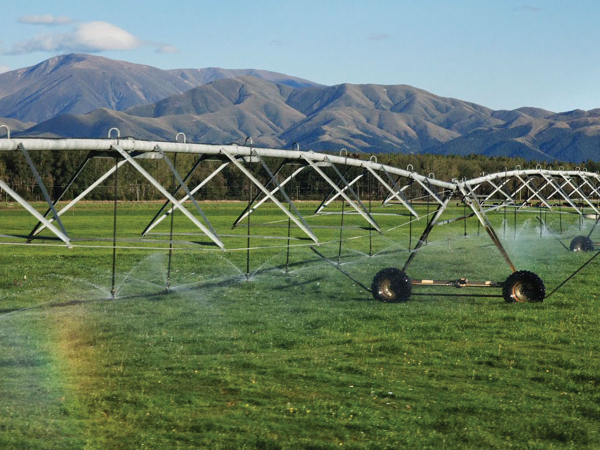 Running irrigation well comprises three main components – management, operation and maintenance.
Increased competition for water means the whole community is looking at how irrigators use water.
Good irrigation not only has benefits for the wider community, but for individual farms too.
This is because pastures grow better, providing more feed which is easier to manage, and fewer breakdowns occur and systems are simpler to operate.
Running irrigation well comprises three main components – management, operation and maintenance.
To irrigate well, you must apply the right amount of water at the right time to get maximum growth from pasture.
Put on too much water and it drains away below the pasture and leaches out some of your expensive nutrients; leave it too late and the plants may stress, which reduces growth rates.
Maintain and manage the irrigation system to minimise wastage and leaks. There is little point in using expensive energy to pump water and then let it go to waste because of leaks in the system. Leaks may reduce the operating pressure so much that the system doesn’t apply water evenly, leading to patchy growth of pasture. Watering tracks and other non-productive areas wastes water.
Four factors influence irrigation needs: soil type, plant type, climate and irrigation system capability.
Soil type
Soil is a natural storage tank, holding water for pasture plants to absorb through their roots. Soils vary greatly in the amount of water they can hold onto.
Clay soils have smaller pores and can hold more water but hold onto the water tighter. Sandy soils have bigger pores and hold less water but make it easier for plant roots to extract the water.
The amount of water a soil can hold is expressed in millimetres of water per metre depth of soil (mm/m) and is called water holding capacity (WHC). It varies from 175-190 mm/m for clay loam to 45-55 mm/m for sand.
Plant type
Pastures receive the majority of the water they require through their roots. Therefore, the depth of the plant’s roots affects the amount of water a plant can uptake.
A shallow rooting plant will have less water available through its root system than a deep-rooted plant.
Annual and perennial pasture has a rooting depth between 0.3-0.8m, compared to lucerne’s 1.2-1.8m. The root zone will also be affected by the plant growth stage, so a seedling will have a smaller root area than an established plant.
Climate
Plants use most of the water they require to keep themselves cool, pumping water from the roots to be transpired by the leaves.
The rate at which they extract water from the soil is based on the evapotranspiration rate (ET). ET rates are affected by climatic conditions such as temperature, wind, humidity and growth stage of the plant.
A hot windy day in the middle of summer will have a high ET rate because the plant needs more water to keep cool.
In spring, soils are generally near field capacity (full of water) and temperatures are still low. There is good potential to save water by delaying the start of irrigation until it is actually needed, i.e. when a soil moisture deficit occurs and temperatures increase. Saving water in the spring, when ET is low (risk to crops is minimal), also means there will be more water left for the peak season.
But care must be taken not to let the soil get too dry, as it may be hard to catch up, especially with irrigators that have a long return period (e.g. when it takes longer than 10 days to return back to a paddock).
Autumn ET rates can decrease rapidly in the autumn. This means irrigation water does not need to be applied as regularly.
Minimising unnecessary irrigation in the autumn also helps minimise cooling of the soil, helping to keep plants growing longer.
Rainfall is the best form of irrigation as it does not cost anything. Where possible, leave enough room in the soil to absorb any rain so it can be utilised to naturally increase soil moisture, saving on irrigation. If soil is fully saturated and it rains, the water has nowhere to go except run-off or drain out the bottom of the soil, so it is not utilised and may take important nutrients along with it.
Not all irrigation systems can apply the same amount of water. The amount of water that can be applied varies depending on the type of irrigation system (border dyke, centre pivot, rotary boom etc). Other influences include:
The overall capability of a system is referred to as system capacity and describes the maximum amount of water able to be applied in a given timeframe (e.g. mm/day, l/s/ha or mm/wk). Because the main aim of irrigation is to keep up with ET rates (plants demand for water), system capacity should try to match ET levels.
As it can be impractical or uneconomic to have an irrigation system which is able to match ET rates at their peak, decisions have to be made on how to manage this limitation. During the season, options may include reducing the area of land irrigated, feeding supplements, or reducing stock numbers.
Long-term options include reviewing the irrigation system and making changes to improve the efficiency of the existing irrigation, increasing irrigators or installing more efficient irrigation types. To improve the reliability of water supply, development of seasonal storage or applying for additional water allocation may be required.
DairyNZ deputy chair Cameron Henderson has been re-appointed unopposed for another term.
Farms across the upper North Island are trialling different pasture mixes as part of a research programme that aims to build greater resilience into farming systems.
Election years are always a concerning time for farmers, according to DairyNZ chair Tracy Brown.
Most dairy regions around the country have had a pretty good season so far says Tracy Brown.


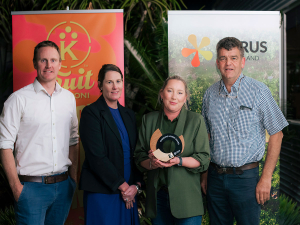
New Zealand's citrus growers were challenged to build their future on the value embedded in their fruit rather than the volume they produce, at Citrus New Zealand's annual gathering in Gisborne on 17 September.
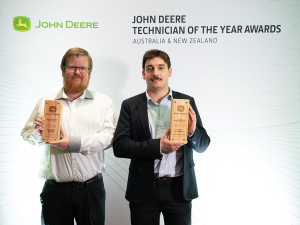
Leading John Deere technicians and apprentices from New Zealand and Australians were recognised at the recent sixth annual JD Technician of the Year Awards, held in Brisbane.
In Dacre, near Invercargill in New Zealand’s South Island, Bruce Dinnington is running a dairy operation unlike any other.
A free online platform aggregating governance vacancies across rural and regional New Zealand has been launched.
Environment Minister Nicola Grigg has announced details of a new rural plastics recycling scheme.
Agricultural drone operators say that a government decision to allow lower-risk drone work without certification won’t lower standards but drive innovation and efficiency.