Why Now Is the Time to Plan Farm Succession, Findex Says
OPINION: Succession and long-term planning are perennial topics because it is perpetually sidelined on busy farms.
 increase font size
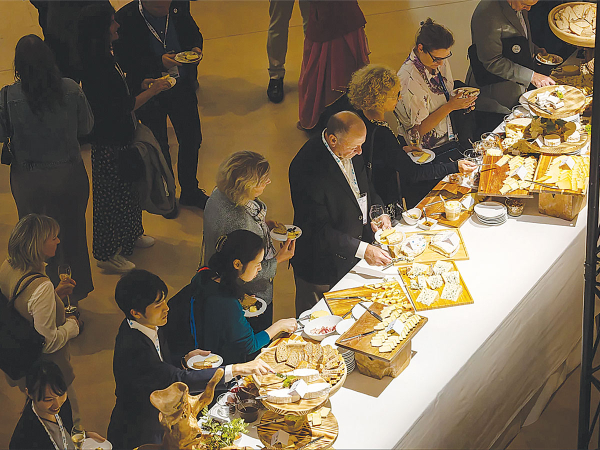 Attendees at the IDF Dairy Summit sample French cheeses in Paris last month.
To Kiwi ears, an international conference that talks about a "just and fair transition" to sustainable dairy sounds like a clarion call for better access to valuable markets. 'Just and fair' means more to the world than opening up borders to big exporters like NZ. Tim Fulton reports.
This year's International Dairy Federation (IDF) world summit in Paris covered innovations, best practice and responses to economic, social, geopolitical and climate crises.
The common denominator was 'carbon footprint'. Jean-Michel Javelle, president of French dairy co-operative, Sodiaal, said no agribusiness company or leader could now imagine building their operations or a strategy without "resilient supply chains".
Nor could they fail to address environmental issues: "financial and non-financial now go hand in hand."
Agriculture was intimately linked to ecosystem health and animal welfare, Javelle said.
Farmers felt climate change as much as anyone, seeing changes in growing seasons or damage from extreme weather, which disrupt cows' rumination and milk production.
Since 2019, Sodiaal had been working with farmers to measure the carbon footprint of their operations. The co-op used telemetrics in its trucks to reduce emissions and had launched more than 500 projects to cut emissions at processing sites. The aim was a 20% reduction in emissions by 2030.
Making change meant modifying herd diets, which represented a significant cost and a potential risk to agricultural yields.
To offset this, Sodiaal had introduced a "transitions platform" raising funds from clients, banks and other partners. "The dual objective is to reduce the environmental footprint while improving working conditions for farmers," Javelle said.
It was clear from IDF that the European Union will continue to 'support' its producers to meet emissions targets. Kiwis call it protectionism. Europeans call it maintaining a vibrant and competitive industry.
Pascal Le Brun, president of French milk producers association, CNIEL, said France was notable for the diversity of its agricultural models. This allowed it to adapt to the specific conditions of each region, from mountainous areas to fertile plains. On average, a French dairy farm had 70 cows and the country was unusual in Europe for relatively small herds over large areas.
Running a "polyculture-livestock model", many French farmers grew multiple crops and animals together at the same time. Le Brun said this model gave farmers greater autonomy in terms of feed, fertiliser and energy - creating good environmental and economic balance. However, French farmers had to be sure it would be effective in the face of climate change, especially water scarcity.
Modernisation of facilities, production and processing tools, particularly through robotization and the use of decision-support tools was essential.
The improvements would not only help address labour shortages but further reduce France's carbon footprint, Le Brun said.
Projections by the United Nations Food and Agriculture Organisatin and the OECD were for annual dairy consumption to rise by 1.4 to 1.8% over the next decade.
The rise would be sharpest outside of Europe, mainly in Africa and Asia, where rising purchasing power and changing dietary habits were growing demand.
OPINION: Succession and long-term planning are perennial topics because it is perpetually sidelined on busy farms.
Farms across the upper North Island are trialling different pasture mixes as part of a research programme that aims to build greater resilience into farming systems.
Election years are always a concerning time for farmers, according to DairyNZ chair Tracy Brown.
Matt Collier, Probiotic Revolution, says calves will drink a lot of milk once-a-day with their probiotic Calf Xtreme.


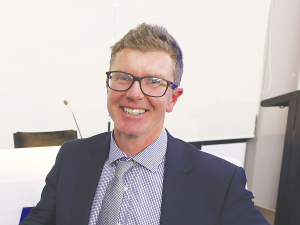
LIC shareholders have elected a new North Island representative to the co-operative's Board, along with five representatives to its Shareholder Reference Group (SRG), following the company's Annual Meeting held in Invercargill.
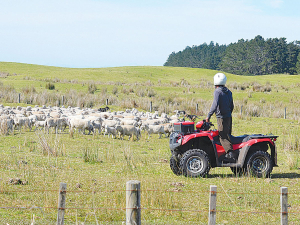
Farmers across parts of Southland and South Otago are continuing to deal with difficult conditions after a prolonged run of wet weather, with pressure building around feed supply, stock management, pasture damage, farm infrastructure and everyday workloads.
Federated Farmers says it welcomes Labour's commitment to reviewing the Sharemilking Agreements Act, calling on other major parties to do the same.
For Canterbury dairy farmers Sian Meijer and Rick Wobben, wearable technology has become one of their most valuable on-farm tools - helping manage 1850 cows across an expansive, high-performing dairy operation while improving efficiency, mating outcomes and day-to-day decision making.
Fonterra has unveiled its annual results for the 2026 financial year, posting $27 billion in revenue and close to $20 billion returned to New Zealand farmer owners and unit holders.
The first major update to the Dairy Cattle Code of Welfare in more than a decade has been released, marking what DairyNZ describes as an important step in ensuring animal welfare standards continue to evolve alongside scientific evidence and on-farm realities.