NZ Ploughing Team to Use Borrowed Gear After Shipping Mix-Up
The New Zealand ploughing team to the world championship in Croatia next month will be banking on borrowed equipment as they seek glory.
 increase font size
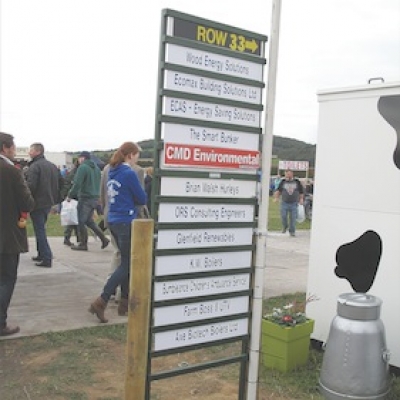 Irish National Ploughing Championships
MASSIVE CROWDS and excellent site facilities distinguished the Irish National Ploughing Championships at Ratheniska, Stradbally, County Laois, 100km NW of Dublin, in September.
The annual event is held at the same site for two successive years, concurrent with the national machinery and equipment field days.
The 2014 ploughing championships was the 83rd such event. Interest in ploughing was high, the Republic of Ireland’s two entrants in the world championships having just returned from competing in France. Eammon Tracey won the conventional world title, after gaining third in the previous year. John Whelan in the reversible section gained third after winning the world championships the previous year.
The Irish competition is huge compared with the New Zealand event. At least 280 ploughmen and women competed in about 20 classes. This includes the Farmerette conventional plough class for women (12 entries), and many women competing in open divisions.
Allied to the ploughing competition, as part of Ireland’s farming festival, is the Irish equivalent of our National Fieldays. But there any comparison ends.
In Ireland’s biggest annual event, the ploughing match, machinery and exhibits combine to promote all that is best in Irish exporting and supplies for agricultural and urban communities.
Total attendance at the three-day event was 279,500 – 82,000 on the first day, 102,000 on day two and 95,500 on the last day. For comparison, last June’s National Fieldays attracted about 120,000 over four days. Exhibitors at the Irish event numbered 1400 – about double the Fieldays.
Getting through the crowd was a challenge, but helped by excellent walkways covered by aluminium panels called Trakway.
“The National Ploughing Association spends upwards of €500,000 (NZ$810000) annually on Trakway,” the managing director/secretary of the Ploughing Association of Ireland, Anna May McHugh, told Rural News. “But it’s essential, allowing all the movement we could ever require for exhibitors, machinery and the public before, during and after the show.”
The Trakway panels are 3 x 2m and some 85,000 have been laid – 5ha of covered ground – ensuring access to all sites is clear and free of mud. “With Ireland’s reputation for wet weather combined with our crowds the area could quickly turn to a disaster,” McHugh said.
Even the bus areas had Trakway covered paths so patrons could arrive and leave in comfort. The panels are removed with special machinery three weeks after the show finishes.
Next year’s event will be held in Country Carlow.
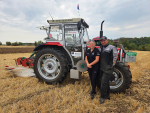
The New Zealand ploughing team to the world championship in Croatia next month will be banking on borrowed equipment as they seek glory.
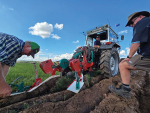
Ploughing champions Mark Dillon and Malcolm Taylor earned the right to represent the country at the World Ploughing Championships in Osijek, Croatia, on 5 and 6 September, after winning their titles at the New Zealand Ploughing Championships in Middlemarch in 2025.
Ireland and NZ have concluded a deal to extend a joint research programme on climate change.
Ireland's Minister of state for Agriculture says it’s hard to explain to Irish farmers the size and scale of NZ farms.
The Irish Minister of State for Rural Communities says his country and New Zealand face very similar challenges on a range of issues related to agriculture, including climate change, biodiversity and rural depopulation.


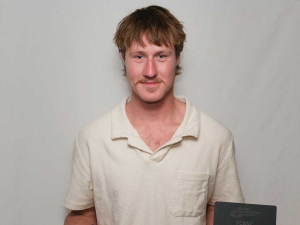
Now in its fourth year, the 2026 Fencing Industry Awards, formed part of the proceedings of the FCANZ Conference, held in Nelson during August.
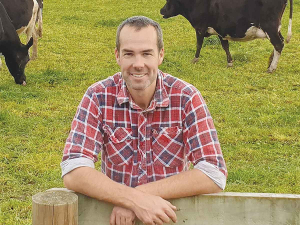
DairyNZ deputy chair Cameron Henderson has been re-appointed unopposed for another term.
OPINION: The stats speak for themselves.
Farms across the upper North Island are trialling different pasture mixes as part of a research programme that aims to build greater resilience into farming systems.
Election years are always a concerning time for farmers, according to DairyNZ chair Tracy Brown.
The Ballance Farm Environment Awards are coming to the West Coast of the South Island.