Before-tax profit for grape growers dropped 42% in the 2012 season due mainly to below-average yields, a Ministry for Primary Industries (MPI) report says.
The ministry has released an analysis of viticulture production and profitability as part of its annual Farm Monitoring Report series.
The report is based on models of a Marlborough and a Hawke's Bay vineyard and an overview of the financial performance of typical vineyards, based on information gathered from a sample of growers and industry stakeholders.
Unfavourable weather in both Marlborough and Hawke's Bay lead to a 20% drop in average yields.
In Hawke's Bay the cool summer and rain at harvest meant growers there struggled to meet contract requirements for quality and ripeness, and prices suffered.
"On the positive side the lower yield helped bring the market more into balance," says MPI's Nelson-based senior policy analyst Nick Dalgety.
The final price that growers expect for the 2012 crop of Marlborough Sauvignon Blanc increased for the first time in four years to $1315 per tonne (from $1190 last year, an increase of 11%).
But overall the before-tax profit dropped 42% to $3230 per hectare, due mainly to below-average yields per hectare.
Hawke's Bay grape growers in particular continue to rely heavily on off-vineyard income.
The outlook for 2013 is positive, with the benchmark model vineyards forecasting an appreciable rise in prices achieved per tonne in both regions.
However, future profitability for individual grape-growing businesses is largely dependent on having desirable grape varieties, a good business structure and a healthy equity.
"Growers believe that changes made to vineyard practices in recent years to reduce costs will be able to be maintained longer term," says Dalgety.
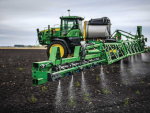
"Examples of such changes include setting up tractors with machinery to carry out several tasks at once and the introduction of mechanised vine strippers at pruning time.
"A more sustainable business return would enable much-needed reinvestment in vineyards, especially to support a rolling maintenance plan to replace old, diseased and less marketable vines."
To view the full report, go to the Publications section of the MPI website, www.mpi.govt.nz
This report is one of a series of Farm Monitoring reports which are being released currently.