Beef + Lamb NZ's Lambing Kit Checklist for a Tough Season
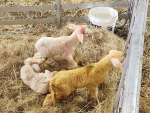
With lambing underway in many regions, Beef + Lamb New Zealand is encouraging farmers to put together a wellequipped lambing kit to help minimise lamb losses, particularly in bad weather.
 increase font size
 B+LNZ Economic Service chief economist Andrew Burtt.
Sheep and beef farm input prices rose at a very slow pace in the year to March 2020.
On-farm inflation was 0.4%, according to the latest Beef + Lamb New Zealand (B+LNZ) Economic Service Sheep and Beef On-Farm Inflation Report.
The report identifies annual changes in the prices of goods and services purchased by New Zealand sheep and beef farms. The overall on-farm inflation rate is determined by weighting the changes in prices for individual input categories by their proportion of total farm expenditure.
B+LNZ Economic Service chief economist Andrew Burtt says large falls in interest rates held on-farm inflation at a low 0.4%.
“Of the 16 input categories, prices increased for 12 and decreased for four – fertiliser, lime and seeds; fuel; electricity; and interest – though the decreases were insignificant except for interest, which decreased by 7.2%,” says Burtt.
The most significant price increases were for insurance (+5.0%); repairs, maintenance and vehicles (+4.2%); rates (+3.7%); and animal health (+3.7%). On average these input categories account for 22% in total of farm expenditure.
“Even excluding interest, on-farm inflation was 1.5% – meaning it was already lower than the 2018-19 season, which may have given farmers a small reprieve,” says Burtt.
“Low interest rates continue to be important because not only does interest expenditure account for 14% of total farm expenditure, it is the only expense that has significantly decreased for farmers in recent years.”
The report covers the price of goods and services, not how much farmers spend on those goods and services.
As an example, individual farmers could have higher total interest expenditure due to higher debt levels, but on average will be paying less interest per dollar of debt.
Also, because the report covers the year to March 2020 the prices identified would not have been affected by COVID-19 and Burtt says it’s too early to know what impact the pandemic will have on on-farm inflation figures.
The full report is available here.
With lambing underway in many regions, Beef + Lamb New Zealand is encouraging farmers to put together a wellequipped lambing kit to help minimise lamb losses, particularly in bad weather.
Chinese beef trade quotas and a looming suspension of Brazilian beef imports into the European Union are expected to reshape global beef trade flows over the remainder of 2026, with implications for New Zealand exporters, according to Rabobank's Q3 Global Beef Quarterly report.
Will a stronger, more coordinated voice help rebuild confidence and improve returns in the wool sector?
Bovine Viral Diarrhoea (BVD) is sometimes viewed as a dairy industry issue, but the reality is that the disease can have serious consequences for beef breeding herds as well.
It’s official, lamb will take centre stage on Kiwi Christmas tables this year.



Three men have been sentenced in District Courts after Ministry for Primary Industries prosecutions over animal welfare, food safety and cattle tracing offences.
Fonterra’s 2026 financial year was a year of delivery, with record volumes of milk collected, processed and shipped by the co-op.
OPINION: The Government's decision to reinstate agriculture and horticultural science as a standalone subject from Year 11 is the right one.
Dairy farmers, still holding onto their Fonterra shares despite switching milk supply elsewhere or exiting the industry, now face a stricter share sell-down requirement.
Hamilton-based agritech company Aimer Farming has completed a $3 million capital raise to support its next stage of growth, including a beef farming product due to launch in 2027.
When dairy manager Miriam Lauridsen learned the farm, she was joining held weekly health and safety meetings, she initially thought that was “a bit over the top”. Experiencing that culture changed her mind.