New Rural Recycling Scheme to Replace Voluntary Farm Plastics Programmes by 2027
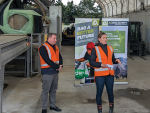
Environment Minister Nicola Grigg has announced details of a new rural plastics recycling scheme.
 increase font size
 Thomas Chin, general manager of the New Zealand Plant Breeders Association.
A proposed recycling levy on commonly used polyethylene woven seed sacks and bags is likely to come into effect next year.
Meanwhile, the seed industry continues to investigate sustainable packaging options. Under an amendment to the Waste Minimisation Act, manufacturers who sell agricultural products with plastic packaging, including polypropylene (PPE) seed sacks and bags, will be required to pay a fee to an accredited organisation to collect and recycle farm plastic packaging.
General manager of the New Zealand Plant Breeders Research Association Thomas Chin says the association is committed to sustainability and industry best practices to achieving official waste minimisation obligations. He says the Government's proposed farm plastic waste levy will have significant ramifications for users of polypropylene seed sacks and bags.
"Our understanding is that by the middle of next year there will be a mandatory regime in place for the recycling and recovery of plastic seed sacks and bags, with a compulsory levee charged to the importer or brand owner of the bags."
Imminent requirements include companies importing, manufacturing and supplying bags to pay a levy on small seed sacks and bulk bags used domestically. The levy would be paid at the border or first point of handling into New Zealand to ensure 100% capture and pay for the colletion and recycling. Most if not all of New Zealand's plastic bags are manufactured abroad and imported into the country.
Chin says that for several years the New Zealand seed industry has been evaluating sustainable bag options such as multi-wall paper bags which are widely used internationally.
He says there are some physical challenges, such as robustness and moisture barrier properties, which are especially important for the storage of endophytic seeds.
Environment Minister Nicola Grigg has announced details of a new rural plastics recycling scheme.

New waste management rules in Marlborough will add impetus to recycling efforts by the wine industry, says Circular Wine Group member Jim White.
After five years giving a new lease of life to vineyard posts, Marlborough-based company Repost is getting its own upcycle, in a joint venture with timber manufacturer OneForty One, which mills micronised copper azoleated (MCA) posts at its Kaituna Mill.
Having already hit the headlines for recycling broken 2.4 metre vineyard posts into 1.8 and 1.6 metre, half and quarter posts for agriculture, Repost recently hit the milestone of one million posts recycled, diverting the CCA treated posts from landfill.
Farm plastic recycler, Agrecovery’s Green-farms Product Stewardship Scheme (GPSS) has been officially accredited under the Waste Minimisation Act (2008).



Ravensdown shareholders have elected Jane Montgomery and Kate Acland to the Ravensdown Board for three-year terms, following a closely contested director election.

Federated Farmers says new legislation replacing the Resource Management Act will cut red tape, unlock investment and help grow New Zealand's export-led economy, after the Planning Bill and Natural Environment Bill passed their third reading in Parliament yesterday.
Leading figures from the major political parties will be questioned on their primary sector policies at the Rural Issues Debate at Mystery Creek Events Centre, Hamilton, on 30 September.
OPINION: Have a plan in place now!
Beef + Lamb New Zealand (B+LNZ) says it welcomes the passage of the Natural Environment Bill and Planning Bill, calling the bills a positive step for sheep and beef farmers.
A spate of southerly winds bringing cold temperatures has presented challenges for Taranaki dairy farmers.