New wool products seek markets
A new initiative targeting new products and markets for NZ strong wool - with export applications as diverse as cosmetics and printing - has recently been launched.
 increase font size
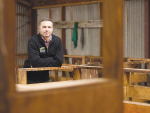
 WRONZ chairman Derrick Millton.
Lack of demand and animal activism are having a negative impact on NZ’s wool industry, says the Wool Research Organisation of New Zealand (WRONZ).
“The NZ wool industry is traditionally a significant contributor to the country’s economy,” WRONZ chairman Derrick Millton says. “However, the latest quarterly forecast from MPI showed wool exports fell 28% to $550m to the year through June, as a lack of demand from China weighed on prices.”
He says this decline – combined with PETA’s recent anti-wool campaign highlights challenges the industry faces.
“It shows how essential it is we continue to promote the value of wool as a natural 21st century fibre, and the high animal welfare standards in NZ that protect our sheep and other animals,” Millton adds.
“R&D is vital to the future of the wool industry in NZ. WRONZ is committed to developing innovative solutions that showcase the intrinsic natural properties of wool, find new and novel uses for it, and enhance fibre, fabric and product performance.”
Meanwhile, NZ wool is following the coffee, honey and wine industries in funding research for a test that determines traceability.
A test that can confirm the authenticity and origin of wool is among $3m of research funded by WRONZ to protect, enhance and grow the industry.
Using concepts already commercially proven in other agriculturally based industries, traceability of wool can now be determined by measuring stable isotopes.
The distinctions between conditions in which the fibre is grown are ‘hard wired’ into the chemical nature of the fibre. Temperature, altitude, rainfall levels, soil and air purity combine to generate unique reproducible levels of stable isotopes in the fibre.
Millton says the ability to verify the source of a product is increasingly important to consumers, and tests have already been widely adopted by the coffee, honey and wine industries.
“It’s a step forward for the NZ wool industry that we can now do the same. The test will provide NZ wool users with a tool to protect their marketing initiatives in the future.”
A new initiative targeting new products and markets for NZ strong wool - with export applications as diverse as cosmetics and printing - has recently been launched.

The wool industry might now be in a slightly better situation today had it voted for a levy in 2014, says Blenheim farmer Derrick Millton.
A combination of factors have given wool cheques a lift and helped to balance sheep farmers' incomes, says Kaikoura wool producer and industry representative Derrick Millton.
'New Uses for Wool' will be the focus of a seven-year wool research consortium
THE WOOL Research Organisation of New Zealand (WRONZ) is exploring whether it can pick up some industry-good activities proposed under the defeated wool levy.

The chair of the country's environmental regulator, the Environmental Protection Authority (EPA), says changes are already under way to improve the performance of the agency to better meet the needs of those who interface with them.

Alliance Group's $16 million programme to install innovative heat pump systems at its Otago and Southland processing plants wins a New Zealand Energy Excellence Award after cutting annual emissions by more than 24,000 tonnes of CO₂e.
The arable sector losing good people and land is a major concern for the 2026 Arable Farmers of the Year, Mid Canterbury seed growers John and Mel McCaw.
The terrible floods that hit the Wairarapa may have subsided, but the danger to farmers still exists, according to local Federated Farmers president Rob Hickson.
New Zealand's Emissions Trading Scheme (NZ ETS) encourages afforestation while not achieving climate goals, says a new report released by the Parliamentary Commissioner for the Environment, Simon Upton.
Are you ready for El Nino? That’s the question asked by Beef+Lamb NZ’s Ian Tarbotton who leads B+LNZ’s farm extension service.