Record Kiwifruit Harvest Brings Optimism, but Green Growers Face Profitability Challenges
Signs for the 2026-27 kiwifruit crop look good, but there are still some challenges for growers – especially those who produce green kiwifruit.
 increase font size

LOSSES TO the kiwifruit industry from Psa-V will be much greater than the predicted $500 million over five years, says grower representative Neil Trebilco.
The replacement gold crop G3 and the existing Green Hayward crops are being hit by Psa more than hoped, says Trebilco, who is president of New Zealand Kiwifruit Growers Inc (NZKGI).
Poor weather has also hampered the Psa recovery pathway, in which growers are replacing the highly susceptible Gold crop Hort16 with new varieties, in particular G3.
But Trebilco says the industry will have a clearer picture in December and he believes some more proactive growers will come through with G3.
“Late and severe spring frost has caused damage to developing canopies and to new grafts,” says Trebilco. “In combination with this, Psa is impacting both the new Gold3 variety and the existing Hayward variety more than we had hoped.”
Areas with harsher weather have been harder hit. “For instance we have seen a greater progression of Psa in areas such as Waihi than we had hoped, probably because it’s colder there.”
The virulent form of Psa is now affecting 58% of New Zealand’s orchards and Hawke’s Bay is the latest area to be hit. A Lincoln University agribusiness study earlier this year predicted $500 million revenue losses to the kiwifruit industry over five years.
“I think the cost could be substantially higher than that,” Trebilco says. “But we will be thinking more about that in December when we see how Hayward and G3 survive through pollination which is happening in the next few weeks. Once the crop has been set we will know more about how the crop looks and the impact of Psa on vines.”
But Trebilco believes some growers will succeed with G3. Some growers thought they would grow G3 and Hayward without a protective spray programme, he believes. “Growers must be more proactive than they thought they would have to be,” he says. “While Gold3 and Hayward are substantially more tolerant [of Psa] than the Hort 16a variety, a comprehensive spray programme is still needed.” But Trebilco says wind is hampering his own efforts to maintain a two-weekly spray cycle on his own orchard. Hayward was previously seen to be highly resistant to Psa so growers are “rightly concerned” about the spread of Psa in the Hayward crop, particularly in the male vines. But Trebilco says he knows of a Hayward orchard that has been infected since Psa was first discovered, but will set a good crop this year.
“It’s not universal; it does depend on where the orchard it is, how cold it is, whether it is stressed because of high water table – because we have so much rain that stresses the vine. You have to get everything right for Hayward and G3 to do well.” Some growers would find it difficult to afford sprays, particularly as Hayward has a smaller profit margin than Gold.
In Hawke’s Bay, Psa has only been found on one orchard so far but that was a major disappointment to growers there. “We had hoped because of the geographical distance from Bay of Plenty that they would be able to be Psa free for quite a bit longer yet.
“From an industry point of view the less it spreads the better because it has such an impact. This whole thing is very stressful for growers.”
Signs for the 2026-27 kiwifruit crop look good, but there are still some challenges for growers – especially those who produce green kiwifruit.
Westpac NZ has become the first New Zealand bank to receive approval from the Reserve Bank of New Zealand (RBNZ) to secure and leverage kiwifruit growers' Zespri shares.
New Zealand's kiwifruit industry has welcomed Government co-investment in a new five-year programme designed to help growers produce higher yields of premium fruit, with less water, fewer nutrients and reduced environmental impact.
Zespri has unveiled Grown for Good, a refreshed global brand platform, in an effort to reinforce the company's commitment to nutrition and creating value across the kiwifruit industry.
Despite the ongoing bad news on the geopolitical front, New Zealand kiwifruit growers may be in for a good payout.
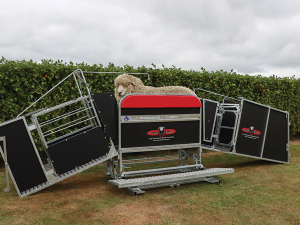
Oamaru-based livestock handling specialist Te Pari has bought Combi Clamp, the New Zealand manufacturer of Combi Clamp manual sheep handlers.

Agriculture Minister Todd McClay has admitted that a scheme bringing workers from Pacific nations to work on orchards has become too hard to navigate but says changes are coming.
A new app designed in New Zealand aims to help sheep, beef and deer farmers capture, analyse and use body condition score data more effectively.
Canterbury farmer Andy Macfarlane has been appointed to the board of AgriZeroNZ, the public-private partnership designed to accelerate the development and deployment of emissions reduction tools for New Zealand farmers.
For over 50 years Mel Ewers has been supporting the apple sector navigate through compliance and quality assurance issues.
The apple sector is enjoying a bumper harvest season.