McRae Wins Southern South Island B+LNZ Director Vote
Matt McRae, a farmer from Mokoreta in Southland who runs a sheep, beef and dairy support business alongside a sheep stud, has been elected to the Beef +Lamb NZ Board as a farmer director.
 increase font size
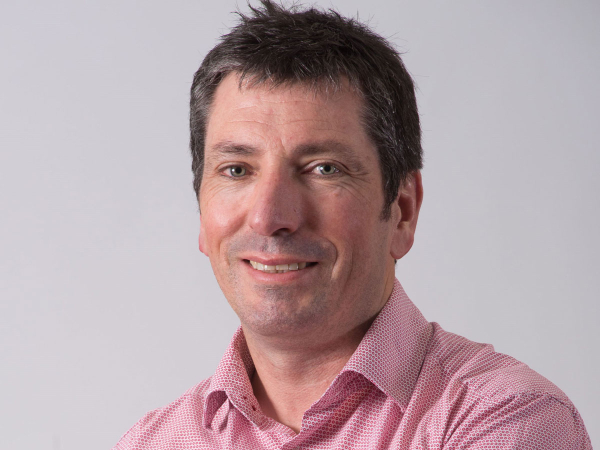 Beef+Lamb NZ chief executive Sam McIvor says the sheep and beef sector is in the midst of a challenging time.
The incoming government needs to take a pragmatic and practical approach to dealing with a raft of issues affecting sheep and beef farmers.
So says Beef + Lamb NZ chief executive Sam McIvor who is calling on the new government to produce a really good roadmap of its plans on a whole range of issues, including regulation, environmental matters, climate change, water, research and development.
McIvor says one of the big criticisms of the previous government was its uncoordinated silo-type approach, which was very confusing for farmers. He told Rural News that its new laws and regulations did not come out in a proper sequence and a more integrated approach will lead to better outcomes.
McIvor says the sheep and beef sector is in the midst of a very challenging time - especially in regard to the sheepmeat market.
"It's a combination of the economic situation in China and Australia liquidating its sheep flock, which has led to stockpiles of sheepmeat and an imbalance of supply and demand."
McIvor says the beef situation is better, with growing demand and higher prices for this product, especially in the United States. He adds that on the home front, it was expected that on-farm inflation would ease this year, but it hasn't and nor have interest rates.
He says a real worry is the regulatory costs and regional and district plans that are being rolled out to comply with the National Policy Statement (NPS). McIvor says it's an understatement to describe what some of the changes councils are putting forward as 'aspirational'.
"Some of these plans are threatening the economic viability of our regions. It appears that some of the regional councils haven't really considered the economic and social consequences of what they are doing and the pain they are inflicting on some farmers."
These plans are supposed to be completed by the end of 2024, but McIvor wants the incoming government to put a stop on these untile there is real clarity around the bottom lines of the NPS. He believes that the targets being demanded by some councils overstep the mark and what is wanted is a more long-term strategic approach, which will take time.
"The objective should be to support farmers to change, rather than continuing to beat them with a stick all the time. Farmers are being squeezed from the top, the bottom and the side."
McIvor points out that farmers are not arguing about the direction of travel on environmental matters, but they want support and pragmatic and practical solutions.
Other Issues
Also, on B+LNZ's wish list for the incoming government is a focus on opening up new markets.
This includes scoring new FTAs, with McIvor saying NZ's red meat sector currently faces more than $1 billion in non-tariff trade barriers.
McIvor would also like to see a review of the climate change targets to ensure these are science based and equitable for the primary sector. He believes the new government should focus on providing tools to help farmers achieve climate change goals rather than setting arbitrary targets. B+LNZ is also concerned about the country not having a clearly defined R&D strategy. McIvor says NZ should be looking at new opportunities for innovation with a focus on engaging globally to achieve this.
Matt McRae, a farmer from Mokoreta in Southland who runs a sheep, beef and dairy support business alongside a sheep stud, has been elected to the Beef +Lamb NZ Board as a farmer director.

Ospri is reducing TB testing frequencies and movement control measures as the disease risk subsidies in parts of the country.
Southland farmer and director Tony Cleland has been named OSPRI New Zealand’s new chair.
The red meat sector is poised for a strong rebound this season, with export receipts forecast to top $10 billion and farm profitability to almost double.
Progeny testing at Pāmu’s Kepler farm in Southland as part of Beef + Lamb New Zealand’s Informing New Zealand Beef programme is showing that the benefits of hybrid vigour could have a massive impact on the future of beef breeding.


Now in its fourth year, the 2026 Fencing Industry Awards, formed part of the proceedings of the FCANZ Conference, held in Nelson during August.
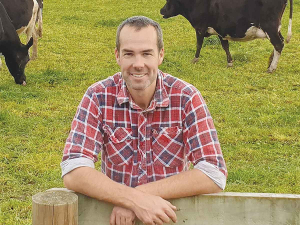
DairyNZ deputy chair Cameron Henderson has been re-appointed unopposed for another term.
OPINION: The stats speak for themselves.
Farms across the upper North Island are trialling different pasture mixes as part of a research programme that aims to build greater resilience into farming systems.
Election years are always a concerning time for farmers, according to DairyNZ chair Tracy Brown.
The Ballance Farm Environment Awards are coming to the West Coast of the South Island.