McRae Wins Southern South Island B+LNZ Director Vote
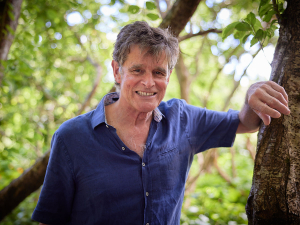
Matt McRae, a farmer from Mokoreta in Southland who runs a sheep, beef and dairy support business alongside a sheep stud, has been elected to the Beef +Lamb NZ Board as a farmer director.
 increase font size

BEEF + LAMB New Zealand's call for sheep-and-beef farmers to fence waterways where practical is supported "in principle" by Federated Farmers president Bruce Wills.
He told Rural News Feds has said the same thing for a long time but the problem lies in implementation.
Wills was at BLNZ's annual meeting last month in Hawke's Bay when Petersen came out strongly on environmental issues saying a delineation between dairying and sheep-and-beef no longer exists.
Petersen says intensive sheep-and-beef farmers on classes of land similar to dairy need to be proactive and start fencing their waterways, while acknowledging such a proposal on steep hill country would be "impractical".
While Wills clearly sees merit in Petersen's call for action, he repeatedly tiptoed around the issue when talking to Rural News, probably because some Feds' members would be less than happy or not fully up with the play on environmental issues.
The federation is doing a lot of work on water issues and is participating fully in the work of the Land and Water Forum (LAWF), Wills points out.
Sheep-and-beef farmers are also now carrying drystock for dairy farmers, and the "conversation" is broadening to protect waterways as best farmers can.
"But it's a difficult one with drystock properties. There are lots of different options and we are having regular discussions within Federated Farmers on how we can set some sensible parameters to do the right thing with water."
Like Petersen, Wills says the idea of fencing streams in the steep hill country is not practical and even if it was it would be massively expensive. Options include alternative water sources and shade provision to stop cattle resting in streams to keep cool. He concedes they must look at the issue "a little more vigorously."
Petersen had no qualms about fronting the issue. He concedes BLNZ cannot dictate what farmers should do, but at the annual meeting clearly warned what the future might hold.
"The risk is that we will be regulated. LAWF is delivering its report shortly to the Cabinet and I'm sure there will be increased scrutiny of the sheep-and-beef sector as a result of that piece of work."
Petersen also referred his audience to the recently released Parliamentary Commissioner for the Environment (PEC) report on the science relating to water quality, noting the point about sediment being one of the main pollutants of rivers, something he says sheep-and-beef farmers can do something about.
"The key thing for me is that farmers have got to map their resources first and determine what action they need to take, [then] they may find the amount of work to be done is relatively small."
Matt McRae, a farmer from Mokoreta in Southland who runs a sheep, beef and dairy support business alongside a sheep stud, has been elected to the Beef +Lamb NZ Board as a farmer director.
The red meat sector is poised for a strong rebound this season, with export receipts forecast to top $10 billion and farm profitability to almost double.
Progeny testing at Pāmu’s Kepler farm in Southland as part of Beef + Lamb New Zealand’s Informing New Zealand Beef programme is showing that the benefits of hybrid vigour could have a massive impact on the future of beef breeding.
Beef + Lamb New Zealand (B+LNZ) has reiterated calls for New Zealand to revise its methane targets after the Government's "disappointing" announcement of its revised Nationally Determined Contribution (NDC).
Beef + Lamb New Zealand (B+LNZ) is having another crack at increasing the fees of its chair and board members.


Āta Regenerative is bringing international expertise to New Zealand to help farmers respond to growing soil and water challenges, as environmental monitoring identifies declining ecosystem function and reduced water-holding capacity across farms.
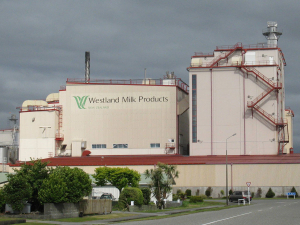
Yili's New Zealand businesses have reported record profits following a major organisational and strategic transformation.
Owners and lessees of certain Hino Trucks New Zealand diesel vehicles have just 10 days remaining to register or opt out of a proposed $10.9 million class action settlement.
Silver Fern Farms has successfully produced and delivered 90 tonnes of premium chilled New Zealand lamb and beef to the United Arab Emirates via airfreight.
For the first three months of 2026, new tractor deliveries saw an increase over the previous two months, resulting in year-to-date deliveries climbing to 649 units - around 5% ahead of the same period in 2025.
QU Dongyu, director-general of the Food and Agriculture Organization of the United Nations (FAO), has issued a warning saying that global fertiliser scarcity caused by disruptions in the Strait of Hormuz will lead to lower yields and tightening food supplies into 2027.