Rural Contractors Urged to Renegotiate Contracts as Fuel Prices Surge
Rural contractors are getting guidance on how to deal with recent rising fuel prices.
 increase font size
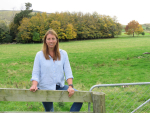
 New RCNZ president Helen Slattery has her pulse taken at the organisation's recent annual conference.
A change of the guard has taken place at Rural Contractors NZ as challenges mount for the sector.
A new president, vice-president and chief executive are all now in place, following the conclusion of the organisation's annual conference, late last month.
Waikato contractor Helen Slattery replaced former president Southland's David Kean after his 12 years on the RCNZ board. Wairarapa spray contractor Clinton Carroll became vice-president at the Rotorua conference. Meanwhile, Andrew Olsen recently joined RCNZ as its first full-time chief executive, with the retirement of the long-serving Roger Parton.
Slattery says the conference reinforced the intense challenges rural contractors are facing, as well as identifying new opportunities.
She says some of the stresses rural contractors are enduring are largely due to the ongoing shortage of skilled staff, particularly experienced machinery operators.
"We all work hard in the season, but these shortages are pushing some contractors to breaking point."
Economist Tony Alexander told the conference of increasing labour shortages and competition for talent.
"His advice was for rural contractors to focus on their businesses and really consider their capacity to service customers, review pricing and how to train and retain good workers," Olsen says.
This may include factoring in that pricing of farm machinery and wrap film that will rise next year by as much as 20%-plus in some cases.
Olsen says rural contractors also heard that farmers are increasingly less interested in applying their own chemicals, opening up new customer opportunities for spray operators.
Meanwhile, Slattery believes the key issue for rural contractors is the minimal allowance for 125 skilled machinery operators to come in for the next season, when a survey of rural contractors showed 400 or more were needed to keep up with farmer demand.
"We accept that as a quid pro quo, we have to continue lifting our efforts to train more Kiwis," she says.
However, Slattery points out that while these trainees emerge with tractor-driving skills, it takes a lot longer to get them to the point they can operate complex machinery.
Olsen says he will be pushing the Government for more experienced machinery operators to be allowed in from overseas.
"Or we face crops left in the ground, jobs and export dollars being lost as well as increasing health and safety risks and stresses for farmers, contractors and their staff."
He says he will also be asking for an exemption to the "unfair tax" contractors face when they need to replace their ute.
"Sure, we heard at conference of the recent launch of the electric Ford Lightning, which saw 44,500 pre-sales in two days in North America," he adds. "But it'll be years before we get them here."
Rural contractors are getting guidance on how to deal with recent rising fuel prices.

Rural contractors will be able to play a role in the revamped agricultural plastic recycling scheme with new regulations due for Cabinet signoff before this year’s election.
Rural Contractors NZ says members are frustrated at having to work through more layers to get visas approved for skilled seasonal machinery operators ahead of the imminent season start. Andrew Olsen comments.
Rural contractors deserve to be listened to on safety issues created by new roading developments which don’t allow motorists to pass slow-moving vehicles, says Associate Agriculture Minister Andrew Hoggard.
When the new National-led government is finally formed there will be a long list waiting for it to action from the primary industries sector.


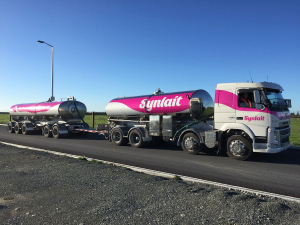
Synlait has swung to second-half profit as operations stabilise, but the dairy processor still posted a $75.4m annual loss.

LIC shareholders have elected a new North Island representative to the co-operative's Board, along with five representatives to its Shareholder Reference Group (SRG), following the company's Annual Meeting held in Invercargill.
Farmers across parts of Southland and South Otago are continuing to deal with difficult conditions after a prolonged run of wet weather, with pressure building around feed supply, stock management, pasture damage, farm infrastructure and everyday workloads.
Federated Farmers says it welcomes Labour's commitment to reviewing the Sharemilking Agreements Act, calling on other major parties to do the same.
For Canterbury dairy farmers Sian Meijer and Rick Wobben, wearable technology has become one of their most valuable on-farm tools - helping manage 1850 cows across an expansive, high-performing dairy operation while improving efficiency, mating outcomes and day-to-day decision making.
Fonterra has unveiled its annual results for the 2026 financial year, posting $27 billion in revenue and close to $20 billion returned to New Zealand farmer owners and unit holders.