Ospri Urges Farmers To Prepare NAIT Records Before Moving Day
Moving Day (June 1) is just around the corner and farmers who are moving farms with the herd are being urged by Ospri to start preparations now.
 increase font size
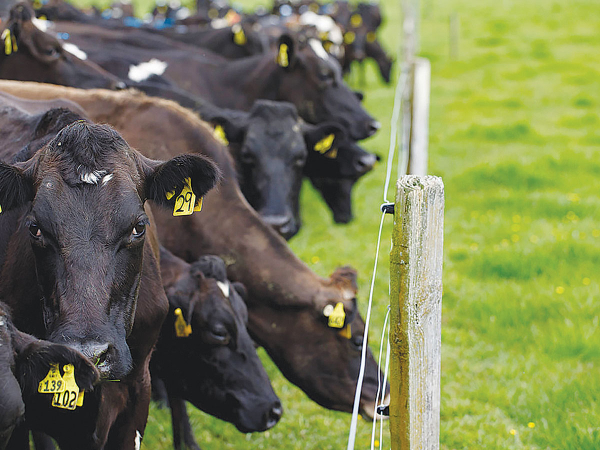 Being in a movement control area means all cattle and deer over three months old must be TB tested within 60 days of being moved.
From 1 October, new livestock movement restrictions will be introduced in parts of Central Otago dealing with infected possums spreading bovine TB to livestock.
The new 'movement control area' covers Tarras, Lindis Valley, the upper Manuherekia and the top end of Ida Valley.
OSPRI has sent advice on the new movement to all farms and lifestyle blocks with deer or cattle in the affected area, approximately 110 properties.
Being in a movement control area means all cattle and deer over three months old must be TB tested within 60 days of being moved.
Only animals going directly to slaughter do not require a test.
Vanessa Hore, Otago's OSPRI farmer committee chair, says she encourages all farmer to take the time to read the information provided and understand the risks.
"I know some farmers will find it challenging operating their businesses under these conditions, but most of us are familiar with farming in a Movement Control Area," she says.
"There is nothing simple about fighting bovine TB, and the possums that carry it; so we have to do what we have to do," she adds.
"Restricting movement of animals in this area is a precautionary measure, we need to limit the potential opportunities for the disease to spread to other areas."
There are 15 herds infected with bovine TB in New Zealand, a third of these are in the Otago region, where the disease is known to be circulating in wildlife.
Moving Day (June 1) is just around the corner and farmers who are moving farms with the herd are being urged by Ospri to start preparations now.

Ospri is reducing TB testing frequencies and movement control measures as the disease risk subsidies in parts of the country.
The move to bring bovine TB testing in-house at Ospri officially started this month, as a team of 37 skilled and experienced technicians begin work with the disease eradication agency.
OSPRI will carry out on-farm TB testing, following AsureQuality's decision not to renew their contract.
OPINION: About as productive as a politician's taxpayer-funded trip to Hawaii, as cost-effective as an OSPRI IT project, and as smart as the power-company pylon worker, the Hound gives you the NZ Post business strategy:



Fonterra has revised its Farmgate Milk Price forecast for the 2026/27 season, lifting the midpoint and narrowing the range on the back of improving global dairy commodity prices.
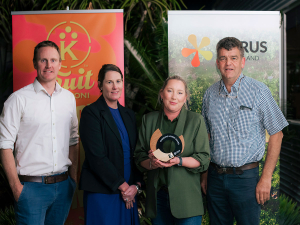
New Zealand's citrus growers were challenged to build their future on the value embedded in their fruit rather than the volume they produce, at Citrus New Zealand's annual gathering in Gisborne on 17 September.
Leading John Deere technicians and apprentices from New Zealand and Australians were recognised at the recent sixth annual JD Technician of the Year Awards, held in Brisbane.
In Dacre, near Invercargill in New Zealand’s South Island, Bruce Dinnington is running a dairy operation unlike any other.
A free online platform aggregating governance vacancies across rural and regional New Zealand has been launched.
Environment Minister Nicola Grigg has announced details of a new rural plastics recycling scheme.