Climate-friendly cows closer
Dairy farmers are one step closer to breeding cow with lower methane emissions, offering an innovative way to reduce the nation's agricultural carbon footprint without compromising farm productivity.
 increase font size
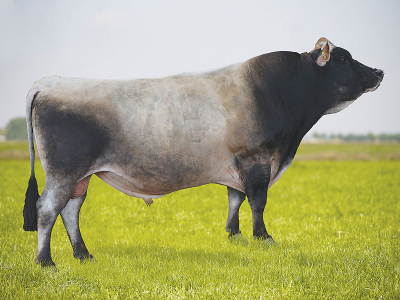 CRV has marketed Connacht in its InSire team for a couple of years now.
Herd improvement company CRV Ambreed claims its 2019 bulls offer farmers great options.
Breeding programme manager Aaron Parker says the bulls include daughter-proven and young genomic InSire bulls.
“We’re a future focused company, always planning at least five years ahead,” Parker says.
“We made a long-term commitment to breed sires that would produce healthy and efficient daughters. Our efforts have truly paid off and dairy farmers will ultimately reap the benefits by having better genetics to breed better cows.”
Product manager Peter van Elzakker stresses that sustainable dairy farming cannot be achieved by index alone, and says more farmers are looking for genetic solutions to meet the current and future demands they face in the environment, herd efficiency and animal welfare.
He recommends farmers look more broadly than production figures and choose the right genetics to achieve their overall breeding goals.
“Facial eczema tolerance, for instance, is extremely important for animal welfare, and reducing urinary nitrogren levels via LowN Sires is a great option to use for increasing environmental sustainability,” he said.
Parker points out that this year’s graduate bulls and the 2019 bulls overall have surpassed CRV’s expectations.
“Our selection process is extremely rigorous. Each year we usually choose the best 10 to 12 bulls from a pool of about 120 bulls that have come to the end of the four-year breeding programme and have herd testing and TOP information,” he says.
Parker says breeding for improved health and efficiency works.
“Analysis of herd records shows that a sire with an excellence rating (5% or more) on the Better Life Health index will have progeny with lower somatic cell count and higher conception rates. If they have an excellence rating on the Better Life Efficiency index, they will have progeny producing more milk solids and lasting longer in the herd,” he said.
Dairy farmers are one step closer to breeding cow with lower methane emissions, offering an innovative way to reduce the nation's agricultural carbon footprint without compromising farm productivity.
CRV has produced the first homozygous polled bull to make New Zealand’s prestigious Ranking of Active Sires (RAS) list, demonstrating the strides the company is making in breeding top-quality polled bulls.
As Mycoplasma bovis (M. bovis) resurfaces in Canterbury, CRV is reassuring dairy farmers it has rigorous production processes and health testing programmes in place within its supply chain.
A Canterbury Hereford stud specialising in providing beef genetics for the dairy industry is claiming a major breakthrough in breeding for more environmentally friendly animals, with reduced urinary nitrogen emissions.
Some dairy farmers could be missing out on up to 160 kgMS of production because they are not herd testing.


Farmgate lamb prices are down by 8%, beef cattle by 4.5% and farm expenditure up by 4.2%.
Kiwifruit growers are watchful but remain optimistic as concerns around the potential effects of the El Niño weather pattern this season.
Almond hulls sourced from Australian orchards may have the potential to help New Zealand cows reduce emissions, boost milk yield and lower input costs.
Striking a balance between meeting the needs of industry to speed up approval time for products but on the other hand ensuring that risks are properly assessed.
Surprised, humbled and quite thrilled. That’s the reaction of James Allen, one of the founding partners and now chief executive of AgFirst, on being made a life member of the Institute of Rural Professionals.