El Niño Spring Outlook: What to Expect in Five NZ Regions
El Niño has officially been with us for several weeks now, and late winter and early September have given us a taste of what is to come.



 increase font size
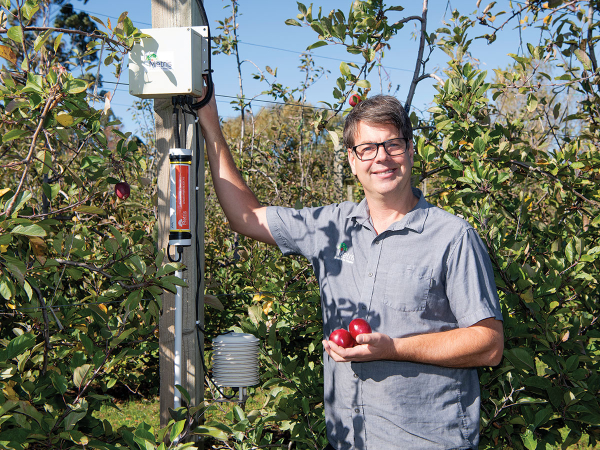 Dr Mark Bart from Metris is giving weather briefings to fruit growers around the country over the next month.
Havelock North Event Centre was a full house for thee Metris annual weather outlook grower breakfast this month.
The question on most minds was 'what sort of El Niño should we expect?'
This growing season is shaping up to be one where preparation will matter just as much as the weather itself. While climate models indicate a strong El Niño pattern, this is unlikely to be a repeat of the classic dry El Niño 1980s and 1990s events of the past. Instead, record global ocean temperatures are adding a new layer of complexity, increasing the amount of moisture available in the atmosphere and creating the potential for heavier rainfall events when weather systems arrive.
There is good news to begin the season. After a slow and warm start to winter, recent high-pressure systems have delivered the cold nights needed to rapidly accumulate chill units. The country has effectively caught up, providing confidence that most orchards will enter spring with favourable dormancy conditions
Orchard conditions are excellent for winter work across all growing regions. Recent soil moisture and clear days of highpressure are ideal for mulching activities before spring growth accelerates. Investing time now lowers disease risk and improves soil organic matter supporting soils later in the season when water demand increases.
Looking ahead, expect a predominantly dry season across New Zealand’s fruit-growing regions. The outlook favours persistent highpressure systems to the west of the country, resulting in frequent westerly airflow, fewer prolonged rain events and tropical systems and higher ET through spring and summer. It will come as no surprise that irrigation management is one of the defining challenges of the season.
The important difference this year is that “dry” does not necessarily mean “uneventful”. Record sea surface temperatures mean the atmosphere is carrying considerably more moisture than during previous El Niño events. While long dry spells are still expected, stronger westerly systems may occasionally tap into this additional moisture and produce intense downpours or thunderstorms as they cross the country.
Growers should be prepared for periods of both water deficit and sudden heavy rainfall rather than assuming a consistently dry season.
Metris recommends setting irrigation triggers, prioritising orchard blocks, budgeting heat protection requirements (as sunburn is a risk) and closely monitor soil moisture and irrigation system performance throughout the season.
The 2026/27 season is unlikely to follow the textbook definition of El Niño. It will reward growers who combine careful monitoring with proactive planning, remain flexible as weather patterns evolve, and make early decisions around irrigation priorities.
For a full weather outlook for your region, real-time soil moisture monitoring or water consent telemetry contact This email address is being protected from spambots. You need JavaScript enabled to view it.
Justin Courtney – head of strategy Metris.co.nz – Horticultural Forecasting Specialists
El Niño has officially been with us for several weeks now, and late winter and early September have given us a taste of what is to come.

With a very strong El Niño increasing the odds of a dry and windy winegrowing season in New Zealand’s eastern regions, the industry should take measures to prepare.
Hawke's Bay fruit growers are being reminded of the need to prepare for whatever the El Niño weather system may bring in the coming months.
Westpac NZ is calling on farmers and growers to start preparing now for the possibility of a dry summer, as likely El Niño conditions raise the risk of drought across parts of the country.
OPINION: Have a plan in place now!


Federated Farmers has welcomed new rural policies released by ACT, saying they align closely with its own election priorities.

Rural Contractors NZ says proposed changes to land transport rules for agricultural vehicles are a welcome response by the Government to out of date regulations which have seen members hit with huge fines.
Alliance is calling for final applications for its 2027 Graduate Programme, with applications closing on Sunday 25 October.
Decades piloting planes has ensured vet and farmer David Hayes is focused on safety. So, after a serious accident while welding on farm, he is sharing his experience so others can learn from it.
Canterbury milk processor, Synlait Milk has confirmed Leon Fung as its chief executive officer.
OPINION: Making it easier to collect rainwater and use it to grow crops and livestock is a no brainer.


OPINION: The same mainstream media muppets that brought you Jacindamania in 2017 have been flat out pimping for the Opportunities…
OPINION: Your old mate reckons the atrocious way farmers in the UK are treated by their lords and masters in…




