
Claas Balers Turn 30
Claas built its first variable chamber round baler - the Variant 100 - in 1996, so 2026 marks 30 years and the fifth generation of the Variant name, recently complemented by the new Cerex Series introduced in 2025.



 increase font size
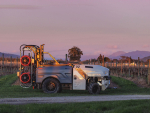
 John Deere has announced a joint venture with orchard and vineyard spraying technology company GUSS.
John Deere claims a joint venture between it and California-based technology company GUSS will assist horticulture producers achieve greater on-farm efficiency.
As part of the collaboration, John Deere will provide access to its global sales channels to support market growth, while GUSS will continue its horticultural industry innovation and product development.
Chris Davison, JD’s director of small tractor & HVC production systems, says the collaboration will accelerate the development and distribution of semi-autonomous orchard and vineyard spraying technology.
“As demand for high-value crops grows, we see significant opportunities to help producers be more productive while addressing the challenges such as limited access to skilled labour to operate equipment,” Davison says.
“The GUSS team has a deep understanding of high-value crop production systems, as well as strong relationships with customers and a proven track record of deploying innovative technology.”
He says both companies are committed to developing pathways to grow more food using fewer resources. By using GUSS technology, multiple machines can be remotely controlled by a single operator. This is done via the use of a combination of GPS and LiDAR (light detection and ranging) technology, vehicle sensors, and software, to move and navigate through orchards and vineyards.
John Deere Australia and New Zealand production systems manager, Stephanie Gersekowski says GUSS has found a way to apply GPS technology in challenging conditions. She says this means horticulture cropping enterprises can now utilise the same level of exciting innovation now available to broadacre operations.
“Traditionally, using GPS guidance under orchards and vineyards canopies has been challenging,” Gersekowski explains. “However, GUSS has overcome this issue by developing several additional technologies, including vehicle sensors and software to supplement GPS and guide GUSS safely and efficiently through crops.”
She adds that with operators able to control up to eight sprayers at once, GUSS equipment provides enormous productivity gains to growers by reducing pressure to find skilled operators. The technology is also said to use fewer resources and reduce costs by eliminating operator error and downtime.
Founded in 2018 and with a staff of approximately 35, GUSS will retain its employees, brand name and trademark, and continue to operate from its current location. GUSS technology is not currently sold through John Deere dealers in Australia and New Zealand.
Claas built its first variable chamber round baler - the Variant 100 - in 1996, so 2026 marks 30 years and the fifth generation of the Variant name, recently complemented by the new Cerex Series introduced in 2025.
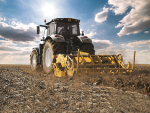
Distributed in New Zealand by OriginAg and supported by its nationwide dealer network, the Italian-built Alpego brand offers an extensive range of solutions including power harrows, rotary hoes, mulchers and subsoilers.
John Deere is introducing its 500R self-propelled sprayer to the NZ market, offering small-grain growers a new option designed for precise application, operator comfort and efficient field performance.
Global tyre manufacturer Michelin has extended its agricultural trailer tyre range, with the introduction of its new WorkxBib series, designed for tipping trailers, slurry tankers and manure spreaders.
Following the record-breaking success of its hydrogen-powered Hydromax, JCB is ramping up its investment in the business, key to the first major change at the executive level of the business, with George Bamford stepping up to the post of joint chairman, alongside his father Lord Bamford.


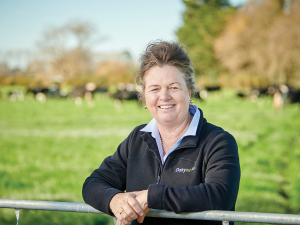
Farmers have until the end of this week to help shape DairyNZ’s future focus.
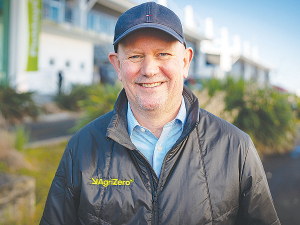
Wayne McNee, chief executive of AgriZeroNZ, has resigned and will leave the organisation on 15 January 2027.
The New Zealand dairy sector set a record in the 2025/26 season, producing more than two billion kilograms of milksolids for the first time.
Milk powder prices are continuing their merry run, firming up a potential $10/kgMS farmgate price this season.
Teachers are welcoming the outgoing Government’s U-turn allowing agriculture and horticultural science to remain a standalone Year 11 subject.
Outgoing ACT MP and dairy farmer Mark Cameron says Saturday’s election result reflects voters deeply impacted by the cost of living.


OPINION: The same mainstream media muppets that brought you Jacindamania in 2017 have been flat out pimping for the Opportunities…
OPINION: Your old mate reckons the atrocious way farmers in the UK are treated by their lords and masters in…




