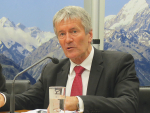
Damien O’Connor Criticises Budget 2026 as ‘Miserable’ for Rural New Zealand
A miserable budget that didn’t deliver much for anyone.



 increase font size
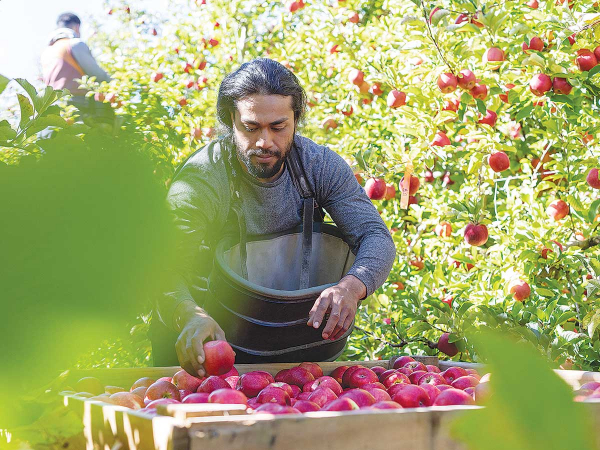 A programme has been launched to introduce Pacific youth to careers in New Zealand's horticulture sector.
A new programme has been launched to introduce Pacific youth to careers in New Zealand's horticulture sector.
The programme was announced in February by Agriculture Minister Damien O'Connor and Pacific Peoples Minister Aupito William Sio.
O'Connor says the Akongoue: Pasifika Horticulture Programme will introduce Pacific youth to the wide range of career options across the horticulture sector.
"In terms of exports, horticulture is one of New Zealand's fastest growing sectors, with the sector's exports forecast to reach $6.9 billion this financial year and expected to grow further," he adds.
"We have been investing significantly in partnership with the sector in new technology and increasing sustainability. For a young person that means exciting career opportunities."
O'Connor says these range from practical jobs like planting and harvesting, through to roles in biodiversity and sustainability, green and digital technologies, engineering, sales and marketing, research and science, and manufacturing and logistics.
The programme is a collaboration between the Ministry for Primary Industries, the Ministry for Pacific Peoples, Tongan Youth Trust, the Sector Workforce Engagement Programme (MBIE), and training organisation New Zealand Sports Turf Institute (NZSTI).
Sio claims it will broaden horizons and reward young Pacific people.
"There is huge potential for our Pacific youth to build lifelong, fulfilling careers in horticulture. This programme is the first step," he says.
"It will help our youth to appreciate and consider the land as a source of life, connecting them with the cultural and indigenous knowledge of previous generations."
Learning will include both time in the classroom and practical activities one day per week in a safe, inclusive learning environment.
Mentors and buddies will help participants get the best out of the programme.
As well as introducing Pacific youth to different horticulture roles, the programme will also contribute to NCEA Level 2/3 (up to 43 credits), and provide important skills, for example in first aid and health and safety.
Social Development and Employment Minister Carmel Sepuloni says students will also interact with a network of industry employers to help with further learning and potential employment opportunities.
"The Akongoue: Pasifika Horticulture Programme is an opportunity to bring together Pacific youth, their Kainga (families), and schools," she says.
"It will help them to identify horticulture career opportunities that offer progression to tertiary studies, employment, diversity, mobility, and financial reward."
O'Connor adds that the programme will equip Pacific youth with important skills and qualifications.
"It will also help excite and attract our Pacific youth into a horticulture career to build life-long prosperity for themselves, and their families."
A miserable budget that didn’t deliver much for anyone.

National's decision to ‘dribble’ information about the NZ/India to Labour contributed to the delay in it deciding to supported the FTA.
When it comes to international trade, politicians from all sides of the aisle are united, says Labour's trade spokesman Damien O'Connor.
Federated Farmers have reiterated their support for the coalition Government to abolish the present ban on the live export of animals.
As the coalition Government mulls new regulations to reinstate the export of live animals, debate is heating up between supporters and opponents.


Dairy processors are ready to further boost New Zealand’s export earnings but want the incoming government to match their ambition with good policy.
Massey University is best placed to solve the “problems” facing the dairy industry, says vice chancellor, Pierre Venter.
Synlait's longest serving employee – a man who joined the Canterbury-based milk processor even before it began processing milk – is now its newest executive.
A dairy industry leader believes eradicating the common and costly disease, Bovine Viral Diarrhoea (BVD) is within reach.
A farmgate milk price of $10/kgMS this season is firming up as milk powder prices soar and the New Zealand dollar weakens.
Federated Farmers has welcomed new rural policies released by ACT, saying they align closely with its own election priorities.


OPINION: The same mainstream media muppets that brought you Jacindamania in 2017 have been flat out pimping for the Opportunities…
OPINION: Your old mate reckons the atrocious way farmers in the UK are treated by their lords and masters in…




