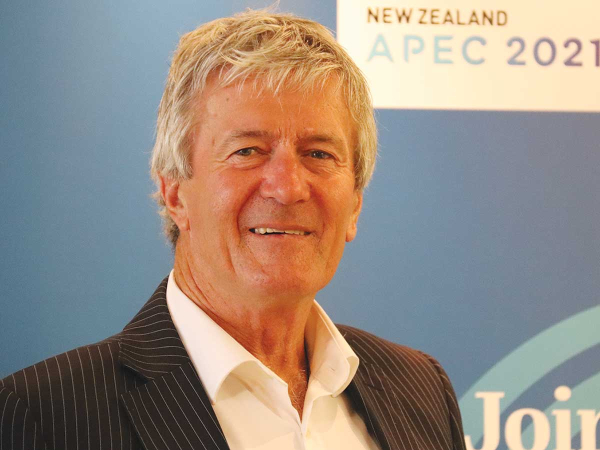
Damien O’Connor Criticises Budget 2026 as ‘Miserable’ for Rural New Zealand
A miserable budget that didn’t deliver much for anyone.
New Zealand has signed up to an agreement designed to improve supply chains in the Indo Pacific region.
Trade and Export Growth Minister Damien O'Connor recently joined ministerial representatives at a meeting in Detroit, USA, to conclude negotiations of a new regional supply chain agreement among 14 Indo-Pacific countries.
He says the agreement is designed to ensure supply chains do not constrain progress made on trade.
The supply chains agreement is one of four pillars being negotiated within the Indo-Pacific Framework (IPEF) initiative launched in September 2022.
O'Connor says the cost of sending a shipping container from NZ to the USA at the height of the Covid crisis grew from $2,000 to $10,000, while the time taken for shipping containers to travel across major global shipping routes skyrocketed from under 60 days to more than 120 days.
He says the IPEF is a novel type of agreement that will provide new channels of collaboration amongst regional countries.
"It covers new ground on modern issues such as the digital economy and accelerating climate action. The group includes the US and many of the large Asian countries, including Japan, Korea, India and most members of ASEAN."
O'Connor says it's in NZ's interest to be part of this IPEF agreement and ensure that supply chains can weather global events.
New Zealand dairy farmers are set to be the first in the world to receive access to a new digital physical milk pricing tool that enables them to fix the price for their physical milk.
State farmer Pāmu is opening its farm gates this summer in an effort to give the rural sector the opportunity to see how large-scale, multi-system farming is delivering productivity and profitability across New Zealand.
A five-year study has found that the cost of reducing emissions without technology may be significant and unsustainable for Northland dairy farmers.
DairyNZ says Waikato farmers need certainty on Plan Change 1, but they say that certainty must be matched with practical, workable rules and a clear transition that doesn't get ahead of the new resource management system currently under review.
While the Government has moved quickly to make commercial hauliers' lot easier during the current fuel crisis, they appear to be stuck in the creep box when it comes to the agricultural industry.
Waikato farmers have been told that the Government’s new planning system legislation and the region’s Plan Change 1 (PC1) “won’t mesh together very well”.

OPINION: Central Hawke's Bay farmer Mark Warren recently told the Hawke's Bay Times it's time for a conversation about allowing…
OPINION: A nation that relies as heavily as NZ does on functional global shipping lanes will have to do its…