Arla Foods delivers $15b revenue as Co-op turns 25
European dairy giant Arla Foods celebrated its 25th anniversary as a cross-border, farmer-owned co-operative with a solid half-year result.
 increase font size
 A total of 7,986 Arla Foods farms across seven European countries have concluded a Climate Check.
One of Europe's largest dairy co-operatives, Arla Foods claims that it's farmers are among the most climate efficient dairy in the world.
The co-op says its Climate Checks programme, which is one of the world's largest externally validated set of climate data from seven European countries also provides its farmers a clear blueprint of what will drive further reductions of greenhouse gas emissions on their farms over the next decade.
Arla farmers have been working steadily towards sustainable farming and implementing green opportunities on their farms, such as circular farming practices, renewable energy and biodiversity and now also Climate Checks.
A total of 7,986 farms across seven European countries have concluded a Climate Check using Arla's new standardised tool for identifying carbon footprint and the data shows that they are among the most climate efficient in the world.
"We have made a major investment in developing and implementing a solid model for measuring climate impact on a dairy farm," says Arla Foods chairman Jan Toft Nørgaard.
"The unique data set that Arla farmers have now created clearly shows which activities will accelerate our reductions over the next decade.
"We will use this to decarbonise our farms at a faster pace and share our findings with stakeholders to help drive an effective transition for the whole industry. There's a huge amount of value in this for all of us," he says.
The data has revealed five universal levers to a lower carbon footprint for dairy on all types of Arlan farms. They are:
The areas targeted by the five big levers are explaining the majority of the differences between the individual farms' carbon footprints. The five levers apply to all Arla farms in the UK, Sweden, Denmark, Germany, the Netherlands, Belgium and Luxembourg regardless of size, geography, breed or landscape conditions.
"The data shows that all types of farms can achieve tangible results if precision farming is increased in these five areas. This helps us significantly going forward both to lower CO2e footprint and for future investments on farms to help meet our ambitious climate goals," says Nørgaard.
Arla farmers assessed and submitted data to 203 questions about their herd, feed production, energy usage. Their data has been verified by an external climate advisor, who has also helped create the farmer's action plan for further climate reductions based on the individual data.
The data confirms that Arla farmers are among the most climate-efficient dairy farmers in the world with 1.15kg of CO2e per kilo of milk including peat lands.
"We are proud of where we've got to, but we are determined to go a lot further. For us, the number is not a final result but a baseline from where we need to improve.
"The Climate Checks is a tool to guide our next steps, to accumulate more insight and transparently measure our progress going forward," says Nørgaard.
As the next round kicks off in June, Arla farmers will get access to a new digital tool that enables them to follow their own progression and to benchmark against data from other Arla farms.
The data shows that the best performing Arla farmers are able to produce a kilo of raw milk with a farm level footprint well below 0.9kg of CO2e.
European dairy giant Arla Foods celebrated its 25th anniversary as a cross-border, farmer-owned co-operative with a solid half-year result.
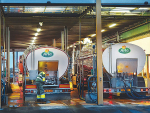
The creation of Europe's largest dairy co-operative should be complete by early 2026.
OPINION: One of the world’s largest dairy co-operatives has come under fire for embracing a new methane-reducing additive fed to cows. The claims, made on social media, says the use of a feed additive by Arla Foods farmers could ‘contaminate’ milk and allegedly cause cancer.
European dairy co-operative Arla Foods is forecasting a total revenue of nearly $25 billion this year.
Danish dairy co-operative Arla Foods is accelerating sustainability efforts on farm to help customers achieve their reduction targets for scope 3 emissions targets.


LIC shareholders have elected a new North Island representative to the co-operative's Board, along with five representatives to its Shareholder Reference Group (SRG), following the company's Annual Meeting held in Invercargill.
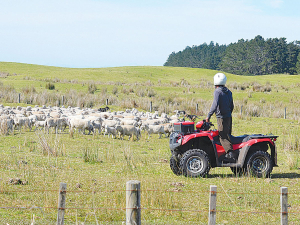
Farmers across parts of Southland and South Otago are continuing to deal with difficult conditions after a prolonged run of wet weather, with pressure building around feed supply, stock management, pasture damage, farm infrastructure and everyday workloads.
Federated Farmers says it welcomes Labour's commitment to reviewing the Sharemilking Agreements Act, calling on other major parties to do the same.
For Canterbury dairy farmers Sian Meijer and Rick Wobben, wearable technology has become one of their most valuable on-farm tools - helping manage 1850 cows across an expansive, high-performing dairy operation while improving efficiency, mating outcomes and day-to-day decision making.
Fonterra has unveiled its annual results for the 2026 financial year, posting $27 billion in revenue and close to $20 billion returned to New Zealand farmer owners and unit holders.
The first major update to the Dairy Cattle Code of Welfare in more than a decade has been released, marking what DairyNZ describes as an important step in ensuring animal welfare standards continue to evolve alongside scientific evidence and on-farm realities.