US Launches Lamb Safeguard Probe, NZ Exports at Risk
As expected, the US has launched a safeguard investigation into lamb imports, a move that could impact New Zealand sheepmeat returns.
 increase font size

It's all happening on Capitol Hill. US lawmakers are bracing for a charm offensive from the White House.
President Obama is using the last days of his presidency to pass the Trans Pacific Partnership (TPP) agreement in Congress, a tough task given that most politicians on both sides of the aisle in Washington are against the deal.
There is talk of the White House tabling the TPP legislation during the ‘lame-duck session’, so lawmakers are bracing for calls from the White House.
Connecticut Democrat representative Rosa DeLauro told a news conference the White House would do “virtually anything they need to do to get the votes”.
‘We should anticipate more free rides on Air Force One, visits to the White House, special events in members’ districts to try to gain favor for the deal. The administration will be relentless.”
US dairy farmers are backing the deal: National Milk Producers Federation president Jim Mulhern says although TPP “achieves less than we wanted in terms of throwing open new markets in Japan and Canada, I am particularly pleased that we did not concede to a huge surge in new imports”.
So, why is President Obama struggling to garner support? It’s election season in the US and both Donald Trump and Hilary Clinton oppose TPP. Bernie Sanders is credited with having helped shift Clinton’s position during their primary battle. She had backed the deal while serving as President Obama’s Secretary of State.
The TPP is enormous: the 12 countries involved account for 36% of the global economy; the US is the world’s biggest economy and Japan is the third-biggest.
For New Zealand, tariffs on our exports to TPP countries would be eliminated, except for beef exports to Japan (where tariffs will fall markedly) and a number of dairy exports into the US, Japan, Mexico and Canada. On current trade volumes, this amounts to tariff savings of $259 million a year once TPP is fully implemented.
Prime Minister John Key recently warned the US: the region will not wait for you. Asian countries are determined to grow, with or without the US.
Primary Industries Minister Nathan Guy recently returned from the US feeling slightly more confident about TPP clearing the hurdle on Capitol Hill.
But his message to farmers and business leaders in Nebraska was clear: if TPP fails it will disadvantage both NZ and the US. It will mean others in Asia will set the rules for trade.
President Obama is facing one of the toughest tests of his presidency: an uphill battle to woo lawmakers and ensure the US doesn’t miss the TPP boat.
Failure in the US could spell the end of TPP and give birth to a new agreement that excludes the world’s largest economy.
As expected, the US has launched a safeguard investigation into lamb imports, a move that could impact New Zealand sheepmeat returns.

New Zealand's red meat sector says it welcomes the Government's focus on trade ahead of the general election in November.
New Zealand red meat exports are booming but a pending decision in the White House, Washington D.C., could dent sheepmeat earnings.
Politicians calling for New Zealand to withdraw from the Paris Agreement on climate risk damaging two of our gold-plated free trade deals.
Prime Minister Christopher Luxon says the red meat sector is doing an excellent job promoting our pasture-fed system around the globe.



Federated Farmers says it welcomes Labour's commitment to reviewing the Sharemilking Agreements Act, calling on other major parties to do the same.
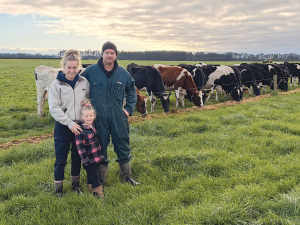
For Canterbury dairy farmers Sian Meijer and Rick Wobben, wearable technology has become one of their most valuable on-farm tools - helping manage 1850 cows across an expansive, high-performing dairy operation while improving efficiency, mating outcomes and day-to-day decision making.
Fonterra has unveiled its annual results for the 2026 financial year, posting $27 billion in revenue and close to $20 billion returned to New Zealand farmer owners and unit holders.
The first major update to the Dairy Cattle Code of Welfare in more than a decade has been released, marking what DairyNZ describes as an important step in ensuring animal welfare standards continue to evolve alongside scientific evidence and on-farm realities.
Ravensdown shareholders have elected Jane Montgomery and Kate Acland to the Ravensdown Board for three-year terms, following a closely contested director election.
Federated Farmers says new legislation replacing the Resource Management Act will cut red tape, unlock investment and help grow New Zealand's export-led economy, after the Planning Bill and Natural Environment Bill passed their third reading in Parliament yesterday.