
Boosting Crop Production by Spreading Effluent
Tararua district farmer Jamie Harris milks around 400 cows using a split calving system on his farm, Crossdale Dairies.
 increase font size
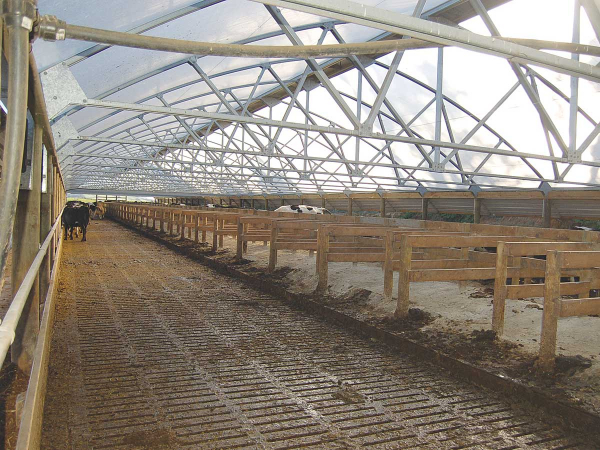 HerdHomes allow the capture of effluent without rain or washwater.
HerdHome System Ltd founders Tom and Kathy Pow are back at the helm of the company they founded 20 years ago.
Tom Pow says for 20 years HerdHome Systems have helped farmers suit current and future rules while increasing profits to the farming businesses.
Over the years three people have led the business while the Pows stepped back.
Pow says the couple are happy to back leading it again. “During that 20 year period many exciting people worked in advising and selling. It was during the early years the close understanding and participation with the early adopter owners, coupled with a string of scientists led rapid change in farming methods.
“In the last few weeks I have been visiting some of our new clients: again these farmers have enthusiasm for change as they are now back in the drivers’ seat of their farms. This was great to see.
“Not one said “we are all doomed” like the butcher of Dads army.”
Pow says HerdHome System is going into a new phase, matching even more closely the many ideas of loafing use, labour saving, cow and calf safety and health.
Effluent collection and storage is “hands free” with no moving parts; reapplication of effluent timed for best profit.
“Farming with Herdhome Shelters of one of the higher stocked and productive farms in my area, close to both fresh water and salt water areas the environmental results are interesting.”
Pow says independent study results currently shows that after farming for 150 years plus, farming can still successfully exist together with nature.
“Herdhomes are marching on with more and more farmers following; growing the profit and quality gap in NZ farming.
“Years like this with wet winters and long hot-dry summers cows love top-up feeding and shelters. Not just any type of housing but something that cows can flow into at anytime of the day or period of season. If cows need shelter then the loafing area needs to be always ready, with no fear that the area will be spoilt with effluent for use later in the season.”
During 20 years the capturing the effluent without rain or wash water has lead to vast improvement to farm soil nutrients.
Mucky manure spread on farms does not get washed way through soils quickly by rain or irrigators as the more liquid black water would.
Pow says dealing with the hundreds of owner of Herdhomes shelter there are many amazing stories.
“One farmer reckoned that the Herdhomes shelter saved his life. The farm being steep to steeper had already claimed three roll-overs of his silage wagon plus a few down hill thrills. It is now no more taking silage to cows but cows come home to feed. His profit went up amazingly partly from more milk and partly from less repairs and maintenance.”
“A Southland beef farmer was away from his farm when a snow storm hit, his calving beef animals were stranded and his helper on-farm couldn’t drive the mob into the eye of the storm and had to leave some on paddock. In the morning all was well with cows and calves were all in the Herdhome, during the night the new born calves followed their mothering cows walking into the direction of the storm to the warmth of the Herdhome.”
Tararua district farmer Jamie Harris milks around 400 cows using a split calving system on his farm, Crossdale Dairies.
Water management is an integral component of sustainable farming practices, according to Watermetrics.
Two farmers and two farming companies were recently convicted and fined a total of $108,000 for environmental offending.
A Taupiri farming company has been convicted and fined $52,500 in the Hamilton District Court for the unlawful discharge of dairy effluent into the environment.
Founded in Germany as recently as 1977, today, the Fliegl Group employs more than 1100 workers, offering an expansive range of transport solutions, from their base in Bavaria.


Minister of Conservation Hon Tama Potaka has appointed Susan O'Regan as Chair of the Queen Elizabeth II National Trust (QEII) for a three-year term.
Red meat farmers are welcoming Labour’s plan to review the Emissions Trading Scheme and not to campaign on pricing agricultural emissions.
Where any worker in the kiwifruit industry is mistreated, we expect the authorities to take action.
Mid Canterbury Federated Farmers arable chair, Bevan Lill, said Beef + Lamb NZ data indicated that for the last six years, the average arable return on investment was about 0.8% while inflation ran about 4% - so the average arable farm was going backwards at about 3% a year.
Seed and grain companies share the concerns of arable farmers about the viability of their sector, says Seed and Grain New Zealand chief executive Dr Sarah Clark.
The New Zealand Institute of Forestry (NZIF) says unnecessary changes to New Zealand’s Emissions Trading Scheme (NZ ETS) will seriously erode investor confidence and result in significant reductions in forest planting rates.