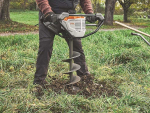
Stihl Launches BT140, Its First Battery-Powered Auger
With battery tools becoming more widespread and more importantly, productive and reliable, it was only time before we saw augers or post-hole borers.
 increase font size
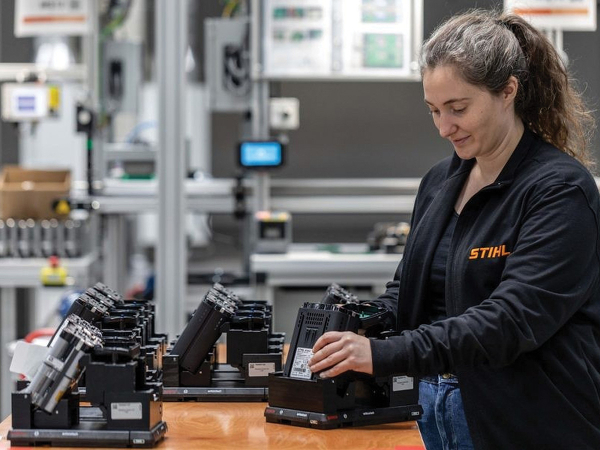 Today, more than one in four of all Stihl products sold worldwide are battery-powered.
STIHL outdoor products, especially petrol chainsaws and brush-cutters, have always been firm favourites with farmers and rural dwellers.
Early battery powered tools were always a little ho-hum – you either loved them or hated them – but the development of new battery technologies over the last decade or so, means they offer a creditable alternative to petrol.
Today, more than one in four of all Stihl products sold worldwide are battery-powered, with the company aiming to increase this share to approximately 35% by 2027 and 80% by 2035. Those statistics will explain why the Stihl Group has opened its first battery-only production site in Oradea, Romania to produce battery packs and battery-powered tools.
Covering a total area of over 33-acres, the 10.7-acre production building will ramp up operations to produced one million battery packs by 2026. By 2028, output is expected to rise to 1.8 million battery packs, alongside 1.7 million battery-powered tools. The site currently employs around 135 people, with expectations for this to rise to around 700 by 2028.
Production initially focuses on battery-powered blowers and AP battery packs from the professional Stihl range. Over time, the portfolio will expand to include additional battery-powered equipment such as brush cutters and chainsaws.
The new €125 million plant will play a central role in meeting the growing demand for battery-powered products across European markets, while expanding the company’s global network and strengthening its position in the fast-growing battery segment.
“It is a vital addition that will secure our long-term competitiveness in Europe and support our customers with high-performance products developed and built for professionals and demanding consumers worldwide,” he adds.
With battery tools becoming more widespread and more importantly, productive and reliable, it was only time before we saw augers or post-hole borers.

Most rural properties wouldn’t be without a chainsaw, so it’s fitting to celebrate the centenary of Andreas Stihl inventing the first portable chainsaw in a Stuttgart workshop in 1926.
If someone turns up on your farm, selling Stihl 461 chainsaws, please shout out. That’s the message from NZ Young Farmers.
Chainsaw accidents are on the rise and it’s time to make some noise about this, says chainsaw maker Stihl.
EVERY SINGLE day more than six people in New Zealand, on average, injure themselves with a chainsaw – a scary statistic which is on the rise and has prompted STIHL to power up its Chainsaw Safety Awareness Week campaign.


During the nesting season, from September to December, industrious starlings can quickly build nests in the darker areas behind tractor and vehicle, usually close to hot engines, typically resulting in localised damage or in some cases complete write-offs.
The meat processing industry is much more collegial than it was in the past and is now more focused on common goals.
With the last couple of months having seen some potential tractor purchases put on hold with the impending election and continued input cost rises, year-to-date figures, ending September, has seen deliveries up around 5% over the same period in 2025, with a total of 2026 units.
Beef+Lamb New Zealand is calling for nominations for director roles in the Northern South Island and Northern North Island electoral districts.
Fonterra chief executive, Richard Allen says being resilient has helped the dairy industry overcome extreme volatility in recent years.
The head of the Ministry for Primary Industries (MPI) trade and international relations group says New Zealand is well-positioned to secure trade access and compete internationally as the world becomes more complicated, demanding and uncertain.