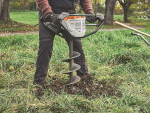
Stihl Launches BT140, Its First Battery-Powered Auger
With battery tools becoming more widespread and more importantly, productive and reliable, it was only time before we saw augers or post-hole borers.
 increase font size
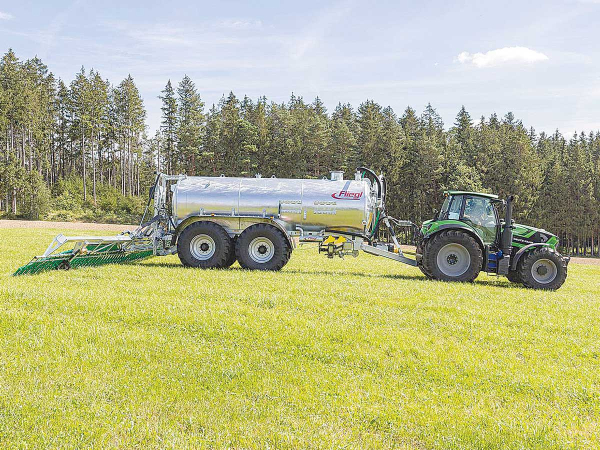 Fully galvanised tanks and chassis and large section tyres help protect against damage to swards.
A relatively young company, founded in Germany in 1977 by Josef Fliegl Senior, the Fliegl Group now employs more than 1100 workers.
While offering an expansive range of transport solutions, from their base east of Munich in Bavaria, the company is also heavily involved in handling liquid effluents, with a range of tankers including basic farmer models, through to high spec, high output contractor units.
Imported and distributed in New Zealand by the Power Farming Group, the Maxx Line Standard range is available ex-stock with 8600 or 10,600- litre capacities, with or without integral loading arms.
They have fully galvanised tanks and chassis, the tanks featuring integral baffles. Large section tyres help protect against damage to swards, while a hydraulic braking system means the tanker is always kept under control.
An 11,000-litre per minute pump assembly on the base machine uses a 6-inch suction intake, while the machine fitted with the integral boom loading system has an 8-inch diameter intake for faster filling and turnaround. Both capacity machines feature a sprung drawbar assembly, working in conjunction with an un-sprung single axle.
Standard equipment includes a silenced pump/ compressor assembly, fill level indicators, hydraulic changeover valve for filling or emptying, double siphons and a full lighting kit.
Elsewhere in the extensive range, double and triple axle layouts complement capacities of 3000 to 27,500-litres within the MaxxLine, Maxxline Plus and Alpha- Line families.
Offered with a choice of discharge/spreading options, the entrylevel splash plate can be upgraded to the highlevel impact head unit that can help reduce nitrate losses by up to 30%. For those looking for better utilisation and more accurate application, more specialised trailing shoe and disc injection methods are available.
Both application systems are “fed” by a screw auger system that uses dedicated traps to remove foreign objects and solid materials, including stones, to avoid blockages in the delivery hoses.
The Skate Drag Shoe applicator improves on conventional trailing shoe set-ups by offering a block pressure of up to 8kg per shoe. It also features mechanical or hydraulically activated section control, and 250mm hose spacing. A comfort function offers automatic folding and headland turns, while also incorporating an anti-drip stop feature when folded.
The Vari-Disc injection system allows operators to incorporate effluent in the top 5 to 10cm of the soil profile, offering easy access of nutrients to plants, while also eliminating odours in sensitive areas. Using 530mm diameter, angled, springloaded discs, the unit is available in 3m, 5.56m and 7.15m operating widths, with 11, 22 and 28 outlets, each unit folding to less than 3m width for transport.
With battery tools becoming more widespread and more importantly, productive and reliable, it was only time before we saw augers or post-hole borers.
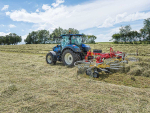
Austrian manufacturer Pottinger has released details of a new compact, linkage-mounted compact twin rotor rake, without a chassis, that is said to deliver impressive manoeuvrability.
The new Lemken Saphir XMR mechanical seed drill has been introduced as the successor to the proven Saphir 10m, with the manufacturer claiming new standards for precision, ease of use and area coverage.
Krone's XDisc 710 direct-cut header can now be used by John Deere and New Holland forage harvesters, as well as the Krone Big X it was originally designed for.
Fifty Eight years ago, on the 16th of August 1968, August Claas, the founder of the harvesting company and father of Helmut Claas, personally presented a Claas Senator combine harvester to Scottish farmer John Steven.

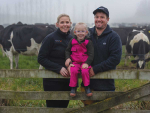
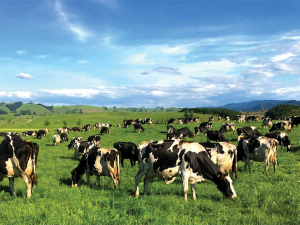
Most dairy regions around the country have had a pretty good season so far says Tracy Brown.
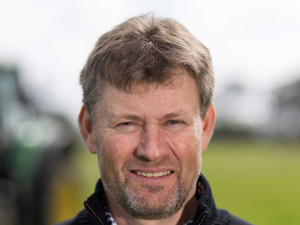
Rural leader Mark Hooper has been appointed as an independent director to the NZPork board, bringing extensive farming, governance and advocacy experience to the role.
Opportunity says its land value tax (LVT) is unlikely to force farmers into a position where asset sales or increased debt are required.
Milk powder prices are keeping farmgate prices up, helping processors offset the dip in milk fat prices.
Climate, nature and animal wellbeing make up Fonterra's refreshed sustainability roadmap released last week.
The Government is introducing a new nationwide rural recycling scheme that will significantly increase the recovery of farm plastics from March next year, Minister for the Environment Nicola Grigg announced today.