Ah Tatua, You've Done It Again!
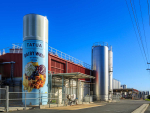
Waikato milk processor Tatua has again declared a record milk payout to farmer shareholders, leaving other processors in the dust.
 increase font size
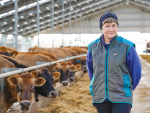
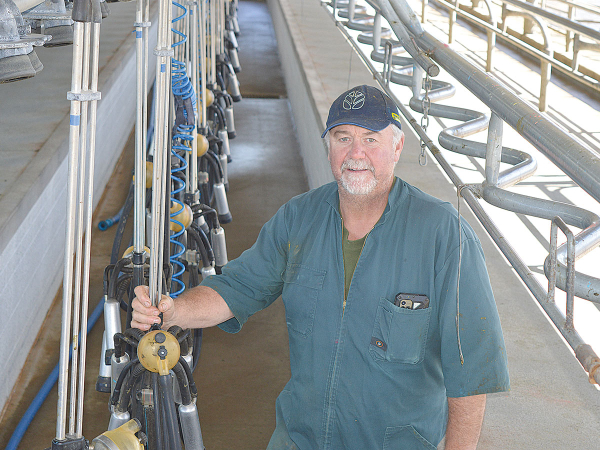 Matthew Zonderop says a repeat $10 milk price will help farmers strengthen their businesses, repay debt, and reinvest in their operations.
With a record $10-plus/kgMS milk price almost locked in for this season, next season isn’t looking too shabby either.
There’s just over three months left for the 2024-25 season and most of the season’s products are either sold or contracted, so Fonterra’s milk price forecast mid-point of $10.25/kgMS looks almost certain.
All eyes will now be the following season. Last week, Westpac came out with the first forecast – estimating that the final milk price for next season could also reach $10/kgMS. That’s music to farmers’ ears.
Federated Farmers dairy chair Richard McIntyre says it’s been an incredibly tough few seasons for most dairy farmers, with high interest rates, high inflation, and a low payout eating into their bottom line.
“Another year or two of a $10- plus payout would certainly be welcome news and allow those businesses to pay down some debt and catch up on some deferred maintenance,” he told Dairy News.
“I know on my own farm there are a lot of things I’ve been putting off until cashflow improved and that finally looks like it’s starting to come right now.”
However, Westpac senior economist Michael Gordon noted that Fonterra may come out with a lower and more conservative opening forecast in late May.
“Our forecast is right in line with the futures market at the moment, which jumped up to $10/kg after the latest GDT auction,” Gordon says.
“We expect world dairy prices to ease over the year ahead as Chinese buying returns to more normal levels.
“On the supply side, the current high prices provide a strong incentive for the world’s major dairy exporters to ramp up production. However, they may still be constrained by other factors – in particular, how well the US and Europe deal with their respective disease outbreaks (avian flu and bluetongue virus) will have an impact on their herd sizes and hence their output over the next season.
“Overall, we’ve assumed that world prices will be 6% lower on average compared to the current season. However, this is partly offset by a lower expected exchange rate over the season.”
Westpac is forecasting a milk price of $10.30/kgMS this season.
Waikato sharemilker and Feds Waikato dairy president Matthew Zonderop says Westpac’s outlook presents a strong financial outlook for New Zealand dairy farmers.
“While uncertainty remains, this level of farmgate return provides a significant opportunity for farmers to strengthen their businesses, repay debt, and reinvest in their operations,” he says.
Zonderop says a continued $10/ kgMS payout translates to substantial profitability, with many farms $2–$2.50/kgMS above breakeven.
He points out that for a 300,000 kgMS operation, this equates to an additional $600,000–$750,000 in profit, enabling them to lower farm debt, improve long-term resilience, upgrade infrastructure, automation and sustainability efforts, secure costs (feed, fuel, fertiliser), and consider fixed milk price contracts.
He says the record milk price also translates into benefits outside the farmgate.
“This dairy sector windfall extends beyond the farm gate, stimulating regional economies through increased demand for local businesses – contractors, machinery suppliers, and rural service providers benefit from higher farm spending.
“There’s wage growth and employment – more profitability allows for potential wage increases and improved labour retention.
“And rising farm values and investment – rural property markets may see higher demand, benefiting existing landowners but posing challenges for new entrants.”
Waikato milk processor Tatua has again declared a record milk payout to farmer shareholders, leaving other processors in the dust.
Central Otago District Council (CODC) has voted against a plan to spread treated sewage sludge from Cromwell and Alexandra on farmland near Lauder, a decision Federated Farmers says reflects strong opposition from rural residents.
Federated Farmers has called on Central Otago District Council (CODC) to drop or vote down a plan to truck sludge from Alexandra and Cromwell to farmland near Lauder, warning it would compound an "outrageous" situation created by a separate council's decision weeks earlier.
Synlait has swung to second-half profit as operations stabilise, but the dairy processor still posted a $75.4m annual loss.
Federated Farmers says new legislation replacing the Resource Management Act will cut red tape, unlock investment and help grow New Zealand's export-led economy, after the Planning Bill and Natural Environment Bill passed their third reading in Parliament yesterday.


Waikato milk processor Tatua has again declared a record milk payout to farmer shareholders, leaving other processors in the dust.

A Labour-led Government won’t be bringing back the controversial freshwater rules of 2020.
National’s much-touted free trade deal with India featured in the Rural Issues Debate at Mystery Creek, Hamilton on Wednesday night.
New Zealand's 2026-27 freshwater fishing season has opened, with anglers encouraged to head to rivers and lakes over the coming days as conditions look favourable across much of the country.
Central Otago District Council (CODC) has voted against a plan to spread treated sewage sludge from Cromwell and Alexandra on farmland near Lauder, a decision Federated Farmers says reflects strong opposition from rural residents.
Pāmu has released its FY26 Integrated Annual Report, reporting a Net Operating Profit of $113 million, more than double the $49 million recorded in FY25.