Why Now Is the Time to Plan Farm Succession, Findex Says
OPINION: Succession and long-term planning are perennial topics because it is perpetually sidelined on busy farms.
 increase font size

Prevention against one of New Zealand's biggest biosecurity risks – foot and mouth disease (FMD) – has been given a leg-up with specialist training in Nepal.
DairyNZ veterinarian Anna Irwin recently returned from Kathmandu, Nepal, where she was part of a five-day training camp run by the European Commission for the Control of Foot and Mouth Disease.
She says the experience highlighted the pivotal role New Zealand dairy farmers play in detecting the disease early.
"I found seeing the disease invaluable," says Irwin. "But it also brought home the importance of being alert on farms. Anyone working with livestock on a daily basis is in the best position to be our number one surveillance force.
"Foot and mouth is one of our biggest biosecurity risks, so we need to be prepared. The quicker something is picked up, the better our response will be."
Along with farmers keeping an eye out for signs, their use of New Zealand's biosecurity systems, such as NAIT (National Animal Identification and Tracing), will help prevent an outbreak.
"It's very important that farmers keep their NAIT records up-to-date, as animal tracing and accurate records are vital in any disease investigation. In any outbreak, the ability to reliably trace animals saves so much time," says Irwin.
"Nepal doesn't have anything like our system in place, which makes it much harder to manage and control the disease when animals move around so much."
If FMD were to reach New Zealand, it would damage the country's trade reputation and halt virtually all exports of meat, animal by-products and dairy products until at least three months after the disease was considered eradicated.
Led by the Ministry for Primary Industries, the Nepal trip provided training in the clinical recognition, diagnosis, investigation and control of FMD.
"Foot and mouth is widespread in Nepal and outbreaks occur frequently there," says Irwin. "The training gave veterinarians, government officials and other rural professionals from foot and mouth-free countries some of the skills required for a potential outbreak."
Irwin will share her experience and training with colleagues and farmers as part of DairyNZ's work with the government and other industry groups such as Beef + Lamb New Zealand, on being prepared for FMD.
Farmers should report anything they are unsure about in any livestock to the biosecurity line by calling 0800 80 99 66.
OPINION: Succession and long-term planning are perennial topics because it is perpetually sidelined on busy farms.
Farms across the upper North Island are trialling different pasture mixes as part of a research programme that aims to build greater resilience into farming systems.
Election years are always a concerning time for farmers, according to DairyNZ chair Tracy Brown.
Matt Collier, Probiotic Revolution, says calves will drink a lot of milk once-a-day with their probiotic Calf Xtreme.


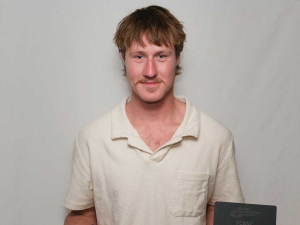
Now in its fourth year, the 2026 Fencing Industry Awards, formed part of the proceedings of the FCANZ Conference, held in Nelson during August.
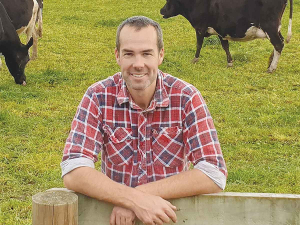
DairyNZ deputy chair Cameron Henderson has been re-appointed unopposed for another term.
OPINION: The stats speak for themselves.
Farms across the upper North Island are trialling different pasture mixes as part of a research programme that aims to build greater resilience into farming systems.
Election years are always a concerning time for farmers, according to DairyNZ chair Tracy Brown.
The Ballance Farm Environment Awards are coming to the West Coast of the South Island.