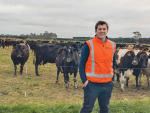
New Dairy Holdings CEO Backs Self-Contained Model
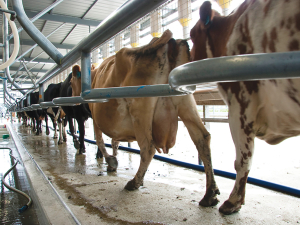
Running a tight and self-contained ship is the key to the success of the country's largest dairy farmer, says Blair Robinson, the new man at the helm of Dairy Holdings.
 increase font size
 Stuart Nash.
Farmers whose herds were culled in response to the outbreak of Mycoplasma bovis will be able to minimise the tax treatment of their income in some circumstances.
Revenue Minister Stuart Nash says Cabinet has agreed to change the law. It means farmers may be eligible to spread their income over several years to avoid an undue tax burden.
“Farmers, like the rest of the primary sector, are facing much uncertainty from the impact of the COVID19 outbreak around the world,” said Nash.
“On top of this, many have already had to deal with the hardship of the M. Bovis outbreak. The decision to offer tax relief for payments related to M.Bovis losses will help alleviate some of those concerns.
As part of our plan to try to eradicate M. Bovis, stock had to be culled on farms where the organism was found. Farmers received compensation for the difference between the normal market value of the stock and the amount received when the stock was culled. They could then restock their farms to replace the culled animals.
A number of affected farmers are using certain cost schemes to value their breeding stock, which means a significant tax bill can arise in the year they receive a compensation payment.
“Following discussions with Federated Farmers and Chartered Accountants of Australia and New Zealand we’ve agreed the best immediate solution. We will change the law to allow the additional income to be evenly spread over the following six years, subject to some conditions,” says Nash.
“It will require legislation which is yet to go through Parliament. However it will apply retrospectively, from the 2017/18 income year. This should help farmers to deal with their tax obligation in what is an already stressful time,” says Nash.
Affected farmers, or their tax agents, can find technical information on Inland Revenue’s website, at https://taxpolicy.ird.govt.nz/bovis
Running a tight and self-contained ship is the key to the success of the country's largest dairy farmer, says Blair Robinson, the new man at the helm of Dairy Holdings.
OPINION: It's no surprise that "world-class biosecurity" continues to dominate as the top priority for agribusiness leaders, holding the number one spot for the 16th consecutive year in KPMG's latest agribusiness report.
OPINION: The previous government spent too much during the Covid-19 pandemic, despite warnings from officials, according to a briefing released by the Treasury.
OPINION: Labour leader Chris 'Chippy' Hipkins is carrying on the world-class gaslighting of the nation that he and his cohorts started after their disastrous Covid response; now trying to undermine the Covid inquiry to protect his own backside.
Compensation assistance for farmers impacted by Mycoplama bovis is being wound up.
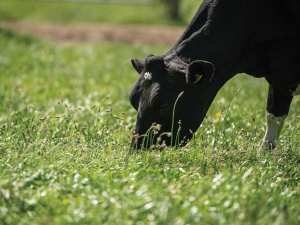
Farms across the upper North Island are trialling different pasture mixes as part of a research programme that aims to build greater resilience into farming systems.
Election years are always a concerning time for farmers, according to DairyNZ chair Tracy Brown.
The Ballance Farm Environment Awards are coming to the West Coast of the South Island.
Most dairy regions around the country have had a pretty good season so far says Tracy Brown.
Rural leader Mark Hooper has been appointed as an independent director to the NZPork board, bringing extensive farming, governance and advocacy experience to the role.