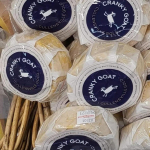
Boutique cheesemaker Cranky Goat in voluntary liquidation
Award-winning boutique cheese company, Cranky Goat Ltd has gone into voluntary liquidation.
 increase font size
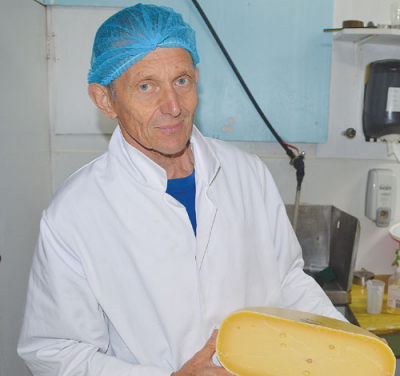 Albert Alferink with his Waikato Vintage cheese, a bronze medal winner at the World Cheese Awards.
Waikato cheesemaker Albert Alferink is no stranger to specialty cheese awards — but now his skills have put him on the global stage.
Two years ago, he made headlines by scooping the NZ champion of champions with his ‘50/50’ cheese, made from sheep and cows’ milk. And at the NZ Specialty Cheese Awards he has won many other awards for artisan cheeses he makes at his Mercer Cheese factory in Onewhero.
Now Alferink’s cheesemaking skills have put him on the global stage. In November, he picked up a bronze medal at the World Cheese Awards in Norway for his Vintage Gouda -- his first gong at the global event.
The cheese was Waikato Gouda from Mercer Cheese, entered by James Thomas, owner of online cheese retailer NZ Cheese Ltd.
Alferink, who sells the cheese as Mercer Vintage from his shop in Mercer, has always made vintage gouda cheese.
He told Dairy News that Thomas, a former employee at Mercer Cheese, decided to enter the World Cheese Awards.
“I found out after the judging day that we won a bronze medal,” he says.
Alferink says he’s happy to win a global award for his cheese but quickly adds that he doesn’t make cheese to win awards.
He says there are many hard working cheesemakers in NZ and, as in sport, only winners get to share the limelight.
Alferink makes 25 tonnes of cheese every year at his small factory. Most cheeses are either sold at his shop or sold to restaurants in Auckland.
Since October last year, he has exported to Australia; he hopes to sell one tonne of cheese in Australia this year through Calendar Cheese, a leading Melbourne distributor.
Alferink says the success of his cheeses depends on more than just the skills of his cheesemaking team. He singles out Onewhero dairy farmers Bryce and Rosemarie Costar, who farm 500m down the road and supply fresh milk for his business.
“It’s essential to start with good, fresh and top quality milk when making cheese,” he says. “And we get it fresh: when they are milking in the morning our tanker is there ready to pick up the milk.”
Alferink also thanks Fonterra; the Costars supply the co-op but are allowed to sell 20% of their milk to their neighbor.
He buys cheese cultures from Chr. Hansen, a global bioscience company with an office in Hamilton.
“Everyone helps me make top quality cheeses,” he says.
Getting everything right
Albert Alferink says the secret to his award-winning vintage gouda is getting everything right.
The curd has to be heated long enough to get it dried.
“There’s no flavor in the cheese for months; the taste develops over a year,” he says.
“There’s very little salt in the Vintage Gouda; young cheese needs salt for flavor but older cheeses develop their own.”
Alferink (67) is semi-retired and leaves most of cheesemaking to his protégé Thomas Fredrickson.
Award-winning boutique cheese company, Cranky Goat Ltd has gone into voluntary liquidation.

OPINION: This old mutt hears some of the world's favourite cheese could soon disappear off shop shelves unless science can find a way to save the mould that makes them.
Cheese exports rose $763 million (35%) in the 12 months to May 2023, compared with the previous year, according to figures released by Stats NZ.
The first Global Dairy Trade (GDT) auction for the new season delivered underwhelming results last week.
Local cheesemakers are facing competition from subsidised frozen EU imports flooding the NZ market, tariff-free, says Whitestone Cheese managing director Stephen Berry.


Now in its fourth year, the 2026 Fencing Industry Awards, formed part of the proceedings of the FCANZ Conference, held in Nelson during August.
DairyNZ deputy chair Cameron Henderson has been re-appointed unopposed for another term.
OPINION: The stats speak for themselves.
Farms across the upper North Island are trialling different pasture mixes as part of a research programme that aims to build greater resilience into farming systems.
Election years are always a concerning time for farmers, according to DairyNZ chair Tracy Brown.
The Ballance Farm Environment Awards are coming to the West Coast of the South Island.