Early detection of lameness is a crucial factor in maintaining a profitable and healthy dairy herd.
Studies conducted in New Zealand suggest that around 26% of cows in a large herd suffer from some form of lameness each year, resulting in significant financial losses for farmers.
Those costs can include decreased milk production, a reduction in reproductive performance, alongside possible vet bill, treatment costs and time taken by staff to treat animals.
The impact of lameness on fertility is particularly significant, with UK research indicating that lame cows ovulate earlier but show signs of heat later than healthy cows, meaning the chances of getting a lame cow in calf are significantly reduced.
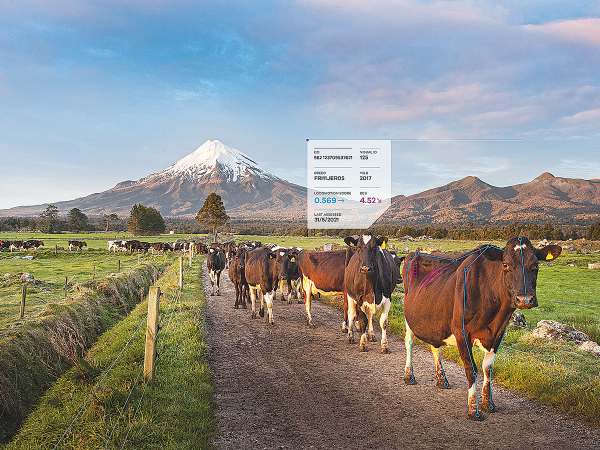
To help farmers address the issue, NZbased company OmniEye has developed an innovative visual monitoring system that uses vettrained artificial intelligence to locomotion score dairy cows.
Providing farmers with an accurate 0-3 score, the system enables early detection of lameness, allowing prompt and effective treatment that can minimise the impact on a herd’s bottom line.
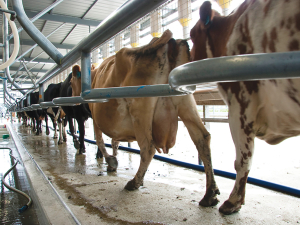
The on-farm hardware required to run the system includes a CCTV camera mounted perpendicular to the exit race and a small enclosure mounted inside the shed. The installation will require a suitable exit race, EID reader, and a reliable internet connection.
Using the DairyNZ locomotion scoring metric, users are provided with a 300-point spectrum of healthy (0.00) through to severely lame (3.00). Scores are presented in a dashboard along with associated videos, allowing for remote diagnosis and effective treatment management.
The system is designed to supplement stockmanship skills and can work symbiotically with wearable technology to provide farmers with a comprehensive understanding of the health and wellbeing of their cows.
The system is currently in use on 30 dairy farms across New Zealand, with farmers reporting significant improvements in their ability to detect problems early and effectively manage the health of their herds.
Hayden Ferriman of Three Leaf Farms says OmniEye has become part of their daily routine.
“It allows us to catch problems earlier and as a business owner, it gives me peace of mind when I’m not in the shed.”
Meanwhile Kurt Zenipmal, manager at Medstone Dairies, says, “alongside the benefits of early lameness detection, we can also use the videos and scores to keep an eye on the cows we’ve treated, then set up auto drafts to put them back in the main herd once they’ve come right rather than watching them from the vet stand and manually drafting”.
www.omnieye.co.nz