FAR Eyes NZ Grain as Dairy Supplementary Feed
Dr Scott Champion, Foundation for Arable Research chief executive, says that everyone in the supply chain had a role to play in driving the sector's long-term success.
 increase font size
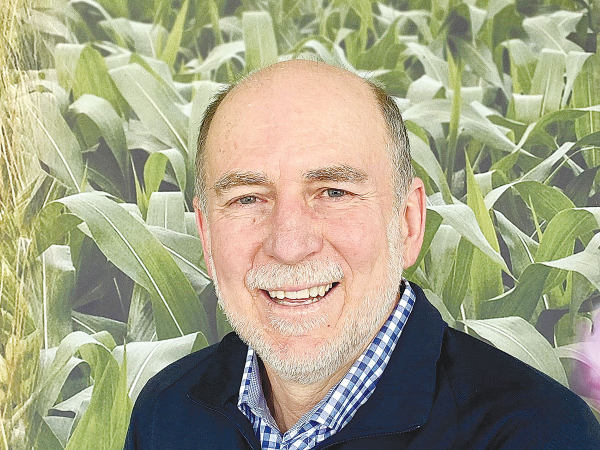 The conference is the last chance to hear from David Densley in his role as FAR's senior maize researcher.
Artificial intelligence will assist farmers to interpret the huge amounts of data generated using precision agriculture, says a US expert who will speak at a Hamilton maize conference this month.
“We’ve evolved from precision agriculture to digital agriculture,” says Scott Shearer, professor and chair of food, agricultural and biological engineering at Ohio State University.
Organised by the Foundation for Arable Research, the “Maize Profit and Productivity” conference will be held at the Claudelands Events Centre on February 12 and 13.
Speaking on the current and future role of precision agriculture in US maize systems, Shearer, who will present via video link, says “digital agriculture” is broader.
“It covers everything from when the seed goes in the ground until there are end products on the consumer’s table. Everything is connected to the internet.”
Digital agriculture applies artificial intelligence and machine learning (AI/ML) to interpret huge amounts of data to support a farmer’s decision-making and improve the efficiency of farm operations.
FAR technology manager Chris Smith says the biggest challenge for growers adopting precision ag as an everyday tool on farm has been the perceived cost versus the return on investment.
Issues around data transfer and inter-operability between different systems by service providers have also been barriers to adoption.
“Internationally, several countries are trialling new technologies that may provide future precision ag opportunities for New Zealand maize growers,” says Smith.
“Software and hardware developments promise greater and smoother integration of layers of data. AI and machine learning will help greatly with this, and will also provide greater resolution of imagery, draw on large amounts of data for identifying issues like weeds, pests and diseases and the ability to manage them more accurately and cost effectively.
“There are some great opportunities ahead,” Smith says.
The conference is also the last chance to hear from David Densley in his role as FAR’s senior maize researcher. Following the conference, he is leaving FAR to concentrate on his consultancy work.
He will discuss a long-term FAR maize research programme focusing on identifying maize production system practices that lead to higher profitability and better production resilience.
Three grower panels will provide a farmer perspective on the conference’s key themes.
The conference also includes an afternoon at FAR’s Northern Crop Research Site at Tamahere, near Hamilton, where trial work will be discussed.
Dr Scott Champion, Foundation for Arable Research chief executive, says that everyone in the supply chain had a role to play in driving the sector's long-term success.

Flat pricing in the face of significant increases in costs is the greatest problem facing the arable sector, says Foundation for Arable Research (FAR) chief executive Dr Scott Champion.
A long way from when AI meant plunging a plastic-covered arm armpit deep up a cow’s rear, John Deere has shown off its new artificial intelligence (AI) assistant, aptly called JD, which aims to simplify data processing on farms.
Case IH has unveiled its redesigned next generation Puma Series tractors, said to offer improvements in connectivity, operator comfort, fuel efficiency and drivability.
Four years since it was first detected in New Zealand, researchers and growers now know much more about management of maize pest fall armyworm (FAW).


Federated Farmers has welcomed new rural policies released by ACT, saying they align closely with its own election priorities.

Rural Contractors NZ says proposed changes to land transport rules for agricultural vehicles are a welcome response by the Government to out of date regulations which have seen members hit with huge fines.
Alliance is calling for final applications for its 2027 Graduate Programme, with applications closing on Sunday 25 October.
Decades piloting planes has ensured vet and farmer David Hayes is focused on safety. So, after a serious accident while welding on farm, he is sharing his experience so others can learn from it.
Canterbury milk processor, Synlait Milk has confirmed Leon Fung as its chief executive officer.
OPINION: Making it easier to collect rainwater and use it to grow crops and livestock is a no brainer.