Importer: Fertiliser Security Policy Must Include All Players
An independent importer says National’s fertiliser security policy will only work if protects all players.



 increase font size
 A helicopter spreading Optimise fertiliser.
Developed and made in NZ by two farming brothers for over 20 years, Optimise micronised pelletised lime-based fertiliser is touted as a sustainable option with a difference.
Scott Pascoe of CP Lime Solutions says, farmers and growers are a proud bunch of people always looking for solutions to improve the way they do things on the land.
“We don’t just work on the land, we live on the land which means we see and notice all the changes and things happening around us," says Scott
Lime is not generally seen as a fertiliser but it has two benefits, firstly as a fertiliser containing calcium, the highest required cation in the soil, and carbonate as a neutraliser of hydrogen to increase pH and make macro and micro nutrients more available.
CP Lime Solutions wanted to get a better understanding of what the most active and responsive part of lime was that created the necessary changes in the soil.
What they discovered was the finer the particle size, the quicker the effect on your soil. They say Optimise micronised pelletised lime raises soil pH quickly and helps farmers achieve and maintain their ideal pH more efficiently. Micronised lime also helps stimulate soil biology, improve soil structure and promote the release of locked up soil nutrients.
 |
|---|
“However, clients were always asking for alternative ways to apply other nutrients, so the solution was to give them options.” says Scott.
The options included adding combinations of sulphur, phosphorous, magnesium, humates, trace elements, seaweed and bio-stimulants to the lime in the pellet. Not only does this have the benefit of reduced volume and easy application, it has shown great results in the field improving the effect on the soil nutrient status.
“At CP Lime Solutions we have always liked to challenge traditional thinking and after 20 years of pelletising lime here in NZ, doing ‘on farm’ soil testing and trialling, as well as getting plenty of farmer feedback about our Optimise products, this has given us confidence that we are on the right track” says Scott.
“There is increased global demand for similar micronised lime products throughout the world including a new plant in NZ commissioned by a multinational company, so we are looking forward to an exciting future.”
An independent importer says National’s fertiliser security policy will only work if protects all players.
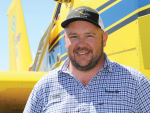
Plan ahead and be patient. That’s the message to farmers and horticulturalists from the chairman of the NZ Agricultural Aviation Association, Kent Weir.
Amazone's ZG-TX combi spreader has been updated with several new features, centred around improved accuracy and easier operation.
When it comes to annual rebates, it's been a long time between drinks for Ravensdown shareholders.
Ravensdown has reported a net profit before tax and rebate of $50.1 million for the year ended 31 May 2026.


Dairy farmers, still holding onto their Fonterra shares despite switching milk supply elsewhere or exiting the industry, now face a stricter share sell-down requirement.
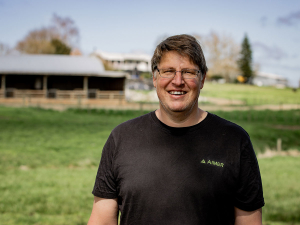
Hamilton-based agritech company Aimer Farming has completed a $3 million capital raise to support its next stage of growth, including a beef farming product due to launch in 2027.
When dairy manager Miriam Lauridsen learned the farm, she was joining held weekly health and safety meetings, she initially thought that was “a bit over the top”. Experiencing that culture changed her mind.
Nominations are open for the 2027 Fonterra Dairy Woman of the Year Award.
Keeping up with pasture moisture demands is likely to be the key challenge for dairy farmers during this season’s El Niño weather pattern, says Blue Skies Weather & Climate Services meteorologist Tony Trewinnard.
Farmers have until the end of this week to help shape DairyNZ’s future focus.