DairyNZ chair wants cross-party deal
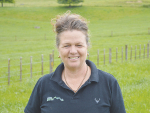
New DairyNZ chair Tracy Brown says bipartisan agreement among political parties on emissions pricing and freshwater regulations would greatly help farmers.
 increase font size
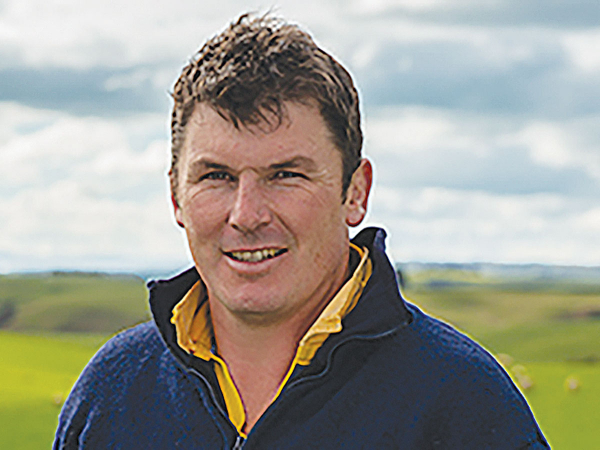 Southland dairy, sheep and beef farmer Dean Rabbidge.
OPINION: He Waka Eke Noa (HWEN) has long been a contentious issue for NZ's agriculture sector.
We have reached a point where the levy bodies and member-based organisations have agreed in principle to a mechanism that will see agriculture paying for a percentage of their emissions, mainly methane emitted from ruminant animals.
Farmers who contribute to these levies and pay the memberships have been let down. We have signed up to a virtue signaling system that will see us all paying a tax of varying levels, which will be used for "research and development" to help reduce emissions while maintaining our already high production, world leading low footprint system.
We are told we need to do this maintain our social license. We are told that we will receive premiums for our products offshore. We are told that the rest of the food producing world will follow. We are told that we need to do our part. We are told to simply plant the less desirable areas of our properties in monoculture exotics to offset the emissions. And we are told that, for most, the tax will be minimal starting at around $1 to $1.50 per stock unit.
All of this I find to be completely mythical, unfathomable and insulting.
We all agree that the sector needs to maintain a social license, but what about the social license of HWEN? I don't think it has one when it will see the existence of rural communities, families, and businesses threatened.
It will reduce the amount of high-quality protein that the world already sources from us. It will reduce the financial viability for many, especially the high country. Sadly, it will - and is already - creating division amongst what has historically been a united and staunch agricultural team.
The personal factor has been ignored and we are becoming collateral damage for what is a growing political power-play. It is forgotten that the properties we are all so proud of are not only our businesses, but our homes, our children's playground and for many, part of our legacy.
Food security is becoming a more topical issue by the day, and we see European countries now winding back environmental regulation to ensure they can continue to feed both people and energy. Time and time again we are told that “once the Europeans do their calculations they will soon learn they will be in a much worse position than NZ”. This may be the case, but I think it is more likely that they will value their food security to the point where they will not implement restrictions such as those that HWEN will generate for us.
I would like to know how paying a tax to the government (which has a somewhat questionable track record of re-allocating it) is going to generate measurable, tangible and timely outcomes?
I know I could make a larger and faster impact by retaining my calculated tax and re-investing it into my property in the form of fencing, riparian planting with natives or water schemes. All the while maintaining our current level of production. All of this is discretionary spending that creates better outcomes, but it will be lost in the name of climate change to a tokenistic and virtue signaling tax.
HWEN has far too many inconsistencies, unfairness, complications, grey areas, uncertainties, future developments and unknowns to be agreed to. When we combine HWEN with the carbon laundering scheme that is the ETS, I am gravely concerned for the future of New Zealand agriculture.
Our food producers are both angry and disappointed in the representation we have received and should no longer accept the position that we have been served. HWEN is completely unacceptable in its current form.
It is He Waka Eke NO from me.
Dean Rabbidge is a sheep, beef and dairy farmer from Wyndham, Southland
New DairyNZ chair Tracy Brown says bipartisan agreement among political parties on emissions pricing and freshwater regulations would greatly help farmers.

First up to the podium at the recent Tractor and Machinery Association (TAMA) Conference in Wellington, Minster for Agriculture, Todd McClay, reflected on a difficult 12 months, but hinted at signs that things were turning the corner, saying “when ag does well, New Zealand does well”.
A horror story - that’s how Federated Farmers describes new research looking at forestry conversions’ impact on water quality.
OPINION: When Groundswell showed up in the 'advocacy hub' at Fieldays alongside the same groups that brought you He Waka Eke Noa, the Hound feared the ginger group had been brought into the woke fold and given the old rubber ring.
OPINION: Industry-good bodies have had a torrid time recently, with some facing backlash from farmers particularly over their stance on emissions pricing and He Waka Eke Noa.


Wool Impact and ASB have signed a new partnership with the bank set to provide financial backing to support the revitalisation of New Zealand's strong wool industry.
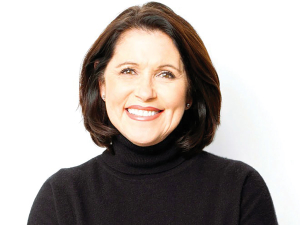
OPINION: Farmers have been clear: it is getting harder, not easier, to find and keep good people.
Last week marked New Zealand Sign Language Week and a South Canterbury tanker operator is sharing what it's like to be deaf in a busy Fonterra depot.
As fuel and fertiliser prices rise and with uncertainty in the future, farmers are being urged to go over their budgets with a fine-tooth comb.
Federated Farmers says reforms of local government announced last week will be music to farmers' ears.
Hinehou Timutimu, the 2026 Fonterra Dairy Woman of the Year, says she feels privileged to have won the award.