Planting to feed the bees
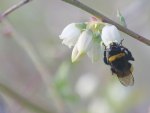
The Ministry for Primary Industries (MPI) have released a handbook offering guidance on how to plant strategically to feed bees.
 increase font size

US PRESIDENT Barack Obama has ordered the US Environmental Protection Agency to assess pesticide impact on bee and other pollinator health and to take action, as appropriate, within 180 days.
“The continued loss of commercial honey bee colonies poses a threat to the economic stability of commercial beekeeping and pollination operations in the US, which could have profound implications for agriculture and food,” says the President.
“Severe yearly declines create concern that bee colony losses could reach a point from which the commercial pollination industry would not be able to adequately recover.”
Other pollinator populations, including native bees, birds, bats and butterflies, are also dwindling. “The problem is serious and requires immediate attention.”
Managed honey bee colonies in the US have fallen from six million in 1947 to 2.5 million.
Obama has created a pollinator health task force headed by the Secretary of Agriculture and the administrator of the EPA made up of representatives of 14 government agencies.
Obama wants a strategy from the agencies in the next six months that will protect pollinators by improving their habitat. He wants explicit goals, milestones and a system to measure progress; a pollinator research action plan; a public education plan and proposals for developing public-private partnerships to encourage the protection of pollinators and increase the quality and amount of habitat and forage for pollinators.
He’s given the Departments of Agriculture (USDA) and the Interior 90 days to develop best management practices to enhance pollinator habitat on federal lands and has ordered reserves of native seed mixes, including pollinator-friendly plants, to be established for use on post-fire rehabilitation projects and other restoration activities.
The Council on Environmental Quality and the General Services Administration has the same deadline to revise guidelines for designed landscapes and public buildings to incorporate pollinator-friendly practices and high quality pollinator habitats.
The USDA is also to spend US$8m helping farmers establish new honey bee habitats in Michigan, Minnesota, North Dakota, South Dakota and Wisconsin. It comes on top of the US$3m the USDA gave Midwest states earlier this year to support bee populations.
Agriculture Secretary Tom Vilsack says US$15 billion of agricultural production, including some 130 fruits and vegetables, depend on the health and well-being of honey bees.
The Ministry for Primary Industries (MPI) have released a handbook offering guidance on how to plant strategically to feed bees.
A new in-hive heat treatment is able to destroy the Varroa mite whilst keeping bees alive.
The COVID-19 crisis appears to have sparked a renewed interest in the healing properties of honey.
Apiculture NZ is seeking assurances from authorities that the country’s beekeepers won’t be faced with the same problems that their Auckland colleagues did when that region went into lockdown.
New Zealand's apiculture industry is still growing, according to a new report.


Forestry Minister Todd McClay has today congratulated the winners of the 2026 Growing Native Forests Champions Awards at Fieldays.

The Government has announced $60,000 to provide one-off grants of $1,000 to each of the 60 New Zealand Young Farmers (NZYF) clubs across the country.
New Zealand’s rural sector has once again demonstrated its generosity, with the second Rural Industry Leaders Dinner, Debate and Auction raising an impressive $400,000 for the Rural Support Trust.
There has been another twist to the Federated Farmers annual election fiasco.
Analysis of decades of research has revealed the implementation of good farming practices plays a critical role in reducing nutrient losses to improve freshwater outcomes.
Yesterday the Government used the opening of Fieldays to announce a major investment, as part of its Land Use Flexibility package, to support a more productive and sustainable future across six sectors including dairy.