PC1 Pause Looms as Coalition Targets Waikato Farm Rules
A pause on Waikato Regional Council's (WRC) plan change that sets new freshwater rules for farming could be announced in the coming weeks.
 increase font size
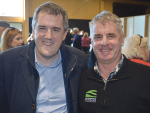
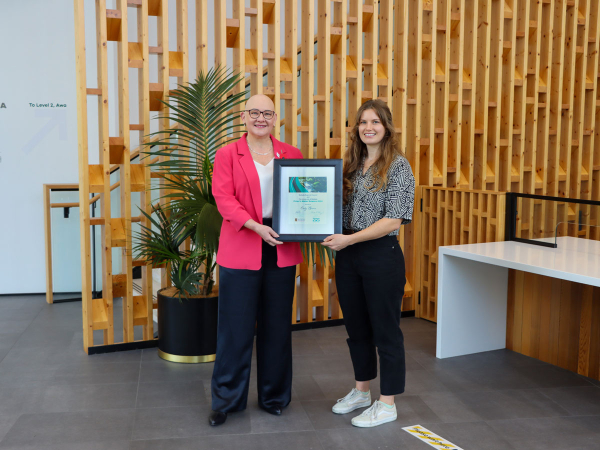 Cady Burns (right) was presented with the Waikato Regional Council Prize in Water Science for 2024 by Council chair Pamela Storey (left) at a full council meeting last week.
Third-year student Cady Burns has won the Waikato Regional Council Prize in Water Science for 2024.
Council chair Pamela Storey presented the prize to Burns at a full council meeting in Hamilton last week.
The award recognizes a University of Waikato student who shows outstanding ability in the water science papers taught in the university’s Faculty of Science and Engineering.
Storey says regional councillors hear community concerns about water quality frequently and share their aspirations for the Waikato region’s water quality.
“Water is one of our six strategic priorities,” she says. “We recognize that clean, healthy water is critical for the environment, our freshwater ecosystems and for community health and wellbeing.”
“For us, part of that recognition is encouraging the next generation of water scientists to come forward,” she adds.
Burns enrolled at the University of Waikato in 2022 to study freshwater ecosystems, looking at both quantity and quality.
She completes her undergraduate study this July and has set her sights on a master’s degree investigating climate impacts around lake systems.
Her research will focus closely on lakes that have affected communities during previous flood events, especially around hydrology and water quality.
She will apply modelling and projection methods to understand the lakes’ dynamics and aims to shed light on future impacts of the changing climate.
Burns has combined her study with work at The Wastewater Specialists.
Last year, she presented her research findings on the toxicity of different portaloo products at the Water New Zealand Conference. Her study evaluated the impact these types of products used in New Zealand have on the biological systems in wastewater treatment plants.
Cr Storey says Waikato Regional Council encourages more students to take up the challenge of studying water and other environmental science.
“I wish it wasn’t such a well-kept secret, but this organisation has a phenomenal team of environmental scientists who are critical for the work we do. We need more in the future.”
A pause on Waikato Regional Council's (WRC) plan change that sets new freshwater rules for farming could be announced in the coming weeks.

OPINION: Staying on Plan Change 1, NZ First deputy leader Shane Jones took to social media to gain some political points.
OPINION: All eyes are on the Government as Waikato farmers seek urgent help to fend off the controversial Plan Change 1 (PC1), designed to manage nutrient discharges into waterways in the region.
Waikato farmers have been told that the Government’s new planning system legislation and the region’s Plan Change 1 (PC1) “won’t mesh together very well”.
The Government is looking at intervening on behalf of Waikato farmers who face new regulations around agricultural land use while Resource Management Act (RMA) reforms are underway.


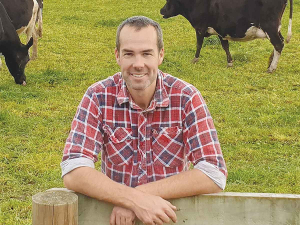
DairyNZ deputy chair Cameron Henderson has been re-appointed unopposed for another term.
Farms across the upper North Island are trialling different pasture mixes as part of a research programme that aims to build greater resilience into farming systems.
Election years are always a concerning time for farmers, according to DairyNZ chair Tracy Brown.
The Ballance Farm Environment Awards are coming to the West Coast of the South Island.
Most dairy regions around the country have had a pretty good season so far says Tracy Brown.