Red Meat Farmers Welcome Labour's Emissions Pricing Pledge
Red meat farmers are welcoming Labour’s plan to review the Emissions Trading Scheme and not to campaign on pricing agricultural emissions.
 increase font size
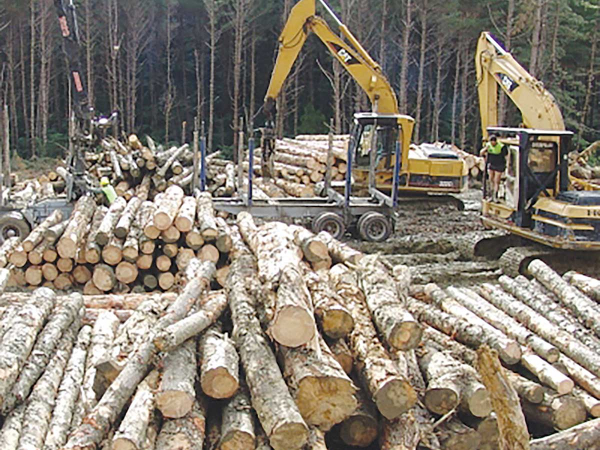 The New Zealand Institute of Forestry (NZIF) and the Forestry Industry Contractors Association (FICA) say they are apprehensive of the government’s proposed forestry policies.
The New Zealand Institute of Forestry (NZIF) and the Forestry Industry Contractors Association (FICA) say they are apprehensive of the government’s proposed forestry policies.
The two industry organisations are concerned the policy changes could incur a cost to New Zealand between $1-2 billion, claiming New Zealand will fail to meet its carbon commitments and be forced to purchase offshore carbon units to compensate.
They say the policies pose a significant risk to the sector’s stability and vitality.
Last month, NZIF president James Treadwell said in an open letter that changes to the Emissions Trading Scheme (ETS), which could see restrictions place on how many forestry units could be purchased by companies to offset emissions, had already led to a reduced price for government units.
Now, Treadwell says the absence of consultation with the industry, coupled with a lack of coordination among government entities, has given rise to investor concerns, leading to a detrimental flight of capital from the industry.
“Of particular concern is the government’s disregard for the advice provided by the Climate Change Commission (CCC), impacting the carbon market,” he says. “The CCC’s current draft advice to restrict new planting is concerning, and it has been further emphasised by the National Party, while the Labour Party has introduced measures to limit new planting through local council control.”
Treadwell says that, additionally, the Ministry for the Environment (MfE) has released a consultation document suggesting a complete overhaul of the ETS, with the possibility of decoupling forestry.
“Forestry’s inclusion in the ETS is the only effective measure currently in place to address climate change commitments, offering a ray of hope in meeting our targets,” Treadwell says. “Slowing down or halting this progress would only harm every New Zealander but also hinder future generations’ ability to fulfil the Industry Transformation Plan, which includes investments in processing, such as biofuels and the growth of the bio-economy.”
“These policies are politically driven and lack scientific or economic backing. Even if immediate actions are taken to improve investor sentiment in the forestry sector, it will take years to rebuild trust in stable government policies,” he says.
FICA chief executive Prue Younger says the workforce FICA represents is already in a dire situation.
“Forestry contractors are already at breaking point with an unsustainable model,” Younger says. “We’ve had a tough three years, and pressure is compounding with increased operational costs, staffing and employment issues, market instability, and contractual challenges. We are seeing widespread reduction of harvest targets and cancelled contracts.”
Younger says the proposed policy changes will add to the industry’s burden and will see businesses cease to exist, meaning the workforce will be out of jobs.
“Not many can survive in this ongoing uncertainty with dire market conditions. A substantial number of jobs are at stake, threatening the livelihoods of 20-40% of the workforce,” she says.
In light of this, FICA and NZIF urgently call upon all politicians and officials to recognise the collective impact of their decisions, the effect on the workforce and greater supply chain and engage in immediate consultation with the forest industry for the betterment of New Zealand and the global fight against climate change. Collaboration is vital in finding sensible and measured solutions that benefit the nation as a whole.
Red meat farmers are welcoming Labour’s plan to review the Emissions Trading Scheme and not to campaign on pricing agricultural emissions.
The New Zealand Institute of Forestry (NZIF) says unnecessary changes to New Zealand’s Emissions Trading Scheme (NZ ETS) will seriously erode investor confidence and result in significant reductions in forest planting rates.
Conversions of sheep and beef farms to forestry have slowed, however new research from Beef + Lamb New Zealand (B+LNZ) suggests land of value for food production remains at risk.
OPINION: The Hound hears John Murphy, chair of Veg NZ, reckons greenhouse vege producers face severe challenges due to changes in the ETS.
The Government's decision to keep agriculture out of the New Zealand emissions trading scheme (ETS) has been roundly applauded by farmers.



National’s pledge to introduce 19 new national standards shows the party is serious about getting Wellington out of farming, Federated Farmers says.
The National Party’s policies to make it easier to grow fresh vegetables, secure reliable water and energy and simplify farm planning are practical changes that will give growers the confidence to invest, according to Horticulture New Zealand (HortNZ).
Fonterra Co-operative Group chief financial officer Andrew Murray has resigned to take up a role outside the dairy giant.
A major move is about to get underway to improve the quality and viability of dairy beef and cattle in NZ.
Veterinarians say changes to the code of welfare for dairy cattle provides a positive foundation for improved cattle welfare across the country.
Today, 15 October, is the International Day of Rural Women, which recognises rural women’s contribution to farming, communities and the environment.