Federated Farmers Praises Labour's Emissions Tax Backdown
For the first time in a quarter of a century, Federated Farmers has something positive to say about the Labour Party’s climate change policy leading into a general election.
 increase font size
 Farmer Jane Smith says the Government is asking for a fight on emissions targets and a fight they will get.
Prepare for more pine trees. That's the message from North Otago farmer Jane Smith following the new methane emission targets recently announced by the Government.
Smith, a founding member of the Methane Science Accord, says farmers are aghast at the "environmentally ignorant and economically inept" greenhouse gas emissions targets.
"Even worse than previous targets from the Green Party playbook, the Nats have now shown their anaemically weak understanding of science and have instead taken the impotent option of simply demanding higher generic targets," Smith says.
"We thought we had a coalition who understood the economy, who could see through rampant extremism in climate change positioning and would acknowledge the fact that Kiwi farmers are the best in the world, producing more food with lower emissions.
"We are the only sector in the world that actually utilises a GHG as part of our food production through photosynthesis process, and the only sector with an offset. Pasture-raised livestock are net sequesters of greenhouse gases but this is ignored by our own sector as this doesn't suit the current ideology."
Last month, Climate Change Minister Simon Watts announced New Zealand's second international climate target under the Paris Agreement.
He unveiled that New Zealand will reduce emissions by 51 to 55% compared to 2005 levels, by 2035.
"We have worked hard to set a target that is both ambitious and achievable, reinforcing our commitment to the Paris Agreement and global climate action," Watts says.
"Meeting this target will mean we are doing our fair share towards reducing the impact of climate change, while enabling New Zealand to be stronger and thrive in the face of a changing climate."
However, Smith says these targets are not only unnecessary and misguided, "they now fast-track the destruction of the integrity of our world-class red meat protein production as we loom towards feed additives and expensive interference with natural methane processes through a myriad of pointless vaccines, boluses and misguided genetics".
"The real shame is the waste of taxpayer money and science resources that will be diverted even further towards chasing methane fairies instead of genuine R & D.
"The Government is asking for a fight on this and a fight they will get. We will need indivdual farmers mobilised in order to do this, as our own sector leaders have simply appeased and agreed - all in the name of gaining accolades, funding and avoiding embarassment around the $1 billion that has been squandered on methane 'reduction' to date."
Smith says Watts needs a cold bath of reality.
"At the very same time that his own government demands increased production and growth, he has just cut the wings off the golden goose that would have paid for hospitalxs and healthcare that we already cannot afford.
"The sad reality is that all New Zealanders will pay for these misguided targets through even higher energy and food costs and continued slower economic growth.
"Prepare for more pine trees."
For the first time in a quarter of a century, Federated Farmers has something positive to say about the Labour Party’s climate change policy leading into a general election.

OPINION: Groundswell's opinion of the incumbent farm industry representatives isn't high.
Climate, nature and animal wellbeing make up Fonterra's refreshed sustainability roadmap released last week.
OPINION: Back in April, the Intergovernmental Panel on Climate Change delivered an update that should have triggered an 8.5 magnitude earthquake in the world of climate change policy.
A five-year study has found that the cost of reducing emissions without technology may be significant and unsustainable for Northland dairy farmers.


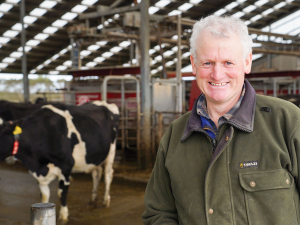
In Dacre, near Invercargill in New Zealand’s South Island, Bruce Dinnington is running a dairy operation unlike any other.

A free online platform aggregating governance vacancies across rural and regional New Zealand has been launched.
Environment Minister Nicola Grigg has announced details of a new rural plastics recycling scheme.
Agricultural drone operators say that a government decision to allow lower-risk drone work without certification won’t lower standards but drive innovation and efficiency.
OPINION: Warning bells are ringing in the arable sector.
Farmgate lamb prices are down by 8%, beef cattle by 4.5% and farm expenditure up by 4.2%.