NZ Avocado Sector Eyes Bigger Crop and New Export Markets
The avocado sector is entering the new season with a larger crop and positive market opportunities.
 increase font size
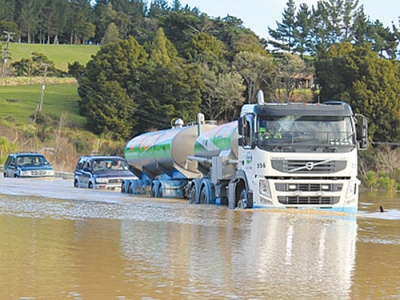 Farming will be one of the most affected industries by changing weather patterns, according to the Insurance Council.
Financial institutions could lead climate change response before science, says Insurance Council of NZ chief executive Tim Grafton.
The financial incentives offered to customers who mitigate and change will be key drivers.
Farming, forestry and fisheries will be most affected by changing weather patterns in NZ.
"Science as an endeavour is conservative – scientists constrain their worst fears and wait for more evidence before communicating them," Grafton told an Auckland climate change and business conference.
"Their predictions therefore tend to understate risk; the opposite is true in the world of insurance, which looks at the maximum possible loss that can occur."
A food security risk study by the Lloyds and Cambrigde University showed that a strong El Nino in the equatorial and Pacific regions would cause a 400-500% rise in the prices of four staples -- rice, soy, wheat and maize, on which the effect of drought is a 7-11% drop in production.
That brought potential for food riots, trade sanctions, business interruption on a massive scale and terrorism. The consequences of a similar event are now seen in Syria which suffered drought in 2007-2008. Wheat costs went up dramatically, preceding the unrest in North Africa which led to the 'Arab spring'.
The Auckland conference preceded a climate change summit in Paris in December. Diplomats spoke of high expectations of a global agreement.
BNZ chief executive Anthony Healy says every corner of NZ will be impacted by climate change; for the banking sector this translated to big risks and opportunities.
The International Panel on Climate Change pointed out that drought in NZ caused a loss of $3.6b in farm production in 2007-2009.
BNZ banks 22% of the farming sector and has exposure of $58b. It sees itself as having a responsibility to consider impacts now rather than putting it on ice for another 20 years.
Farming customers often raise the issue and are at the 'coalface'. They see weather events every day and regulations which impact on their profits. With dairy prices, they might be focused just
on getting through the short term.
"But as we have seen more and more there are proven links between good environmental management and business successes," Healy says.
BNZ is informing its agri-bankers on climate change issues and customers are showing how to innovate. Creative solutions are needed and sustainability is the biggest driver of innovation in the world today.
The avocado sector is entering the new season with a larger crop and positive market opportunities.
Havelock North Event Centre was a full house for thee Metris annual weather outlook grower breakfast this month.
A milk glut around the world shows no sign of easing, putting downward pressure on farmgate milk prices for the next few months.
Fonterra has reduced its forecast 2026/27 Farmgate Milk Price.
A warning to all those in the primary sector to prepare for an unpredictable El Niño weather pattern in the coming season.
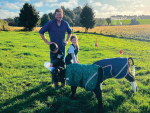

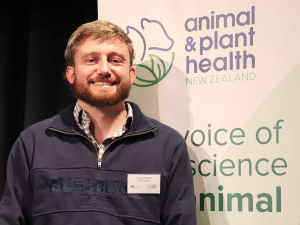
Efficiency is the big one because it tracks back into what is done on farm.
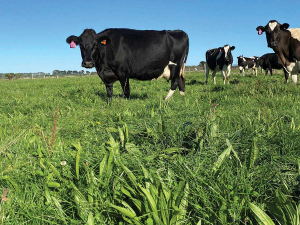
A four year trial has reaffirmed that mixing plantain into dairy pastures can help reduce nitrogen losses to freshwater while maintaining milk production and profitability, say researchers.
Fonterra has opened its upgraded Chengdu Application Centre, bringing New Zealand dairy expertise closer to customers in one of China's fastest-growing regions.
When it comes to annual rebates, it's been a long time between drinks for Ravensdown shareholders.
Special courses for secondary school teachers to help excite kids about agriculture and horticulture are now being run at Massey University.
Running a tight and self-contained ship is the key to the success of the country's largest dairy farmer, says Blair Robinson, the new man at the helm of Dairy Holdings.