LIC: Faster Bull Team Change Reflects Genetic Progress
In the past, a bull could sit comfortably in a breeding team for several years with little change, but today, that’s no longer the case.
 increase font size
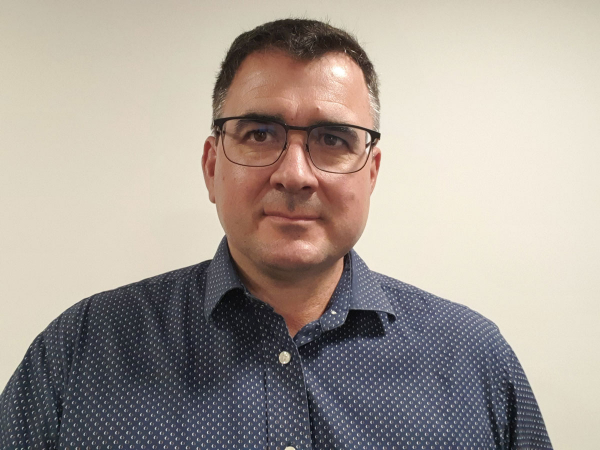 NZAEL's new manager Andrew Fear.
New Zealand Animal Evaluation Limited (NZAEL) has appointed Andrew Fear as its new manager.
Fear previously worked as the general manager for Analytica Laboratories and Precise Consulting & Laboratory.
Prior to that, he worked for LIC for seventeen years, including as the co-operative’s general manager of operations and service.
From 2015 to 2018, he served as a director of LIC Australia.
“Andrew has a wealth of experience leading complex projects and bringing people together to achieve success,” says NZAEL chair Mark Townshend.
“He is an innovative and strategic thinker. His background working in senior management in science and herd improvement organisations will be invaluable to NZAEL as we work for farmers to achieve genetic improvements in the national dairy herd.”
“We believe Andrew has the leadership to help deliver a single Breeding Worth (BW), independently compiled and including genotypes for the benefit of all farmers. Farmers are increasingly asking for a single clear BW.”
NZAEL is a subsidiary of DairyNZ, which manages the national breeding objective for New Zealand dairy cows.
It aims to develop, promote and deliver independent, state of the art animal evaluation technologies that advance genetic improvement in the national dairy herd. The organisation is currently working on the national animal genetic evaluation system to help farmers make better breeding decisions for their herds. Artificial breeding (AB) is used on over 70% of New Zealand’s dairy cows.
DairyNZ chief executive Tim Mackle says he welcomes Fear to his new role.
“Andrew's strong background in leadership and governance roles, coupled with his experience in breeding will be invaluable when he takes up his role with NZAEL on 1 February 2022.
“He brings a great depth of knowledge on animal evaluation and managing system changes to the position, and we are thrilled to have him join the team.”
Fear says he is excited about the opportunity the role provides to have an impact on the rate of genetic gain in the New Zealand dairy industry.
“Genetic gain contributes around 40 percent of on-farm productivity gains, so having a positive impact on the rate of improvement will have a meaningful impact for all New Zealand dairy farmers.”
In the past, a bull could sit comfortably in a breeding team for several years with little change, but today, that’s no longer the case.
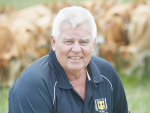
New Zealand's genetics landscape will continue to evolve, says outgoing New Zealand Animal Evaluation Ltd (NZAEL) chair Mark Townshend.
A working group, made up of agribusiness leaders, has been set up to help New Zealand remain internationally competitive in genetic gain.
OPINION: Kiwi dairy farmers continuously strive to be world-leaders in pasture-based production, emissions efficiency and animal care. Our sector's success in global trade relies on these factors.
Farmer co-operative LIC says changes to the current animal evaluation model proposed by DairyNZ isn’t the way forward.


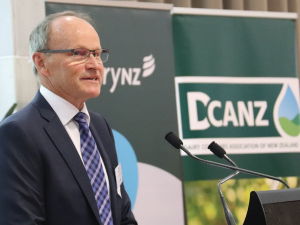
Dairy processors are ready to further boost New Zealand’s export earnings but want the incoming government to match their ambition with good policy.
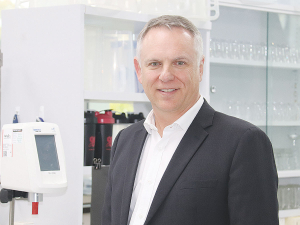
Massey University is best placed to solve the “problems” facing the dairy industry, says vice chancellor, Pierre Venter.
Synlait's longest serving employee – a man who joined the Canterbury-based milk processor even before it began processing milk – is now its newest executive.
A dairy industry leader believes eradicating the common and costly disease, Bovine Viral Diarrhoea (BVD) is within reach.
A farmgate milk price of $10/kgMS this season is firming up as milk powder prices soar and the New Zealand dollar weakens.
Federated Farmers has welcomed new rural policies released by ACT, saying they align closely with its own election priorities.