NZ Must Prioritise Food Security, Says HortNZ's Malley
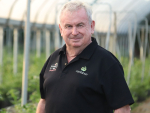
New Zealand needs to make sure that it continues to focus on its own food security, according to HortNZ board member and blueberry grower Dermott Malley.
 increase font size
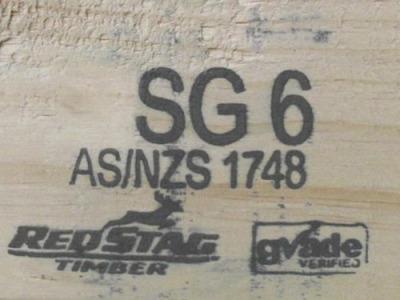
Rationalisation of the sawmill industry will continue, says Marty Verry, chief executive of Red Stag Timber, which is building a $60m 'supermill' at Rotorua.
Verry told the ForestWood conference that data analysis showed another 16 mills will close in the next six years – 12 small mills, four medium and one or two larger mills. He was not sure how that played into the 2022 sector strategy of doubling forest and wood production exports (to $12 billion). The trend line of a declining number of mills was well established, but they could still produce more timber and be profitable.
"It is just the story of automation and consolidation happening around the world," he said.
"Some of the risk areas include a drop in building consents – from 2018 they are predicting a big drop off." Some struggling sawmills could get supported if they were part of a forest or bigger operation.
Rapid technology change and rapid uptake of information and technology will be the trend.
"You will see fewer mills.... Those that are surviving would have invested heavily; they will be very competitive and highly automated and productive."
It is not unique to New Zealand: Australian data shows the same consolidation story – sawmills getting larger and more automated.
Since 2006-07 there has been a significant fall in the number of sawmills in Australia, hardwood sawmills falling by 60% and softwood by 25%. Over the past decade their domestic softwood industry has become much more capital intensive and larger in scale.
New Zealand needs to make sure that it continues to focus on its own food security, according to HortNZ board member and blueberry grower Dermott Malley.
Bank of New Zealand (BNZ) and Pāmu (Landcorp Farming Limited) have developed a new way for landowners to earn revenue from existing native forests.
Forestry Minister Todd McClay has today congratulated the winners of the 2026 Growing Native Forests Champions Awards at Fieldays.
The Fieldays Forestry Hub returns to Fieldays in 2026 for the fifth consecutive year, highlighting the important role forestry and wood processing play in supporting New Zealand's economy, environment, and regional communities.
Two forestry companies have been sentenced for road failures that led to the death of Coromandel truck driver Greg Stevens.



Now in its fourth year, the 2026 Fencing Industry Awards, formed part of the proceedings of the FCANZ Conference, held in Nelson during August.
DairyNZ deputy chair Cameron Henderson has been re-appointed unopposed for another term.
OPINION: The stats speak for themselves.
Farms across the upper North Island are trialling different pasture mixes as part of a research programme that aims to build greater resilience into farming systems.
Election years are always a concerning time for farmers, according to DairyNZ chair Tracy Brown.
The Ballance Farm Environment Awards are coming to the West Coast of the South Island.