The Māori agriculture sector is experiencing major growth and the Director General of Ministry for Primary Industries Ray Smith says it's an area to watch with its value trebling in the past decade.
In the latest MPI report on the situation and outlook for the primary sector, the value of Māori collectives assets has risen from $6 million to $19 billion since 2013. Collectives include Māori trusts, incorporations and iwi-owned commercial arms but does not include the assets of individual Māori who operate in the overall primary sector.
Māori collectives assets in sheep and beef farming increased by $100 million from $7.1 billion in 2018 to $7.2 billion in 2023. Sheep and beef is the biggest single asset class with dairy in second place at $4.4 billion, with forestry and fishing next. But the biggest growth has come in the horticulture sector at just on $2 billion.
The MPI report says this shows the strong ongoing growth in the Māori food and fibre sector and in the wider economy. It says it also suggests a shift towards higher value options that generate greater revenue. The report looks at the proportion of Māori assets in the food and fibre sector as opposed to other investments. It shows that Māori collectives in the Wairarapa are the highest at 87%, with Tairawhiti at 73%, Hawke's Bay and Taranaki at 61%, and Northland and Waikato at 47%. The collectives with the lowest asset base in the Māori food and fibre space was Auckland.
Smith says people sometimes underestimate Māori agribusiness and how much Māori ownership there is in the agri sector, be it forestry, fisheries, sheep and beef farming, dairy or horticulture.
"We have been working hard to try and bring the Māori agribusiness story out so that people can see it," he says.
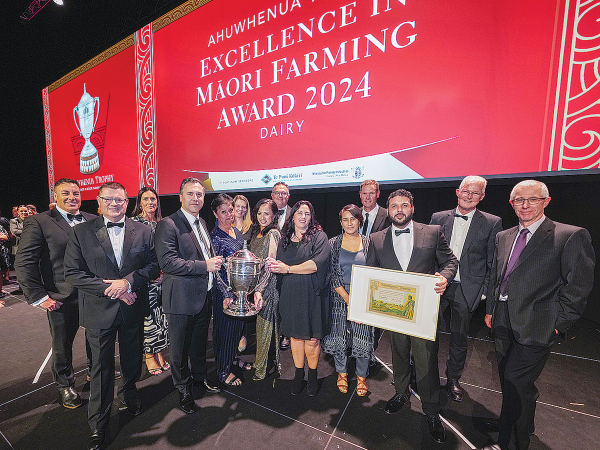
Smith says it's also important for those Māori farming communities to see how much they contribute to their own communities and the wider economy. He noted that this year, Māori sheep and beef operations will be competing for the prestigious Ahuwhenua Trophy - an award that has been running for more than 90 years which recognises excellence in Māori farming.
"It's a great event with more than 800 people expected to turn up for the final awards night in June, in a display of strength to showcase the Māori agri economy," he says.
Smith says as well as the main competition, it is great to see the competition for the young Māori farmer which again demonstrated the calibre of young Māori rising through the ranks of the sector.