
Lanaco and Blueair Launch World-First NZ Wool Air Filter
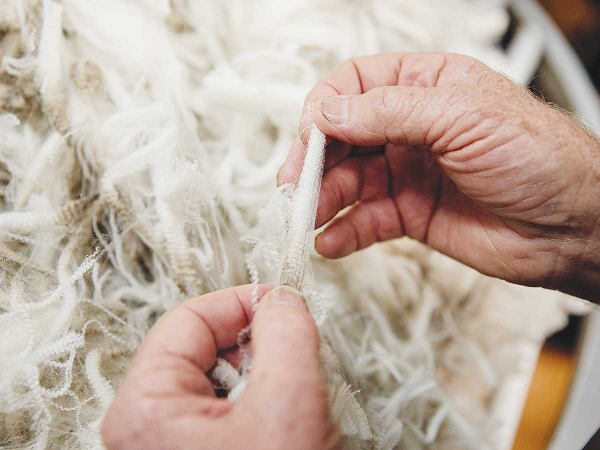
New Zealand wool is reaching new heights as air filtration companies move away from synthetic products to biodegradable alternatives.
 increase font size
 Merino New Zealand’s plan to market wool internationally on the promise that it is grown “regeneratively”, has been described as a ‘marketing exercise’.
Merino farmers need to be sure of their evidence if they are to embrace a regenerative agriculture label, says Lincoln University Professor Jon Hickford.
Commenting on Merino New Zealand’s launch of its ZQRX programme, which aims to market wool internationally on the promise that it is grown “regeneratively”, Hickford calls it primarily a ‘marketing exercise’.
Hickford told Rural News that he was not against marketing, nor the increased farm performance monitoring which the programme entails. But he says farmers needed to be sure the techniques employed have scientific evidence behind them. “It’s a marketing ploy and I wish them well, but they do need to be cautious in case someone comes asking questions.”
As president of New Zealand Institute of Agricultural and Horticultural Science (NZIAHS), Hickford recently led a group of mainstream New Zealand agriculture scientists in criticising regenerative agriculture as an ill-defined fad of dubious scientific merit.
“Marketing’s great at making claims about how a product will make you feel, how it might behave, what it might do for you and so on,” Hickford says.
“The problem with it, is if you are ever challenged to actually prove that what you claim is real. If you claim that your farm systems are ‘better’, then the people buying the product may ultimately one day come back and say, ‘prove it, show us that it’s better’.”
Hickford says there has to be an evidential trail to support what you’re claiming “Therein is the tension with regenerative agriculture in New Zealand – because it’s just a claim. There’s no evidential basis to what is being claimed.”
Hickford said there was room for merino farming to improve its environmental performance and some farmers were already moving away from grazing high country, and into more intensive lower altitude grazing with better feed systems. He says that would give better wool while retiring environmentally-sensitive land.
New Zealand wool is reaching new heights as air filtration companies move away from synthetic products to biodegradable alternatives.

Will a stronger, more coordinated voice help rebuild confidence and improve returns in the wool sector?
Speculation of a possible joint move by Fonterra and a2 Milk to buy Synlait raises a much bigger strategic question, says agribusiness expert Dr Nic Lees.
Lynnette Hudson's 30-year obsession with Pinot Noir was sparked working vintage in Burgundy, seeing how subtle changes in terroir were expressed in the glass. It was, she says, "an elightening moment in every way".
A four year trial has reaffirmed that mixing plantain into dairy pastures can help reduce nitrogen losses to freshwater while maintaining milk production and profitability, say researchers.



Waikato milk processor Tatua has again declared a record milk payout to farmer shareholders, leaving other processors in the dust.

A Labour-led Government won’t be bringing back the controversial freshwater rules of 2020.
National’s much-touted free trade deal with India featured in the Rural Issues Debate at Mystery Creek, Hamilton on Wednesday night.
New Zealand's 2026-27 freshwater fishing season has opened, with anglers encouraged to head to rivers and lakes over the coming days as conditions look favourable across much of the country.
Central Otago District Council (CODC) has voted against a plan to spread treated sewage sludge from Cromwell and Alexandra on farmland near Lauder, a decision Federated Farmers says reflects strong opposition from rural residents.
Pāmu has released its FY26 Integrated Annual Report, reporting a Net Operating Profit of $113 million, more than double the $49 million recorded in FY25.