
Federated Farmers Welcomes ACT’s New Farming Policies
Federated Farmers has welcomed new rural policies released by ACT, saying they align closely with its own election priorities.
 increase font size
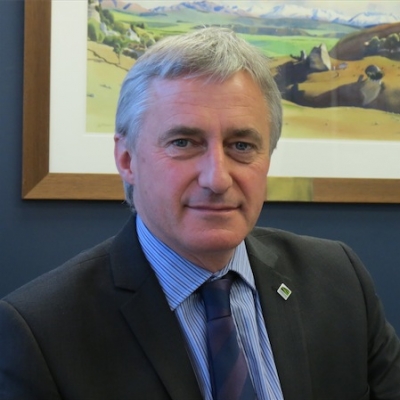 William Rolleston
Federated Farmers is looking at changing its subscription structure to better reflect the changing nature of farm land ownership.
National president William Rolleston says people owning multiple farms and corporate farming has reduced the lobby’s membership numbers. He says Feds is looking at finding a subscription structure that is fair and equitable to all.
“If one person has a number of farms it doesn’t seem reasonable that they pay a single farm subscription when someone has, say, just one 400ha property and is paying the same,” he told Rural News.
“We have to package it in a way that the members feel is equitable and they all feel they are getting value. If you own five farms you are getting five times the value from Federated Farmers as opposed to having one – the value is spread across all of those farms.”
Rolleston says the Federation has some farmers now paying on a per farm basis and believes this could be way to go. He doesn’t believe the farmer lobby will go the same way as the dairy sector, which levies members on their production. He says a subscription based on a ‘per farm’ basis is likely, but adds there are anomalies with a person with 5000 stock units paying the same as someone with 30,000 SUs.
In the past, the Federation has focused on the number of members it has and Rolleston says such a concept in today’s farming environment is “a bit silly”. He says the Federation has been working with corporate farmers on an arrangement to reflect the benefits they receive from their membership.
The Feds board will consider a proposal for the national council in June. The council comprises all the provincial presidents and the board. They have the final say on policy issues.
Federated Farmers has welcomed new rural policies released by ACT, saying they align closely with its own election priorities.

Federated Farmers is backing Feilding High School’s call to keep Agriculture and Horticultural Science as a standalone subject in Year 11.
National’s pledge to introduce 19 new national standards shows the party is serious about getting Wellington out of farming, Federated Farmers says.
Mobile phone coverage and reliability are deteriorating in rural areas, and farming families are bearing the cost, according to a Federated Farmers survey.
Central Otago District Council (CODC) has voted against a plan to spread treated sewage sludge from Cromwell and Alexandra on farmland near Lauder, a decision Federated Farmers says reflects strong opposition from rural residents.



Federated Farmers has welcomed new rural policies released by ACT, saying they align closely with its own election priorities.

Rural Contractors NZ says proposed changes to land transport rules for agricultural vehicles are a welcome response by the Government to out of date regulations which have seen members hit with huge fines.
Alliance is calling for final applications for its 2027 Graduate Programme, with applications closing on Sunday 25 October.
Decades piloting planes has ensured vet and farmer David Hayes is focused on safety. So, after a serious accident while welding on farm, he is sharing his experience so others can learn from it.
Canterbury milk processor, Synlait Milk has confirmed Leon Fung as its chief executive officer.
OPINION: Making it easier to collect rainwater and use it to grow crops and livestock is a no brainer.