Editorial: Sensible move
OPINION: The Government's decision to rule out changes to Fringe Benefit Tax (FBT) that would cost every farmer thousands of dollars annually, is sensible.
 increase font size
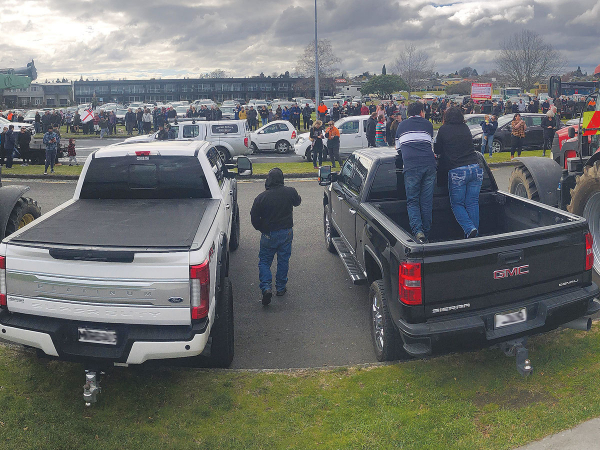 The Government has pushed out the Introduction of its new 'Ute Tax' until April 1 2022 - April Fool's Day!
In an ironic twist, the Government has pushed back the date of its so-called 'ute tax' or feebate scheme to April 1 next year - April Fools' Day!
The delay - from the original January 1 date - was announced by Minister of Transport Michael Wood.
"The rollout has been delayed because of the disruption caused by the current Delta outbreak," he claims.
This is despite the unworkability of the scheme that has been identified by the motor industry and users like farmers and tradies. Many in the vehicle sector also point out that Delta is actually the reason for increased production costs, monumental rises in shipping costs and long delays in product landing in New Zealand.
News of the delay comes as the Land Transport (Clean Vehicle) Amendment Bill passed its first reeding in Parliament on September 21. This will smooth the way for the clean car standard, alternatively called the fuel economy standard, in addition to clean car discounts.
The Bill passed its first reading by 77 votes to 43, supported by Labour, the Greens and Te Pati Maori, while opposed by National and the ACT Party.
National's spokesman for transport David Bennett has described the scheme as a "tax grab" that will hurt the hard working and vulnerable New Zealanders the hardset. "The Bill is just a pipe dream that has illusions how the market works."
Bennet says it adds many costs and details as yet unknown to the motor industry and users.
ACT Transport spokesman Simon Court described the bull as "virtue signalling nonsense" and said "it will see the Government, yet again, dip into Kiwis' back pockets".
Court claims that while intended to lower NZ's carbon emissions, the policy will fail to deliver.
The Motor Industry Association (MIA) says the Bill is unrealistic.
"By setting standards that are so steep over a short timeframe, distributors of Battery Electric Vehicles (BEV's) are the only ones ever likely to comply, while at the same time putting NZ out of step with comparable countries," It says.
The MIA further claims that the Government appears to have overlooked the fact that manufacturers do not produce models solely for the NZ market, which is relatively small in the case of global volumes.
"Rather they manufacture for key markets like North America, Europe and Australia where volumes are much greater and emission standards less oppressive."
The industry estimates that the combined costs of fees and penalties, under the scheme, is likely to add between 15 and 20% to the cost of new vehicles.
"This creates the likelihood that people will hang onto older vehicles for longer, suggesting that the Government doesn't fully understand its own climate change policies, or is just trying to implement another sneaky revenue grab."
OPINION: The Government's decision to rule out changes to Fringe Benefit Tax (FBT) that would cost every farmer thousands of dollars annually, is sensible.

Selecting the reverse gear quicker than a lovestruck boyfriend who has met the in-laws for the first time, the Coalition Government has confirmed that the proposal to amend Fringe Benefit Tax (FBT) charged against farm utes has been canned.
OPINION: Ther'es a reason politicians rank even lower than John Campbell in the most trusted profession surveys.
OPINION: This old mutt suggests farmers and tradies will be delighted to learn that the exorbitant ute tax they are now paying is helping wealthy Aucklanders buy subsidised Teslas.
OPINION: Farmers are rightly fuming over Labour's decision to increase the 'Ute Tax'.


OPINION: David Seymour and James Meager's plan to make it easier for farmers and orchardists to operate drones can best be described a 'courageous' move.

New Zealand wool is reaching new heights as air filtration companies move away from synthetic products to biodegradable alternatives.
Opuha Dam's ability to protect South Canterbury communities from major flooding has taken a significant step forward, with Opuha Water Limited (OWL) successfully commissioning a new outlet valve capable of releasing record volumes of water from the dam ahead of a weather event.
There's been widespread support from the primary sector for the Government's announcement on changes to freshwater farm plans that come under the Natural Environment Bill, which is now set to replace the existing RMA.
A partnership between state-owned enterprise Pāmu (Landcorp Farming Limited) and charity Meet the Need is putting more than quality New Zealand beef into food bank parcels this year.
The Opportunity Party has faced criticism during the election campaign that its policies are too urban-focused and offer little for rural communities.