Going gaga
She wears skin and meat every day, is known as Lady Gaga and is the top performer among her peers.
 increase font size

FARMERS CAN make an extra $200 a beast by cow pooling, while the purchaser gets cheaper meat, says Federated Farmers Rural Butchers chairperson Mike Hanson.
And the practice of urban people banding together to buy a beast and have it processed for meat is on the increase, says Hanson.
“It’s really just buying in bulk,” he says. “The freezing works is only paying $3.50/kg. The farmer may be able to sell it to the cow pooling person for $4-$5/kg, so they might be making an extra $2/kg. He might make an extra couple of hundred dollars for himself from one beast.
“The person buying it, instead of paying $15-20/kg is only paying $8-$9… it works out a lot cheaper.”
Following a Sunday television programme on this practice of urban people banding together to buy a beast and have it butchered, the Abattoirs Association and Beef + Lamb NZ have raised safety concerns, the latter saying the practice should be stopped.
But Hanson says cow pooling is safe provided beasts are sent to abattoirs for killing.
“It’s been done for hundreds of years now – killing the beast on the farm and cutting up. That’s probably safe, but if everyone is going to do cow pooling it has to be sent to the abattoirs.”
Sunday made it look as though it was all farm-killed meat, creating confusion, Hanson says.
“But if it goes to abattoirs it’s good as gold. If you kill it on the farm for the farmer he must eat it himself or give it to friends; he’s not allowed to sell or trade.”
Hanson, who runs Netherby Meats, Ashburton, says demand for ‘cow pools’ are on the increase. His business offers butchery, processing and home kills for farmers. But ‘cow pool’ beasts are sent to the abattoir.
“We’ve had heaps of people talking about it; we had 10 last week, 8-10 this week for cow pooling people. But it’s all being sent to the abattoirs so it’s all good to go.”
Hanson says if you aren’t a farmer or farm worker the Animal Products Act states you must be actively engaged in the ‘day-to-day’ maintenance of an animal for 28 days before it is processed.
“That said, it’s potentially a good way to reconnect people to where their food actually comes from,” he says.
“That connection is important when the Sunday Star Times quizzed 21 primary students, all believing cotton socks came from animals. Some thought scrambled eggs came from plants and most were convinced yoghurt grew on trees.”
She wears skin and meat every day, is known as Lady Gaga and is the top performer among her peers.
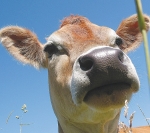
FACIAL ECZEMA (FE) is a disease which causes lowered production and sometimes death from liver damage.
A Morrinsville farmer has been fined more than $33,000 for illegally discharging dairy effluent into the environment. The volume of effluent was such that cows' udders were dragging in it.
With 'cow pooling' in the spotlight following TV One's Sunday programme, Federated Farmers Rural Butchers believes it has a role to play in reconnecting the public to their food.
The recent coverage of 'cow pooling' has raised the profile of home killed meat as a viable method for consumers to attain cheaper meat.


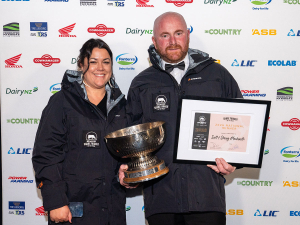
More than 640 dairy farmers and industry leaders gathered together at Rotorua's Energy Events Centre on Saturday night to celebrate the New Zealand Dairy Industry Awards where Southland couple Scott and Stacey Mackereth were named Share Farmers of the Year.

Āta Regenerative is bringing international expertise to New Zealand to help farmers respond to growing soil and water challenges, as environmental monitoring identifies declining ecosystem function and reduced water-holding capacity across farms.
Yili's New Zealand businesses have reported record profits following a major organisational and strategic transformation.
Owners and lessees of certain Hino Trucks New Zealand diesel vehicles have just 10 days remaining to register or opt out of a proposed $10.9 million class action settlement.
Silver Fern Farms has successfully produced and delivered 90 tonnes of premium chilled New Zealand lamb and beef to the United Arab Emirates via airfreight.
For the first three months of 2026, new tractor deliveries saw an increase over the previous two months, resulting in year-to-date deliveries climbing to 649 units - around 5% ahead of the same period in 2025.