Once-a-Day Calf Feeding: How Probiotics Boost Heifer Growth
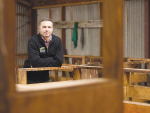
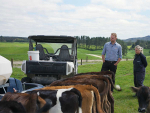
Matt Collier, Probiotic Revolution, says calves will drink a lot of milk once-a-day with their probiotic Calf Xtreme.
 increase font size
 Fonterra chief executive Miles Hurrell says the co-operative is confident about international prices remaining strong.
Fonterra farmers will start the new season with strong cashflow, thanks to an opening forecast with a record midpoint of $8/kgMS.
The co-op will pay its farmers 60% of the forecast midpoint as advance payments each month for milk.
If the payout remains at the forecast midpoint of $8 until the end of the season, Fonterra and its farmers will pump$12 billion into the New Zealand economy.
Federated Farmers dairy chair Wayne Langford says farmers are happy with "a very strong start" to the new season.
"This will see farming businesses in a much better cashflow position through the first half of the season when the majority of expenses occur," Langford told Rural News.
"The value a payout like this will bring to all New Zealand is huge, especially as we work out way out of the Covid-19 crisis."
Fonterra has passed the $8 mark only once in its 21-year history: in 2013-14 farmers received a final milk price of $8.40/kgMS plus a 10c dividend.
Fonterra chief executive Miles Hurrell says the co-operative is confident about international prices remaining strong.
"The $8 midpoint is great news for farmers; the forecast farmgate milk price is a key marker that farmers look for.
"This is the biggest opening forecast we have come out with and farmers will be rapped."
However, there are an number of risks and this explains Fonterra's $1.50 forecast milk price range - $7.25 to $8.75/kgMS announced last week.
Hurrell points out that Covid is far from over. The impacts of governments winding back their economic stimulus packages, foreign exchange volatility and changes in the supply and demand patterns that can enter dairy markets when prices are high could be dampener.
And as always, potential impacts of any geopolitical issues around the world could also trigger a sudden drop in dairy prices.
ASB economist Nat Keall says the wide opener is appropriate given the season has just begun and the remaining uncertainty continuing to impact global dairy markets.
ASB's own forecast is towards the upper end of the range - at the $8.20 mark.
Keall notes that even if the milk price ends up being near the bottom of the range - which he thinks is unlikely - it would still represent a strong result for farmers.
Over the past ten years the farmgate milk price has averaged around the $6.25/kgMS, so a $7.25 result would still be well above average.
"Still, we think that's an unlikely scenario. For the season to finish near the bottom of Fonterra's range, prices would need to start trending substantially lower far earlier than we expect, or drop away more sharply when they do.
"With global dairy supply still relatively constrained and demand from China likely to remain high, we continue to think the odds are against a swift or a sharp correction."
Hurrell agrees that global demand for dairy, especially New Zealand dairy, is continuing to grow. China is leading the charge as its economy continues to recover strongly.
Matt Collier, Probiotic Revolution, says calves will drink a lot of milk once-a-day with their probiotic Calf Xtreme.

After a winter of frozen pipework and refrigeration call-outs, Terravest chief executive Kip Bodle and chief operating officer Luke Walker explain why this El Niño summer calls for a different kind of preparation, before the first heatwave finds the weak points for you.
Speculation of a possible joint move by Fonterra and a2 Milk to buy Synlait raises a much bigger strategic question, says agribusiness expert Dr Nic Lees.
After delivering a strong financial year, rural trader PGG Wrightson says the coming months will depend on customer confidence and weather.
In the past, much has been made of the concept of farm to fork, but an Australian expert in food science and marketing with experience in the dairy industry, Dr Angeline Achariya, says the reverse of this slogan is critical to win modern day consumers.


Alliance Group's $16 million programme to install innovative heat pump systems at its Otago and Southland processing plants wins a New Zealand Energy Excellence Award after cutting annual emissions by more than 24,000 tonnes of CO₂e.
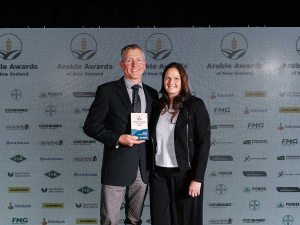
The arable sector losing good people and land is a major concern for the 2026 Arable Farmers of the Year, Mid Canterbury seed growers John and Mel McCaw.
The terrible floods that hit the Wairarapa may have subsided, but the danger to farmers still exists, according to local Federated Farmers president Rob Hickson.
New Zealand's Emissions Trading Scheme (NZ ETS) encourages afforestation while not achieving climate goals, says a new report released by the Parliamentary Commissioner for the Environment, Simon Upton.
Are you ready for El Nino? That’s the question asked by Beef+Lamb NZ’s Ian Tarbotton who leads B+LNZ’s farm extension service.
Bigger, bolder salads packed with colour, crunch and flavour are making headlines overseas — and the arrival of fresh spring vegetables means New Zealanders can now get chopping too, creating their own Great Kiwi Spring Salad.